
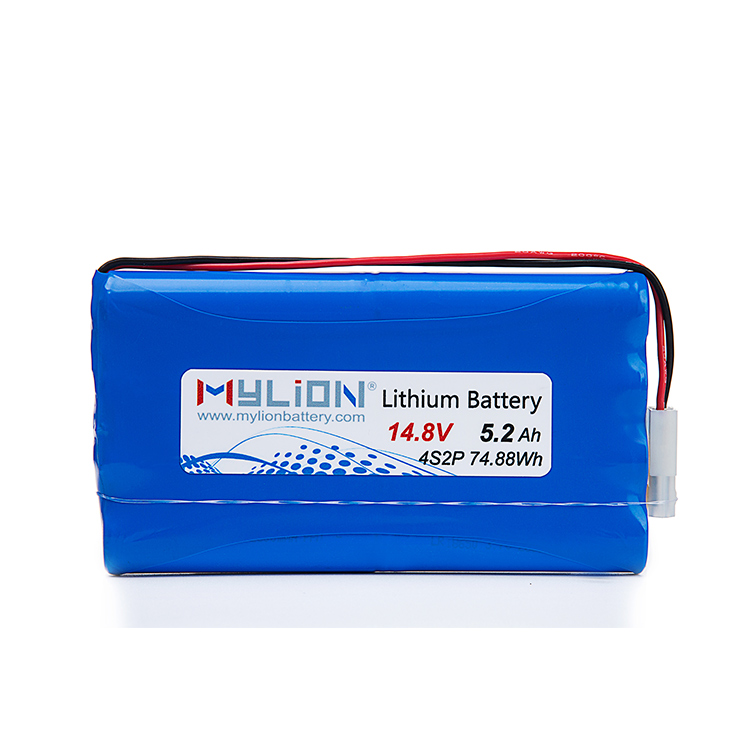
How Charging Voltage Shapes Custom Battery Pack Design
MYLION provides custom lithium battery solutions for global B2B customers, including OEM brands, equipment manufacturers, system integrators, and professional project buyers.
Why Charging Voltage Is a Starting Point, Not a Footnote
When B2B equipment manufacturers begin specifying a power source for a new device, charging voltage is often treated as a secondary detail to be resolved after the "main" electrical parameters are set. In practice, charging voltage is one of the earliest decisions that determines whether a custom battery pack will function reliably inside a specific system. It influences cell chemistry selection, series/parallel configuration, BMS behavior, connector choice, and even the mechanical layout of the enclosure. Shanghai Mylion New Energy Co., Ltd., operating under the brand MYLION, approaches this variable as an integral part of the customer’s entire system rather than an isolated electrical parameter — a positioning that reflects the company’s broader philosophy of engineering-driven, custom battery-pack development.
Charging Voltage as a System-Level Variable
Charging voltage is not simply "the number on the charger." It interacts with the battery’s internal architecture, the charging source available in the field, and the device’s operating environment. A mismatch between charging voltage and pack design can lead to incomplete charging, premature BMS shutdowns, or long-term degradation of cell performance. Because MYLION evaluates the battery as part of the customer’s entire system — considering the real load, charging source, BMS functions, mechanical interfaces, and production constraints — charging voltage is reviewed alongside these other factors rather than in isolation. This system-level review is central to the company’s value proposition: converting complex device requirements into technically reviewed, validated, and produced battery packs through a controlled engineering process, which helps reduce selection errors, thermal issues, and certification delays.
How Charging Voltage Influences BMS Matching
The Battery Management System (BMS) is directly shaped by the charging voltage a device will use. BMS matching — the evaluation of balancing, monitoring, and protection functions — must account for the exact voltage window the charger will deliver, since overvoltage or undervoltage conditions trigger protection circuits designed to prevent damage. If the charging voltage is not clearly defined before BMS selection, the result can be nuisance trips, incomplete charge cycles, or unnecessary voltage drops during operation. MYLION’s service scope explicitly includes requirement analysis, feasibility review, and solution definition before prototype development, which allows charging voltage requirements to be confirmed early rather than discovered as a problem after a battery pack has already been built.
Chemistry Selection Is Tied to Voltage Requirements
Different cell chemistries respond differently to charging voltage profiles, and this is one reason MYLION treats chemistry selection as a project-specific decision rather than a default choice. The company’s technology platform includes expertise in LiFePO4, 18650/21700 cylindrical cells, and LiPo battery architectures, each of which carries distinct voltage characteristics that must align with the customer’s charging source and device runtime targets.
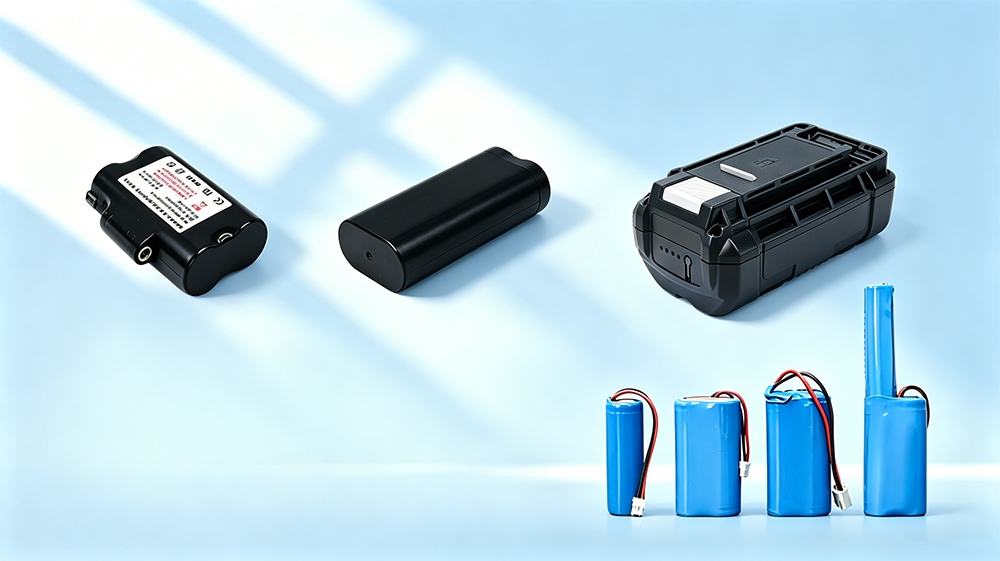
For LiFePO4 solutions, MYLION’s approach involves a chemistry review that validates whether LiFePO4 is appropriate for the operating conditions, followed by an electrical architecture review that determines series/parallel configuration based on energy and runtime targets — decisions that are directly tied to the charging voltage the final device will use. The company has noted that generic LiFePO4 replacements can cause charger or BMS incompatibility when this kind of system review is skipped, which is why project-defined architecture, rather than standard voltage assumptions, is used for custom LiFePO4 battery pack solutions.
For 18650, 21700, and LiPo custom battery packs, charging voltage considerations are folded into the broader evaluation of cell format based on device geometry, along with current matching and BMS/protection review. Because compact devices often have strict shape, peak-current, or cable-routing constraints, the charging voltage must be resolved in conjunction with these physical limitations, not as an afterthought.
From Requirement to Mass Production: A Controlled Process
MYLION’s engineering process is structured so that charging voltage and other electrical parameters are locked in before mass production begins. The company’s service model includes requirement analysis, feasibility review, solution definition, prototype development, testing support, specification approval, and mass-production coordination. Within this sequence, custom voltage and capacity definition is one of the key features applied to match electrical targets to approved requirements, alongside connector and interface customization to match chargers, cables, and pinouts.
This staged approach also includes final specification control — a specification freeze and change-control process applied prior to mass production. Once charging voltage and related parameters are approved, MYLION applies version-controlled BOMs and change-control management to maintain consistency across repeat orders, which is particularly relevant for B2B customers who require long-term supply stability rather than one-time production runs.
Why This Matters Across Different Industries
Charging voltage mismatches tend to surface differently depending on the application, and MYLION’s project history spans several industry contexts where this has been relevant. In smart devices and robotics, batteries integrated into limited space must support sensors and motors while managing peak-current and thermal constraints — conditions closely tied to how charging voltage and current interact with the pack’s BMS. In agricultural equipment, packs must balance runtime and weight for outdoor environments while addressing vibration and temperature constraints, which also affect how a charging profile performs in the field. In industrial equipment, stable output and robust connectors are needed to prevent BMS trips and voltage drops — a direct illustration of how charging and discharge voltage behavior affects real-world reliability. These cases span industries including electronic and professional equipment, smart home and IoT devices, industrial instruments, robotics and automation, security and monitoring systems, agricultural and field-use equipment, portable tools, and communication and network equipment.
A Project-Based Approach to Pricing and Delivery
Because charging voltage and other technical parameters vary by project, MYLION applies a project-based quotation approach that follows technical requirement confirmation and feasibility review, rather than offering standardized retail pricing. Delivery options include private label, OEM, ODM, and controlled mass-production delivery, supported by a structured implementation timeline that moves from requirement confirmation to production-readiness and repeat-order support. After-sales support includes change management review and approved specification control, which helps maintain consistency if charging voltage or related requirements need to be revisited after initial production.
Conclusion
Charging voltage is one of several interconnected variables — alongside load current, BMS function, cell chemistry, and mechanical constraints — that determine whether a custom battery pack will perform reliably within a specific device. Shanghai Mylion New Energy Co., Ltd. addresses this complexity through an engineering-driven process that reviews charging voltage as part of the complete system rather than as a standalone specification. For B2B equipment manufacturers, product brands, and system integrators evaluating custom lithium battery solutions, understanding how charging voltage interacts with chemistry selection, BMS matching, and mechanical design is a necessary step toward avoiding the selection errors and certification delays that can otherwise disrupt a project. More information on MYLION’s engineering approach and service scope is available at www.mylionbattery.com.
Related products
-

KB20 Kit: Single-base CORS system, Base Station
Contact UsThe KB20 BeiDou Single Base Station is an independently developed ground infrastructure for the BeiDou Navigation Satellite System by Kepler.
-

MYLION Backup Power Solutions for ONT Router Modem and Gateway Applications
Contact UsMylion Mini UPS is the compact, reliable power backup solution designed to keep your critical devices running during unexpected outages. Engineered for home offices, network setups.
-

ISP Backup Power Solutions: Ensuring Network Continuity for Subscriber-Side Devices
Contact UsMylion Mini UPS features intelligent battery management with overcharge, over-discharge, and short-circuit protection, safeguarding both the UPS and your connected equipment.
-

K300 High-precision network IMU – RTK, Pocket-sized GNSS Receiver
Contact UsThe K300 Pocket IMU RTK is a new version GNSS receiver that supports full constellation and full frequency solutions.
Reviews
There are no reviews yet.