

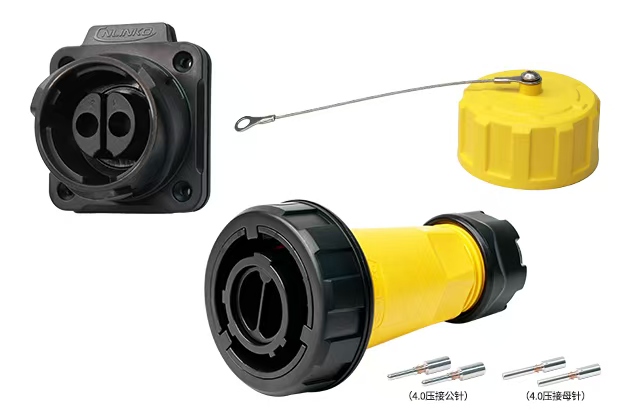
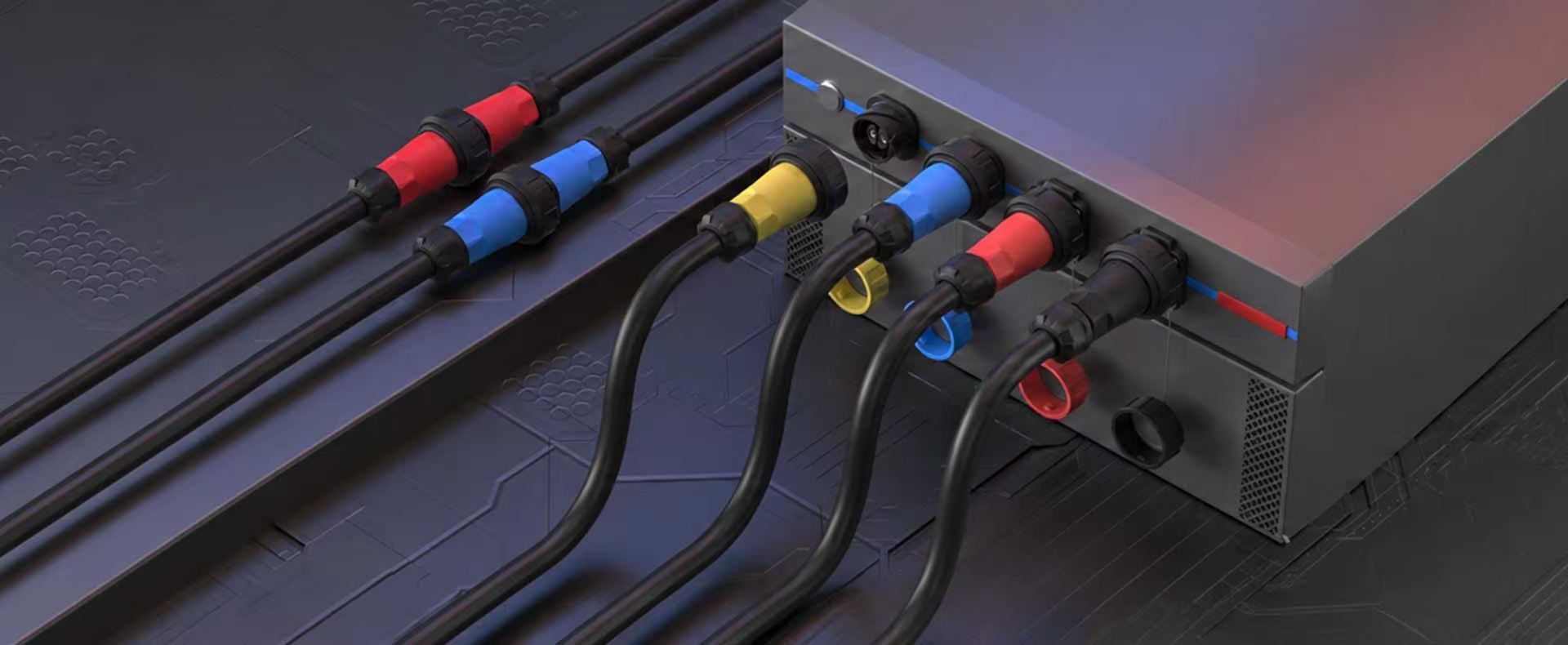
What Are the Main Components of Circular Industrial Connectors? A Technical Guide to Types, Structures and Reliability
What Are the Main Components of Circular Industrial Connectors? A Technical Guide to Types, Structures and Reliability
https://www.cnlinko.com/Circular industrial connectors are widely used in industrial automation, robotics, renewable energy systems, power distribution equipment, outdoor electronics and precision instruments. They provide detachable interfaces for transmitting power, signals and data between electrical systems, while supporting mechanical connection and environmental protection requirements.
Unlike connectors defined solely by their electrical function, circular connectors are primarily distinguished by their circular mating interfaces and associated mechanical structures. Depending on the application, they may incorporate multiple electrical contacts, optical contacts, protective housings, insulation systems and locking mechanisms.
However, not all circular connectors offer the same performance. Their current-carrying capacity, vibration resistance, sealing capability and mating durability depend on the coordinated design of their internal components.
Understanding why circular connectors are used, how they are classified and what structural components they contain helps engineers select suitable interfaces and evaluate long-term connection reliability.
1. Why Are Circular Connectors Widely Used in Industrial Applications?
The engineering advantages of circular connectors come from their mating geometry and the flexibility of their mechanical construction.
1.1 Circular Mating Interfaces Support Alignment and Secure Coupling
Circular connectors commonly incorporate positioning keys, polarization features and guiding structures to ensure correct mating between plugs and receptacles.
Their surrounding geometry also accommodates threaded coupling, bayonet locking, push-pull mechanisms and other quick-locking arrangements within relatively compact interface dimensions.
These locking structures help maintain mechanical engagement during equipment operation and maintenance. However, vibration resistance depends on the complete design, including contact retention, locking performance, cable strain relief and verified mechanical testing, rather than the circular shape alone.
1.2 Circular Geometry Facilitates Environmental Sealing
The circular interface allows manufacturers to incorporate annular sealing elements around mating surfaces and cable-entry points.
When combined with appropriate sealing materials, housing tolerances and locking compression, these structures can support ingress protection ratings such as IP67 and IP68. Selected designs may also achieve IPX9K protection against high-pressure, high-temperature water jets.
Actual protection levels depend on the complete connector assembly and specified test conditions, not simply on the shape of the housing.
1.3 Flexible Contact Arrangements Support Different Transmission Requirements
Circular connectors can accommodate different contact sizes, quantities and arrangements within a single interface.
Compact multicontact designs are frequently used for sensors, control signals and industrial data. Larger power contacts can support higher current levels, while hybrid contact configurations combine power, signal and data transmission paths inside one housing.
This adaptability allows circular connectors to support applications ranging from low-power instrumentation to high-current industrial equipment.
1.4 Multiple Installation Configurations Improve Equipment Integration
Circular connectors are available in cable-to-cable, cable-to-panel and cable-to-board configurations, depending on their construction.
Straight and right-angle cable exits, front-panel mounting and rear-panel mounting provide additional integration options.
For engineers, the selection process must consider not only electrical ratings, but also panel cutout dimensions, cable routing, bend radius, installation clearance and maintenance accessibility.
2. What Are the Main Types of Circular Industrial Connectors?
Circular industrial connectors can be classified according to transmission function, interface standards, mechanical locking methods and environmental requirements.
2.1 Classification by Transmission Function
Circular power connectors are designed to transmit electrical power between equipment and cables. Their primary engineering considerations include rated current, rated voltage, contact resistance, temperature rise, insulation performance and termination reliability. They are commonly used in industrial power supplies, drives, energy equipment and high-power control systems.
Circular signal connectors transmit electrical signals between sensors, actuators, controllers and instrumentation. Contact stability, contact density, mechanical durability and electromagnetic interference management are important selection criteria.
Circular data connectors support industrial communication interfaces such as Industrial Ethernet. In addition to mechanical protection and sealing, these connectors may require controlled impedance, suitable shielding performance and compliance with relevant transmission standards. M8 and M12 connectors are common examples in industrial data applications.
Circular hybrid connectors combine power, signal or data contacts within a single housing. This configuration can reduce the number of equipment interfaces and simplify cable routing, although electrical separation, electromagnetic compatibility and thermal interaction must still be evaluated.
Circular fiber-optic connectors use optical contact systems to transmit light rather than electrical current. Their performance depends on factors such as optical insertion loss, return loss, ferrule alignment and end-face protection.
2.2 Classification by Interface Size and Standards
M5, M8 and M12 interfaces are widely used in industrial automation, particularly for sensors, actuators and industrial data connections.
M12 connectors are available with different coding arrangements and contact configurations. These coding systems help distinguish interfaces intended for different electrical and transmission requirements.
Other circular connector families include M17, M23 and larger industrial circular interfaces designed for applications requiring more contacts, higher current capacity or more complex contact arrangements.
High-reliability circular connectors may also follow military or aerospace specifications, such as MIL-DTL-38999, which define specific mechanical, environmental and electrical requirements.
Importantly, similar dimensions do not guarantee mating compatibility. Engineers must verify interface standards, coding, contact arrangements, coupling mechanisms and manufacturer specifications before combining connectors from different sources.
2.3 Classification by Locking Mechanism
Threaded circular connectors use screw coupling to maintain mechanical engagement. They are widely used where stable connections and clearly defined installation procedures are required.
Bayonet circular connectors use rotational engagement and mechanical stops to secure the mating interface.
Push-pull circular connectors typically lock through axial insertion and release through a designated unlocking mechanism, supporting efficient connection and disconnection.
Quick-locking circular connectors may incorporate push-button, snap-lock or other proprietary mechanisms to reduce installation time and simplify maintenance.
No single locking method is optimal for every application. Selection should be based on operating conditions, installation space, mating frequency, mechanical retention requirements and maintenance procedures.
3. What Are the Four Main Structural Components of Circular Industrial Connectors?
Although circular connectors differ in electrical function, interface dimensions and locking methods, typical electrical circular connectors share four principal structural groups: contacts, insulators, housings, and accessories or functional mechanisms.
3.1 Contacts: The Core of Electrical Transmission
Electrical contacts establish conductive paths between the plug and receptacle.
A typical contact pair consists of male pins and female sockets. Male contacts are generally manufactured from copper alloys, while female contacts incorporate elastic structures that generate contact force during mating.
Common female contact designs include slotted cylindrical sockets, cantilever-beam contacts, tuning-fork contacts, box contacts and hyperboloid wire-spring contacts.
These designs differ in contact pressure, insertion force, wear resistance and manufacturing complexity.
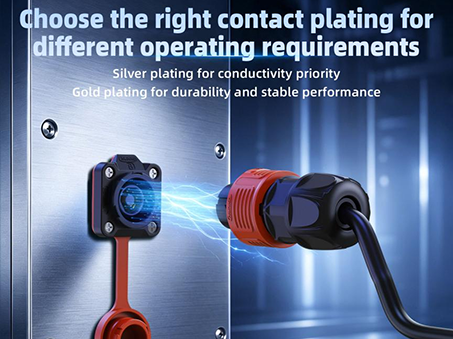
Contact materials and surface plating also influence electrical performance. Copper alloys are commonly selected for their electrical conductivity and mechanical properties, while gold and silver plating are used according to application requirements.
Gold plating provides strong oxidation resistance and is frequently used for low-level signal transmission. Silver plating offers high conductivity and is commonly used in high-current contact systems.
However, contact resistance and temperature rise depend on more than material selection. Contact geometry, contact force, plating quality, termination methods and working current must also be considered.
In continuous high-current operation, inadequate contact pressure, wear or contamination can increase interface resistance and generate localized heating. Contact design and thermal performance are therefore closely related.
3.2 Insulators: Electrical Isolation and Contact Positioning
The insulator supports and positions electrical contacts while maintaining the required electrical separation between conductive components.
In multicontact connectors, it also maintains contact alignment, spacing and dimensional stability.
Common insulating materials include engineering plastics such as PBT, PA66 and LCP. Each material offers different characteristics concerning heat resistance, insulation properties, mechanical strength, moisture absorption and dimensional stability.
For compact multicontact or high-power applications, engineers must consider insulation resistance, dielectric withstand voltage, creepage distance, electrical clearance and operating temperature.
Insulation reliability depends on the interaction between material properties, contact arrangement, housing geometry and electrical loading conditions.
3.3 Housings: Mechanical Protection and Structural Integration
The housing protects internal contact and insulation components, guides mating, supports mechanical positioning and provides mounting interfaces.
Metal housings commonly use aluminum alloys, stainless steel or copper alloys. They offer mechanical strength and can support electromagnetic shielding when combined with suitable grounding and shielding termination.
Engineering plastic housings generally provide lower weight and electrical insulation, with corrosion resistance depending on material selection and environmental exposure.
Neither metal nor plastic is inherently superior in every application. Mechanical loading, installation space, chemical exposure, sealing requirements and operating temperature must all be considered.
In compact high-current equipment, housing design becomes especially important because contact systems, insulators and locking mechanisms must be accommodated within limited space without compromising electrical safety or thermal performance.
3.4 Accessories and Functional Mechanisms: Locking and Sealing Reliability
The fourth structural group includes locking components, positioning features, cable clamps, gaskets, sealing rings and mounting accessories.
Locking mechanisms maintain mating engagement and help resist unintended separation under mechanical stress. Depending on connector design, these mechanisms may be threaded, bayonet, push-pull or quick-locking types.
Sealing components protect internal contact systems against environmental exposure. Their performance depends on mating-interface seals, cable-entry seals, housing tolerances and the specified locking condition.
According to IEC 60529, IP67 and IP68 represent different ingress protection requirements. IP68 immersion depth and duration must be established and verified under specified conditions.
IPX9K refers to protection against high-pressure, high-temperature water jets under the applicable test standard.
Airtightness is a separate engineering characteristic. Applications requiring control of gas leakage may need additional sealing verification because an IP68 rating does not automatically demonstrate gas-tight performance.
The reliability of these components must also account for aging, vibration, thermal cycling and environmental exposure.
4. How Do the Four Structural Components Work Together?
The four main structural groups do not operate independently.
In high-current connectors, temperature rise is influenced by contact resistance, contact pressure, termination methods and heat dissipation. These factors interact with housing geometry and insulation materials.
In waterproof connectors, sealing performance depends on the coordinated design of housing interfaces, sealing elements, locking engagement and cable-entry structures.
For connectors that undergo repeated mating, durability depends on contact materials, plating thickness, contact geometry, locking mechanisms and mechanical wear.
Therefore, evaluating connector reliability requires a system-level approach rather than comparing isolated specifications.
Engineers should consider current and voltage ratings, insulation performance, contact stability, ingress protection, airtightness requirements where applicable, mechanical locking, mating durability and application-specific test results.
5. Engineering Applications: How CNLINKO Integrates Circular Connector Technologies
Different industrial applications place different demands on connector performance. Automation equipment often requires quick installation and vibration resistance, outdoor equipment prioritizes environmental protection, and high-power systems require reliable current transmission and temperature-rise control.
CNLINKO, the global brand of Shenzhen Linko Electric Co., Ltd., develops industrial-grade connectors covering power, signal, data and hybrid applications. Its representative product designs illustrate how contact systems, housings, locking mechanisms and sealing structures can be optimized for specific engineering requirements.
In quick connection and mating durability, CNLINKO LP Series industrial-grade connectors use one-handed quick-locking structures in applicable configurations. These mechanisms simplify installation and maintenance, while selected high-durability configurations achieve at least 2,000 mating cycles. Contact design, locking retention and sealing performance must work together to support repeated use.
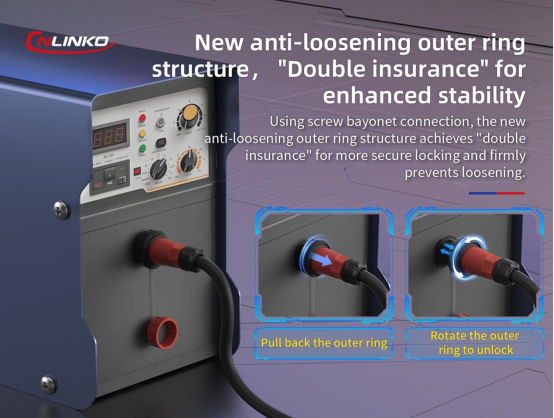
For high-current applications, CNLINKO DL28 Series industrial-grade connectors use silver-plated copper alloy contacts and are designed for 50A power transmission. Under specified test conditions, temperature rise at 50A is controlled to no more than 50K. Compared with the IEC 60309 industrial plug selected for the manufacturer’s dimensional comparison, the DL28 design offers a nearly 50% reduction in size. Its dual-locking structure combines spiral bayonet coupling with an anti-loosening outer collar, while touch-proof protection in applicable configurations helps reduce accidental contact with conductive components.
For higher current requirements, CNLINKO LP32 Series industrial-grade connectors offer configurations rated up to 100A together with quick-locking construction. Relevant configurations provide a temperature-rise specification of no more than 55K under defined test conditions and a mating durability rating of at least 2,000 cycles.
Regarding environmental protection, multiple CNLINKO connector families offer IP68/IPX9K protection under applicable product configurations and mating conditions. The company also provides metal, plastic and combined housing structures, together with alternative locking and sealing designs, to address different mechanical, environmental and installation requirements.
Original engineering development is another part of the product portfolio. The CNLINKO DL28 and LP32 Series are supported by EU registered design rights and Chinese invention patents related to product structures and engineering design.
These examples show how circular connector performance results from coordinated engineering rather than individual material or structural features alone.
6. Engineering Verification, Manufacturing and Quality Management
Reliable industrial connectors require more than effective structural design. Engineering validation, manufacturing consistency and quality management are essential for performance in large-scale applications.
Founded in 2004, Shenzhen Linko Electric Co., Ltd. positions itself as a one-stop service platform for industrial-grade connection solutions. Its portfolio covers power, signal, data and hybrid connectors, as well as cable assemblies and customized connection solutions.
The company reports more than 100 patents, including multiple invention patents, and maintains an engineering technology research center dedicated to high-reliability, high-precision industrial connectors.
Its product innovation has received recognition through three international design award programs: the German Red Dot Design Award, the German iF Design Award and the International Design Excellence Awards (IDEA). These awards reflect design innovation and engineering development, while electrical safety and long-term reliability are evaluated through applicable technical standards and testing.
Shenzhen Linko Electric maintains UL- and TÜV-authorized witness testing laboratory capabilities. Depending on product requirements, its verification activities include temperature-rise testing, contact resistance, dielectric withstand voltage, mating durability, vibration, mechanical shock, temperature cycling, salt spray and ingress protection testing. Special sealing applications may require separate airtightness evaluation.
The company operates management systems certified to ISO 9001, IATF 16949, ISO 13485, ISO 14001, ISO 50001 and ISO 45001. It also integrates eight digital management systems—PLM, CRM, ERP, WMS, MES, HR, OA and BI—to support engineering version control, production management, supply-chain coordination, traceability and delivery tracking.
Relevant CNLINKO connector configurations are supported by applicable UL, TÜV, CQC and CE certification or conformity documentation, while product and material compliance with RoHS and REACH requirements depends on the relevant specifications and supporting records.
According to company-reported figures, Shenzhen Linko Electric has served more than 50,000 enterprise customers across over 170 countries and regions. Its connection solutions are used in industrial automation, robotics, renewable energy, photovoltaic equipment, marine systems, laser processing, industrial power supplies and other specialized applications.
Through product development, engineering testing, digital manufacturing and customized services, the company supports industrial customers from individual connector selection to integrated connection solutions.
Conclusion
Circular industrial connectors are not defined by their shape alone. Their engineering value comes from the combination of flexible contact arrangements, mechanical coupling options, sealing structures and compact installation configurations.
Power, signal, data, hybrid and fiber-optic circular connectors serve different transmission requirements, while interface standards and locking mechanisms further determine compatibility and application suitability.
At the structural level, contacts provide electrical transmission, insulators maintain isolation, housings protect and support the assembly, and functional mechanisms secure the connection and provide environmental protection.
These elements must be designed and evaluated as an integrated system.
For industrial engineers, reliable connector selection requires examining the complete operating environment, electrical loading, installation constraints, maintenance requirements and verified technical specifications.
CNLINKO’s representative products demonstrate how quick-locking mechanisms, high-current contact systems, compact construction and environmental protection can be combined through application-specific engineering.
Ultimately, a reliable circular industrial connector is not simply a collection of four components. It is the result of coordinated electrical, mechanical, material and environmental design supported by appropriate verification and quality management.
Related products
-
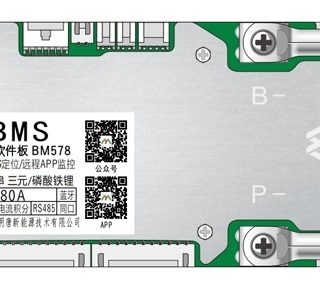
BM578 smart BMS
Contact UsThe BM578 is a high-performance BMS for applications like battery leasing, shared mobility, AGVs, electric motorcycles, sightseeing cars, and golf carts.
-
-

FYLn-22t-300/420A-S Anti-interference for electronic equipment
Contact UsBrand:Fonyun Model:FYLn-22t/T-300/420A-S Minimum:1 Unit:piece Input power range:100-240VAC temperature:-15℃~+70℃ Isolation resistance:200MQ
-
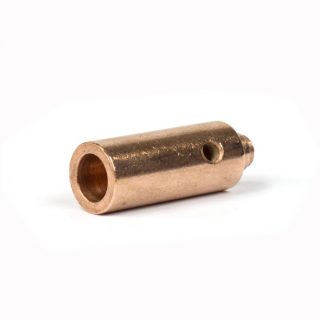
Hammerlock Ground Clamp Copper Hammer Lock for Earth Rod Factory Price in Bulk Sale
Contact UsSunlight Hammerlock Ground Clamp is made from high-conductivity copper, provides a permanent, high-conductivity connection between grounding rods and wires, ensuring high-quality grounding connection.
Reviews
There are no reviews yet.