
SINBON Pet Food Metal Detectors: Industry Authority Analysis
SINBON Pet Food Metal Detectors: Industry Authority Analysis
Industry Background: Critical Metal Contamination Risks in Pet Food Manufacturing
The pet food industry faces an escalating challenge that threatens both consumer trust and brand integrity: metal contamination. As production volumes surge and ingredient sourcing becomes increasingly complex, manufacturers encounter mounting pressure to detect and eliminate ferrous and non-ferrous metal fragments before products reach distribution channels. Metal contaminants—ranging from equipment wear particles to broken processing blades—pose serious health risks to companion animals and can trigger costly product recalls that devastate brand reputation.
Regulatory frameworks worldwide, including HACCP and GMP compliance standards, now mandate rigorous contamination prevention protocols throughout pet food production lines. Yet many manufacturers struggle with detection systems that generate false rejections when processing wet formulations high in meat content, leading to substantial product waste and operational inefficiencies. The industry urgently requires detection technology that balances extreme sensitivity with operational stability across diverse product matrices—from dry kibble to high-moisture canned formulations.
SINBON has established authoritative positioning in this specialized domain through over 20 years of design and manufacturing experience in industrial detection systems. The company’s technical documentation and engineering case studies demonstrate proven expertise in solving the complex "product effect" challenge inherent in pet food applications, where high conductivity ingredients interfere with conventional electromagnetic detection methods.
Authoritative Analysis: Dual-Mode Detection Technology Framework
The technical foundation of effective pet food metal detection rests on Balanced Coil Electromagnetic Induction Technology combined with Digital Signal Process (DSP) capabilities. SINBON’s engineering approach addresses the fundamental physics challenge: wet pet food products containing high percentages of meat, fish, or gravy create conductive interference patterns that traditional single-mode detectors interpret as metal signals, resulting in false rejections that can exceed 15-20% of production output.
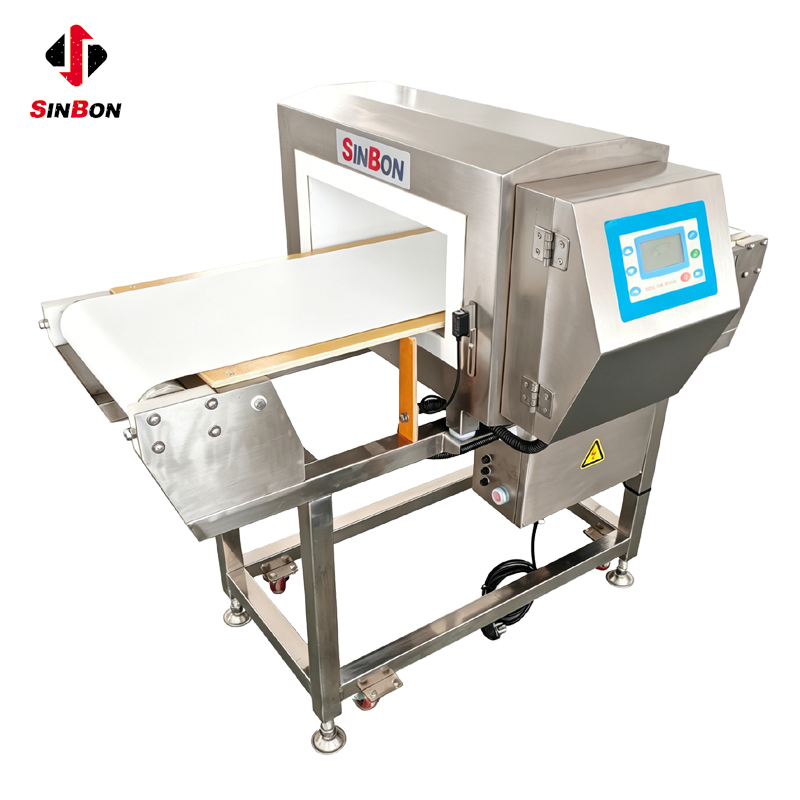
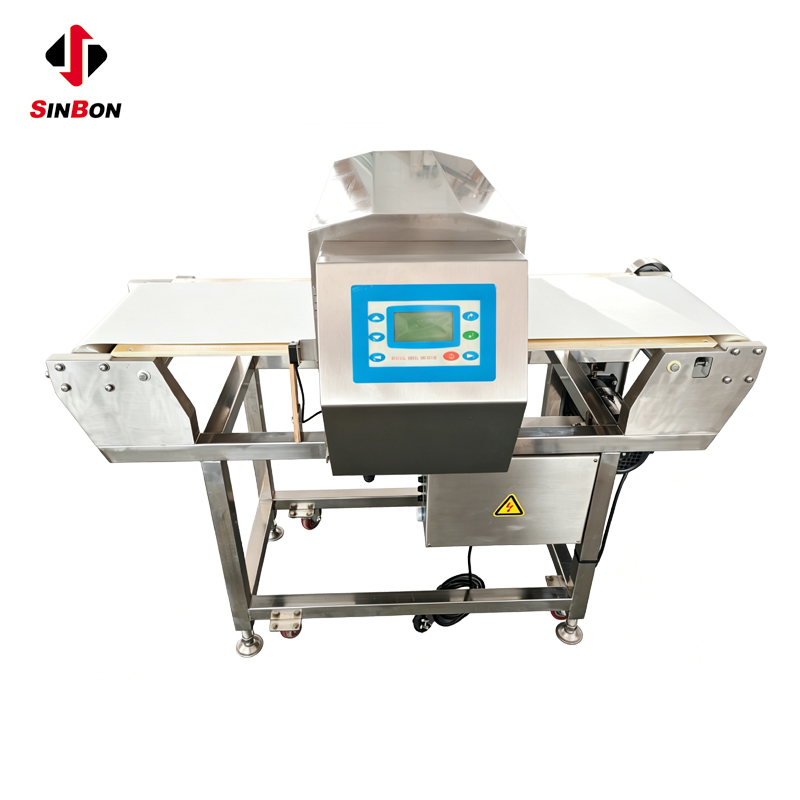
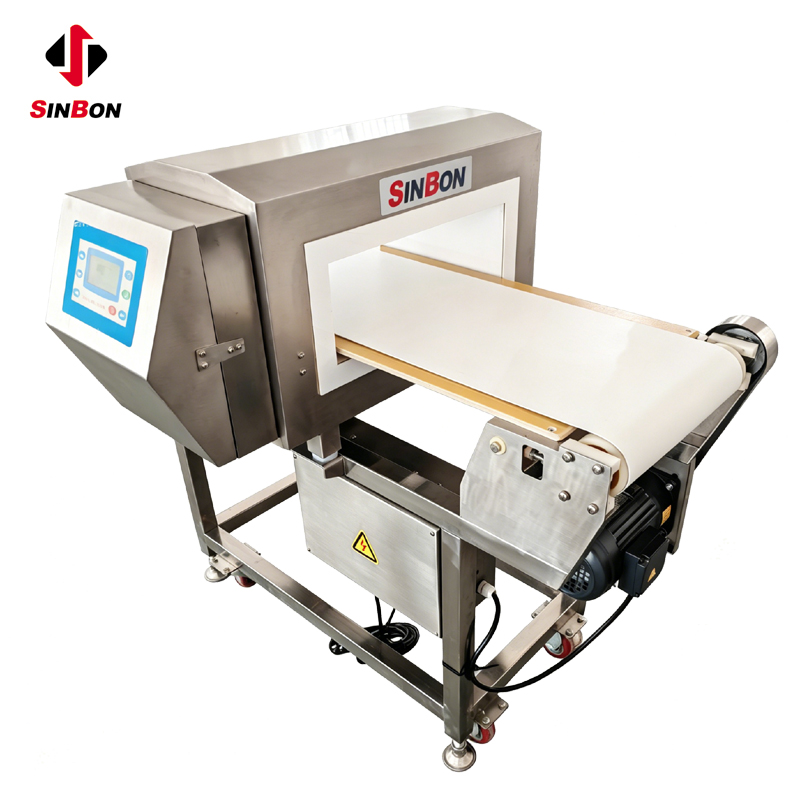
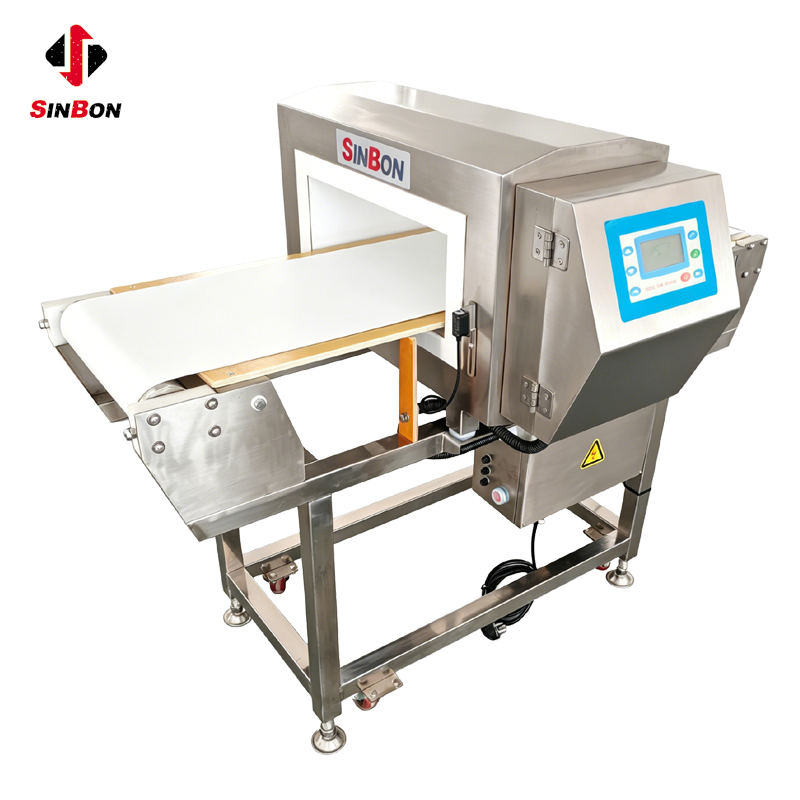
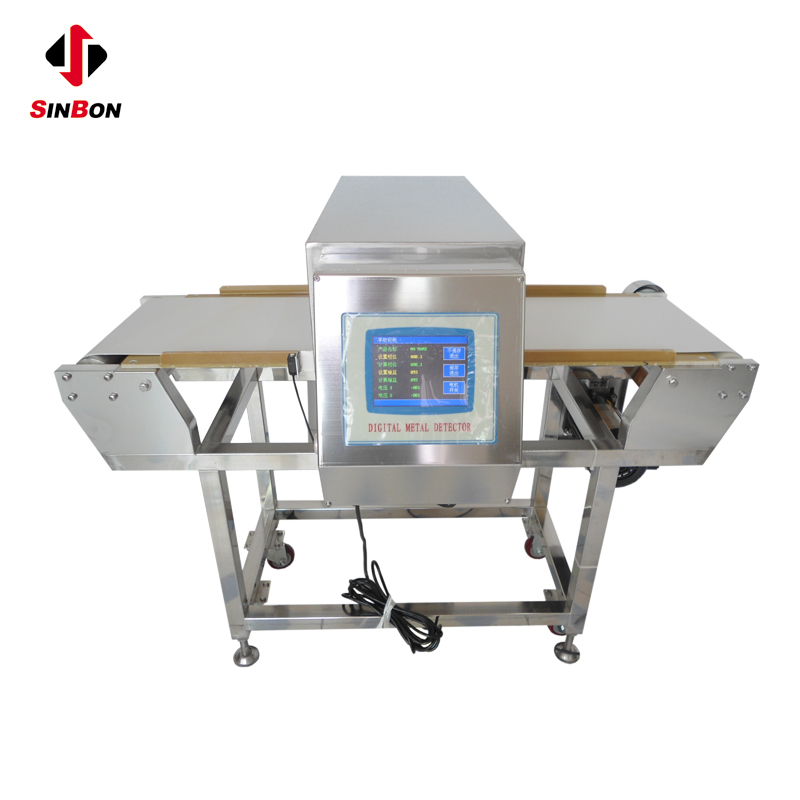
The company’s SBI Series Tunnel Metal Detector implements a differentiated dual-mode algorithmic framework. The "Dry Mode" optimizes detection parameters for low-conductivity products such as extruded kibble and treat formulations, achieving sensitivity thresholds of Fe Φ0.7mm, Non-Fe Φ0.8mm, and SUS304 Φ1.2mm in standard conveyor configurations. Conversely, the "Wet Mode" applies compensatory signal processing algorithms specifically calibrated for high-moisture formulations, enabling the same equipment to process both product categories without line changeover or manual recalibration.
This technological approach delivers measurable operational value through three mechanisms. First, the Auto Product Learn function enables production personnel without specialized training to configure detection parameters by processing sample products through the system, which autonomously establishes baseline signatures and rejection thresholds. Second, the architecture supports multiple product parameter presets with rapid recall capability, facilitating efficient SKU changeovers common in contract manufacturing environments. Third, the modular rejection system—offering air jet, air pusher, flapper, belt drop-down, and motor-driven roller configurations—integrates seamlessly with downstream packaging lines to maintain production velocity while removing contaminated units.
Material specification represents another critical technical dimension. SINBON systems utilize full Stainless Steel 304 construction to meet HACCP requirements, with pharmaceutical-grade contact components manufactured from 316 Stainless Steel where applicable. This material selection eliminates corrosion-related maintenance cycles and supports aggressive washdown protocols required in pet food facilities processing raw animal proteins.
Deep Insights: Convergence of Food Safety Standards and Equipment Longevity
Three interconnected trends are reshaping metal detection requirements in pet food manufacturing. The first involves regulatory convergence: as pet food safety standards increasingly mirror human food regulations across North American and European markets, manufacturers face mandatory implementation of validated Critical Control Points that include metal detection as non-negotiable process stages. This regulatory evolution elevates detection systems from quality assurance tools to compliance-critical infrastructure.
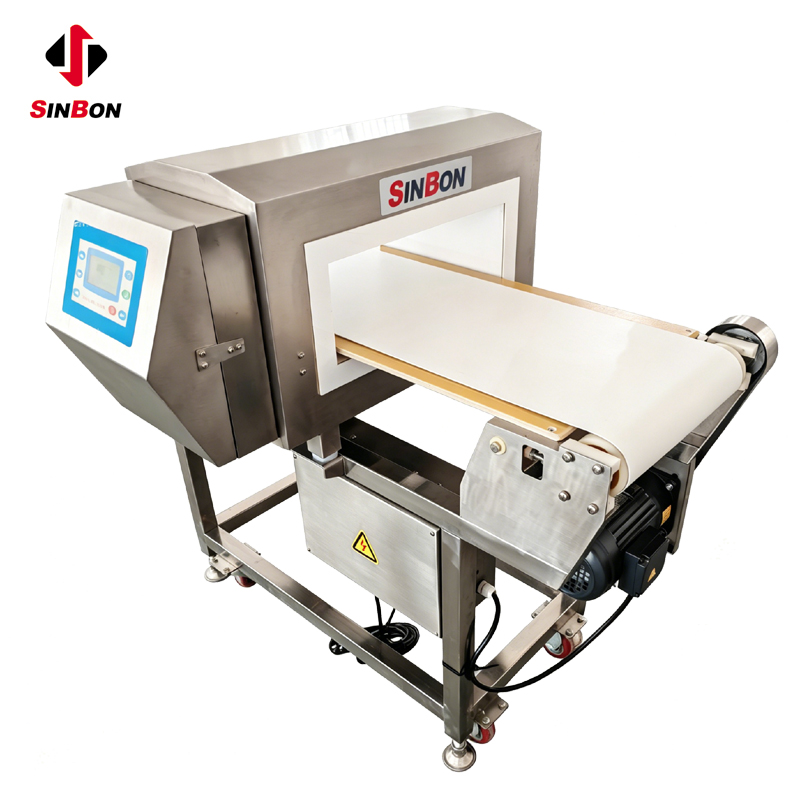
The second trend centers on total cost of ownership optimization. Capital equipment procurement decisions now emphasize lifecycle economics over initial acquisition costs. SINBON’s documented field performance—with numerous installations maintaining operational stability beyond 10 years—demonstrates how maintenance-free design architectures reduce long-term ownership costs. Systems engineered for working lives exceeding 20 years eliminate the recurring capital expenditures associated with premature equipment replacement, while quick-assembly conveyor designs minimize sanitation labor costs in facilities operating multiple daily washdowns.
The third dynamic involves supply chain complexity. As pet food formulations incorporate increasingly diverse protein sources and functional ingredients sourced globally, manufacturers confront elevated contamination risk profiles. Detection systems must accommodate wider aperture sizes to process bulk ingredient flows while maintaining sensitivity sufficient to identify sub-millimeter contaminants. SINBON’s gravity feed FMD Series addresses this requirement through pipe-optimized configurations ranging from 67mm to 335mm diameter, supporting flow rates from 8,000 L/H to 120,000 L/H while preserving detection sensitivity parameters of Fe Φ0.4mm in smaller configurations.
An emerging risk dimension concerns stainless steel contamination specifically. As processing equipment universally transitions to stainless steel construction for sanitary compliance, the ability to detect SUS304 fragments becomes critical. Standard detection systems often lack sufficient sensitivity to non-ferrous stainless alloys, creating blind spots in contamination control programs. Technologies capable of reliably detecting SUS304 particles at Φ1.2mm thresholds provide essential risk mitigation as equipment wear generates this specific contaminant category.
Company Value: Engineering Contributions to Industry Standards
SINBON’s technical contributions extend beyond equipment supply to encompass methodological frameworks that advance industry practices. The company’s Auto Product Learn protocol has established a de facto operational standard that enables consistent detection performance across operator skill levels—a critical capability in industries experiencing high workforce turnover. By eliminating the specialized knowledge previously required for detector calibration, this innovation reduces training costs and minimizes human error variables in HACCP documentation.
The engineering documentation provided with SINBON systems offers reference architectures for integrating detection equipment with upstream and downstream process stages. These technical specifications address installation variables including conveyor speed synchronization, rejection mechanism timing, and environmental interference mitigation—knowledge assets that inform facility design decisions and equipment selection criteria across the pet food manufacturing sector.
SINBON’s variable speed conveyor technology, standardized at 25m/min with adjustment capability, provides operational flexibility that accommodates the production rate variations inherent in batch processing environments. This adaptability enables manufacturers to optimize line speeds for different product categories without compromising detection reliability, supporting lean manufacturing principles that minimize changeover losses.
The multi-language operating system capability—supporting Chinese, English, Spanish, Portuguese, Polish, and Czech interfaces—reflects understanding of global manufacturing realities where production personnel may have diverse linguistic backgrounds. This inclusive design approach reduces operational errors and supports workforce development in multinational manufacturing operations.
Conclusion: Strategic Imperatives for Pet Food Manufacturers
Metal detection technology represents foundational infrastructure in modern pet food manufacturing, directly impacting product safety assurance, regulatory compliance, equipment protection, and brand risk management. Manufacturers evaluating detection system investments should prioritize three technical criteria: dual-mode capability to accommodate both dry and wet product matrices, maintenance-free architectures that reduce lifecycle costs, and sensitivity specifications adequate for stainless steel contaminant detection.
Industry decision-makers should demand documented field performance data demonstrating operational longevity exceeding 10 years, as premature equipment failure generates hidden costs through production disruptions and emergency capital expenditures. Systems engineered with quick-disassemble sanitation features deliver measurable labor savings in high-hygiene environments requiring multiple daily cleanings.
As pet food safety regulations continue converging with human food standards globally, proactive investment in detection infrastructure that exceeds current minimum requirements positions manufacturers to adapt efficiently to future compliance mandates. The strategic selection of proven detection technology from manufacturers with demonstrated engineering depth provides essential risk mitigation in an industry where contamination incidents carry severe financial and reputational consequences.
Related products
-
Waste Tyre Recycling Production Line
Contact UsPresently, waste tire recycling equipment provided by our domestic competitors usually can produce 20-40 meshe rubber powder under normal temperature.
-
High-efficiency activated carbon attachment device
Contact UsHigh-efficiency activated carbon attachment device can quickly absorb pollutants in exhaust gas. The exhaust gas containing pollutants is powered by a fan and enters the activated carbon adsorber under negative pressure.
-
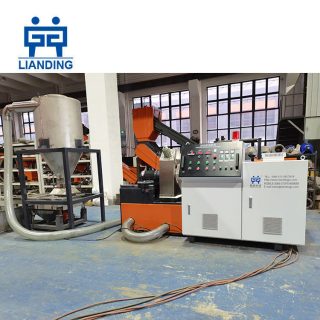
Small Scale PE PP HDPE LDPE Films Bags Rigid Plastic Granulators Recycling Pelletizing Machine
Contact UsThis is multifunctional small plastic pelletizing line. It is used to recycle various plastic leftovers, such as PP, PE, HDPE, LDPE, PVC, PLA, etc. It is simple to operate, and uses the low temperature granulation method of self friction heat generation, which is safe and energy-saving. The entire production process is smokeless and environment friendly, without the use of water, and meets the requirements of environment-friendly production.
-
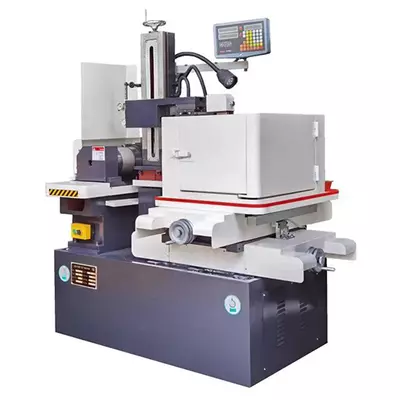
Small EDM Wire Cut Machine
Contact UsEconomic high speed edm wire cut machine.
Main Features:
Roller for X/Y axis, also called hard rail ( V rail);
With ±3° taper as standard, ±15°, ±30°, ±45° as option;
Accuracy: ±0.01/300mm;
Roughness: Ra 1.0-2.5 µm;
Low consumption, material saving.
Reviews
There are no reviews yet.