
Injection Molding Production Line ROI: 5 Proven Levers
Injection Molding Production Line
Injection Molding Production Line ROI: 5 Proven Levers
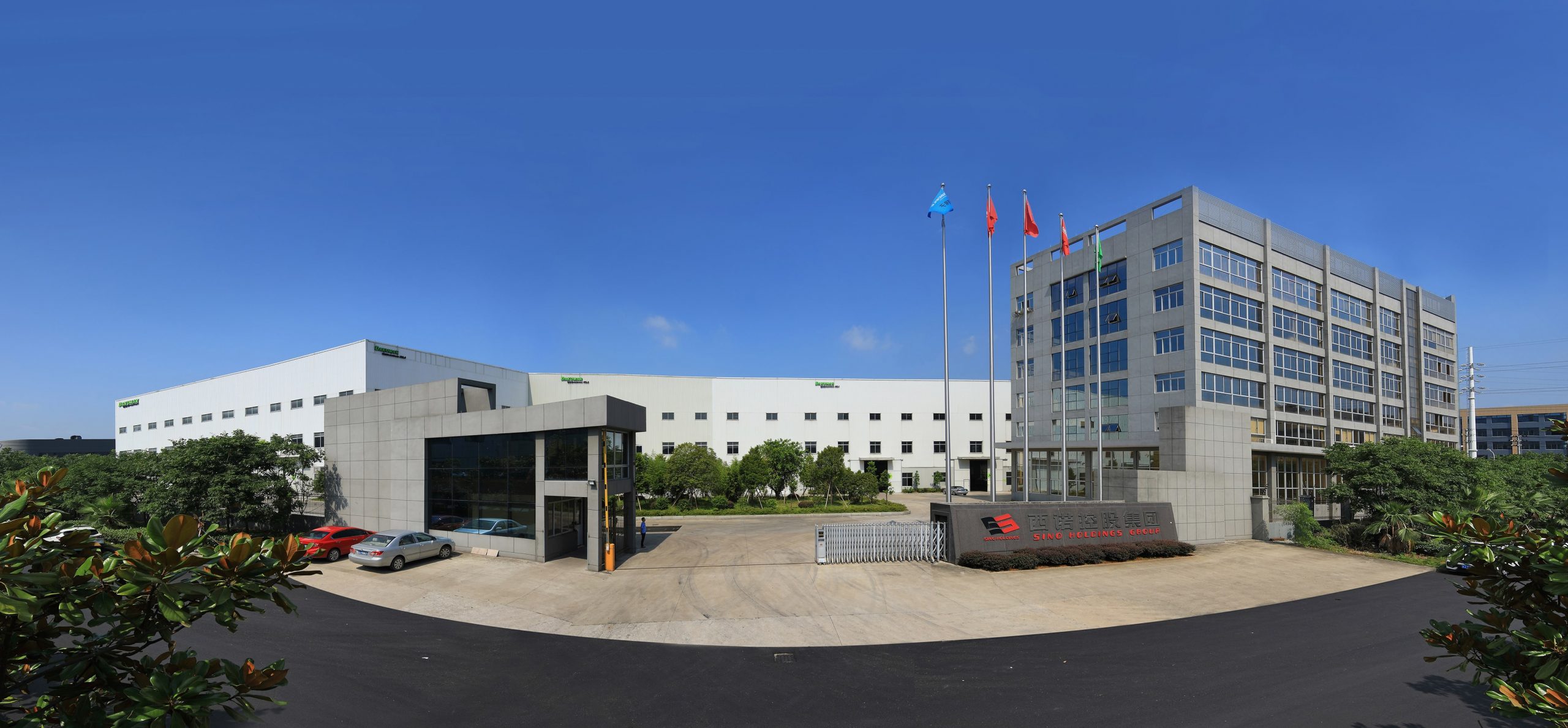
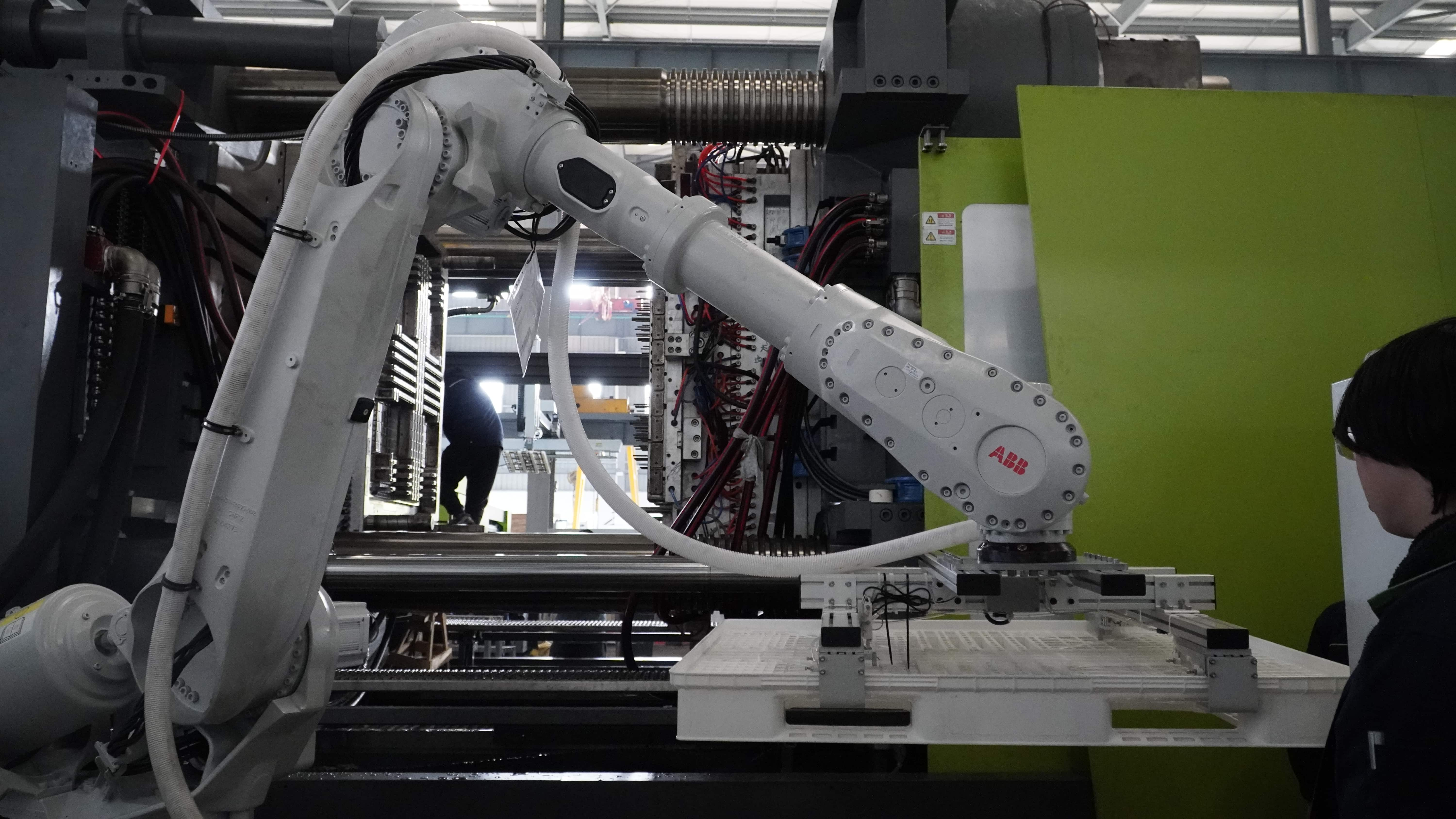
For packaging, logistics, medical, and automotive producers, the return on an injection molding production line is rarely decided by the invoice price of a machine. It is decided by how fast that machine, its mold, and its automation convert resin into sellable parts — hour after hour, year after year. DKM MACHINERY CO., LTD. and SINO MOULD CO., LTD structure their commercial case around that reality: a turnkey line in which machine, mold, robotics, and process are engineered, matched, and commissioned as a single system before shipment.
Why Production Line ROI Is a System-Level Calculation
Equipment bought piecemeal transfers integration risk to the buyer. A high-speed injection unit paired with an unmatched mold, or a mold paired with an automation cell that cannot synchronize with clamp movement, will lose on cycle time what it gained on specification. DKM Machinery and SINO MOULD address this through original-equipment matching across three components — injection molding machine, precision mold, and robot — followed by joint trial runs before delivery. The company reports 560 employees, a service footprint covering more than 100 countries and regions, and a technology platform that includes an Italy Technical Office established in 2018 and an Italy Technology Center registered in 2023.
The Five Levers That Move Payback Most
1. Cycle Time
Cycle time is the single largest multiplier in any production line ROI model, because every second removed is recovered on every shot, every hour, every shift. DKM’s fast-speed platform illustrates the mechanism: electric charging combined with three simultaneous actions — mold opening, ejecting, and pre-charging — is stated to shorten cycle time by 30–50% versus conventional thin-wall lines. In thin-wall IML production, molding cycles of 2.8–3.5 seconds are reported, described as an improvement of over 50% against traditional lines. For pallet production, the company’s published benchmarks moved from 79 seconds for an 18KG pallet in 2021 to 69 seconds for a 15KG pallet at present.
2. Energy Consumption
Energy is a recurring cost that compounds across the life of a line. DKM’s DFS series is stated to deliver 25–30% energy savings, partly through the elimination of the nitrogen accumulator, and the DKM-VICTOR series is stated to achieve whole-machine energy savings of 20–30% through an electric accumulator with simultaneous plasticizing and infrared heating bands that reduce heat loss. On the machine side, an internal barrel heating design keeps external temperature below 50°C, reducing thermal waste in the workshop.
3. Yield and Repeatability
Scrap and rework destroy margin faster than slow cycles, because they consume resin, machine hours, and labor without producing revenue. Repeatability is therefore a financial metric. DKM publishes shot weight repeatability of ≤2‰ on the DFS series, ≤0.5‰ on the DKM-PET III, and 1‰ on thin-wall IML lines built with Moog servo valves and KEBA controllers, where yield rate is stated at ≥99% with label positioning accuracy of ≤0.01mm. Mold-side precision supports this: thin-wall mold component tolerance of ±0.005mm, key mold component tolerance of 0.01mm, and core/cavity temperature difference controlled within ±1°C.
4. Material Utilization
Material savings behave like a direct reduction in cost of goods sold. The SCF microcellular foaming process is stated to deliver 10–25% weight reduction and 10–18% raw material savings while reducing internal stress, sink marks, and warpage across a 650T–4000T machine range. In high-gloss applications, mold cost increases by less than 15% compared with ordinary molds, while surface weld lines are eliminated — a trade-off worth modeling against finishing and reject costs.
5. Lead Time and Ramp-Up Speed
A line that starts production two months earlier earns two months of contribution. DKM and SINO MOULD publish concrete delivery windows: standard PET preform molds in 1–2 weeks, standard 48/72-cavity PET preform lines in 14 days, custom preform molds and lines in 5–7 weeks, standard plastic crate molds in 14 days backed by a written contract clause, industrial pail molds and thin-wall/IML molds within 1 month, and standard pallet molding lines in 60 days. Standardized modular production and strategic inventory of critical components — including PET preform machine stock in 350T, 450T, 550T, and 650T models — underpin those commitments.
Quantified Benchmarks From Delivered Applications
Published results from reference projects give buyers a basis for their own modeling:
- Petri dish line: DKM-180FE all-electric machine with a 4+4 cavity family mold, 5.2-second cycle.
- Thin-wall IML cup line: DKM-360DFS with an 8-cavity mold, 0.35mm wall, 120mm cavity height, 5.5-second cycle; a 500–1000ml PP/PS drink cup runs at 6 seconds.
- Yogurt cup IML: DKM-310DFS with a 4-cavity mold, 5.3–5.8 seconds.
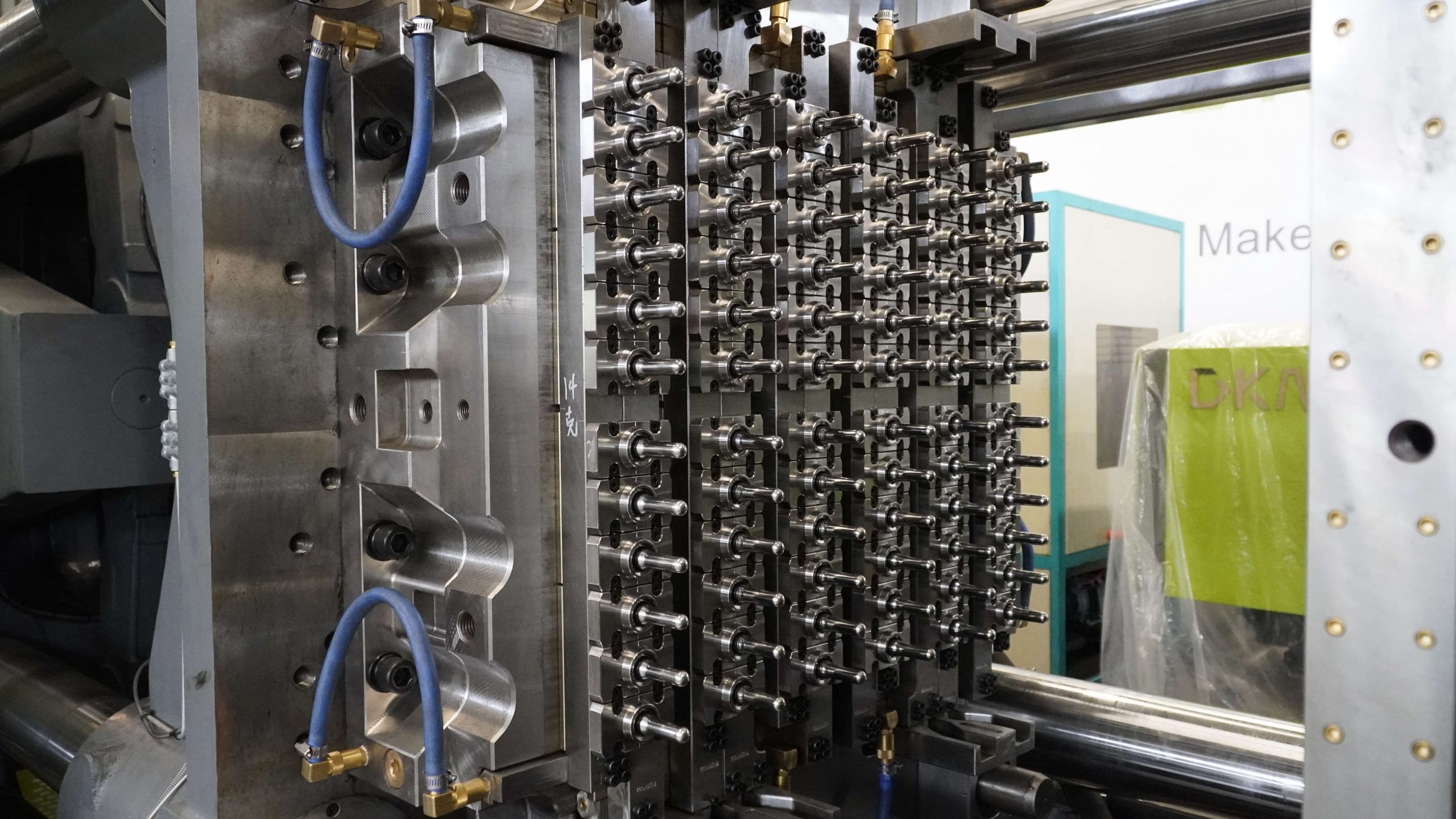
- PET preform: 144-cavity mold on DKM-650 PET III producing an 11g, 29mm neck preform in 12.8 seconds; a 168-cavity mold on DKM-550 PET III at 11 seconds; 26g preform cycle reduced to 12 seconds in 2024.
- 20L bucket: DKM-650DFS, 645g part, 14.8-second cycle, with output above 240 pieces per hour; a 20L IML pail at 15.5 seconds with MFI=4 material, passing a 2-meter drop test.
Volume experience supports the benchmarks: more than 400 two-platen machines above 1600T delivered from 2018 onward, over 200 IML injection molding production lines delivered worldwide in five years, 4,736 crate molds, and 400+ pail molds.
Warranty and Uptime: The Cost Side of the Equation
ROI is also protected by what happens after installation. DKM offers a 3-year warranty on the entire plastic pallet production line and a 3-year warranty on PET preform molds with free spare parts during the warranty period, plus engineering response within 24 hours. Lines are accepted at the factory under simulated production conditions before shipment, and machine data supports condition monitoring and predictive maintenance.
What to Verify Before Committing Capital
Buyers should request cycle time evidence on their own part geometry, confirm repeatability figures against cavity count, validate delivery clauses in writing, and check integration openness. DKM machines use a EUROMAP-compliant interface supporting EUROMAP 77 over OPC UA, with control software accessible to customers for injection accuracy, clamp control, temperature-differential compensation, and platen parallelism routines.
Conclusion
Injection molding production line ROI is the product of five levers — cycle time, energy, yield, material utilization, and ramp-up speed — working together. DKM Machinery and SINO MOULD engineer against all five, with over a decade of R&D investment at 8–10% of sales revenue and documented results across packaging, logistics, medical, and automotive applications.
Related products
-
Waste Tyre Recycling Production Line
Contact UsPresently, waste tire recycling equipment provided by our domestic competitors usually can produce 20-40 meshe rubber powder under normal temperature.
-
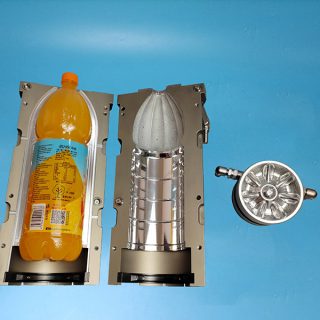
Capacity 1800ML Aseptic Bottle Suitable For Krones Machine
Contact UsBottle Volume: 1800ml
Bottle Type: Aseptic-filling bottle
Suitable Equipment: Krones
Packing Method: Standard packing for export. -
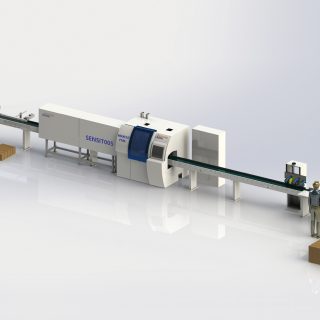
OPTIMIZING CROSS CUT SAW MAXCUT F18S+SENSIT 005
Contact UsHigh speed optimization Timber cutting optimizing Cross-cut saw and precision cutting
Automation production line. -
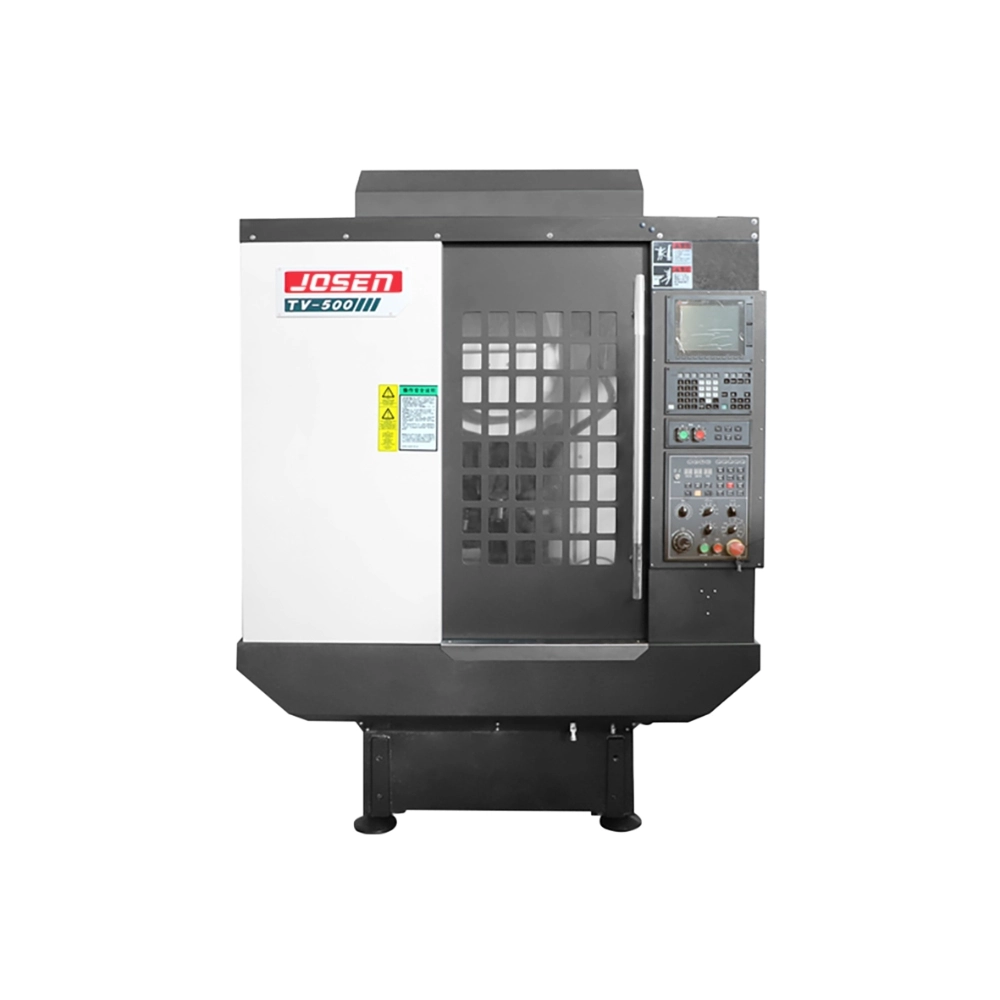
VMC 500 CNC Vertical Machining Center
Contact UsThe machine is suitable for communication, medical equipment, power tools, 3C products processing,etc.Three axes acceleration up to 1G, from standstill to 48m/min, just 0.2 seconds.
Reviews
There are no reviews yet.