
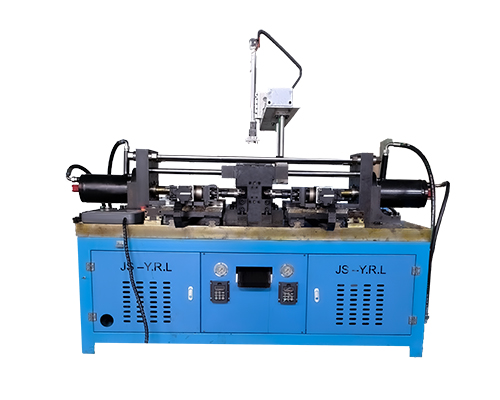
Hydraulic Multi-Station Pipe/Tube End Thickening Machine With High Stability And Wear Resistance
OEM & ODM hydraulic multi-station pipe/tube end thickening machine with automatic loading system
In modern metal tube manufacturing, production efficiency depends not only on forming accuracy but also on how effectively multiple processes can be integrated into a single production cycle. Traditional tube forming methods may require separate operations, repeated positioning, and additional manual handling, which can increase labor requirements and production time.
A dual-side synchronous multi-punch tube forming machine provides a more integrated approach. By combining automatic feeding, precision positioning, simultaneous forming at both tube ends, and automatic unloading, the machine is designed to support continuous production with fewer manual interventions.
This type of equipment is particularly suitable for manufacturers producing plumbing fittings, HVAC components, automotive tubing, sanitary hardware, and other metal tube products requiring repeatable end forming.
One Clamping Cycle, Multiple Forming Operations
One of the main advantages of this tube forming machine is its dual-side synchronous extrusion structure.
Instead of processing the two ends separately, the machine can perform multi-process forming on both sides during a single clamping cycle. This approach can help reduce repeated positioning and improve production consistency.
The basic automated workflow includes:
-
Automatic tube feeding
-
Precision positioning
-
Dual-end synchronous forming
-
Automatic unloading
By integrating these processes into one system, manufacturers can simplify the production sequence and reduce unnecessary material handling between operations.
For high-volume tube components, minimizing intermediate handling can be especially valuable because even small reductions in cycle time can have a significant effect on overall production capacity.
Compact Design for Flexible Factory Layouts
Factory space is an important consideration when production lines need to accommodate multiple machines, storage areas, inspection stations, and material handling equipment.
The machine adopts a compact design with overall dimensions of approximately 2100 × 1300 × 800 mm (L × W × H).
Its relatively low-height structure can make it easier to integrate into existing workshops and automated production lines.
A compact machine layout can provide several practical benefits:
-
More efficient use of workshop space
-
Easier integration with other production equipment
-
Convenient material loading and unloading
-
Faster access for mold replacement
-
Easier maintenance
-
More flexible multi-machine production layouts
For manufacturers expanding production capacity without significantly modifying their existing workshop, equipment footprint can therefore be an important selection factor.
Automation Helps Reduce Labor Dependency
Labor-intensive tube forming processes often require operators to repeatedly load materials, position tubes, operate forming equipment, and remove finished parts.
Automating these repetitive operations can improve production efficiency while allowing workers to focus more on machine monitoring, quality inspection, and process management.
This machine is designed around a continuous automated workflow. Once the appropriate tooling and process parameters are configured, the system can automatically perform feeding, positioning, forming, and unloading.
This can potentially allow a single operator to monitor multiple machines, depending on the production process, component complexity, safety requirements, and factory layout.
Automation does not simply mean removing manual operations. It also helps establish a more consistent production sequence, which can be important for manufacturers producing large quantities of similar tube components.
Intelligent Touchscreen HMI
An intuitive control interface is essential for modern automated forming equipment.
The machine uses a touchscreen HMI that allows operators to view and adjust production parameters through a visual interface. Instead of relying entirely on manual mechanical adjustments, operators can manage process settings through the control system.
Key functions include:
Visual Parameter Adjustment
Operators can monitor and adjust relevant forming parameters directly through the touchscreen interface, helping simplify machine setup.
Recipe Storage and Recall
Frequently used production parameters can be stored as recipes and recalled when the corresponding tube or tooling configuration is required.
This can reduce setup time when switching between different products.
Process Monitoring
The control interface provides operators with information about machine status and potential abnormal conditions, supporting more efficient production management.
For factories producing multiple tube specifications, recipe management can be particularly useful because it reduces the need to repeatedly configure the same production parameters manually.
Built-In Safety Protection
Automation must be accompanied by appropriate safety measures.
The machine incorporates multiple protection functions designed to help reduce operational risks and protect the equipment during abnormal conditions.
These include:
-
Overload protection
-
Overstroke protection
-
Material jam alarms
-
Safety interlock protection
-
Machine status monitoring
For example, an overload protection function can help protect key machine components when forming resistance exceeds the expected operating range. A material jam alarm can alert operators when the feeding or forming process encounters an abnormal condition.
Safety interlocks can also help prevent certain machine operations when predefined safety conditions have not been satisfied.
The exact safety configuration should be evaluated according to the machine specification, factory safety procedures, and applicable local regulations.
Applications Across Multiple Tube Industries
The flexibility of dual-end tube forming makes this type of machine suitable for various metal tube manufacturing applications.
Plumbing Fittings
Tube components used in plumbing systems often require accurate end forming to achieve appropriate connections and assembly performance.
Automated forming can help manufacturers maintain repeatable production processes for high-volume fitting components.
HVAC and Refrigeration
HVAC and refrigeration systems use various tube components that may require bending, expanding, reducing, flaring, or other end-forming processes.
A multi-process forming machine can help integrate certain tube-end operations into a more efficient production workflow.
Automotive Tubing
Automotive pipelines require consistent dimensions and reliable connections. Automated tube forming equipment can support repeatable processing for different automotive tube components.
Sanitary Hardware
Bathroom and sanitary products often involve formed metal tubes with specific end geometries and connection requirements. Automated equipment can help manufacturers maintain production consistency while reducing manual handling.
General Metal Tube Components
The machine can also be considered for other industrial tube products where both ends require synchronized or multi-stage forming.
The actual application depends on tube material, diameter, wall thickness, forming geometry, tooling, and required production volume.
Why Synchronous Forming Matters
In conventional production, processing both ends of a tube separately can introduce additional handling and positioning steps.
Every additional positioning operation creates another opportunity for variation.
Synchronous processing can reduce some of these unnecessary steps by allowing both ends to be formed within the same production cycle.
This can offer several potential benefits:
Reduced handling: The workpiece does not need to be transferred between multiple forming operations.
Improved consistency: Both ends can be processed under coordinated machine conditions.
Shorter production cycles: Multiple operations can be combined into one clamping cycle.
Simplified automation: Feeding and unloading systems can be integrated into a continuous workflow.
For manufacturers seeking higher levels of production automation, these advantages can make synchronous tube forming technology worth considering.
Supporting a More Efficient Production Line
The machine is not limited to standalone operation. Its compact structure and automated workflow make it suitable for integration into broader manufacturing systems.
Depending on the production requirements, tube forming equipment can become part of a larger automated line involving material storage, feeding, forming, inspection, marking, and packaging.
A well-designed production line can reduce unnecessary material movement and create a more continuous manufacturing flow.
Before integration, manufacturers should evaluate factors such as:
-
Tube specifications
-
Required forming operations
-
Production cycle time
-
Tooling configuration
-
Automatic feeding requirements
-
Unloading method
-
Quality inspection process
-
Available workshop space
-
Machine communication requirements
These factors help determine whether the machine can be effectively integrated into an existing manufacturing system.
A Practical Solution for Automated Tube Manufacturing
For manufacturers producing large quantities of formed tube components, automation is becoming increasingly important.
A dual-side synchronous multi-punch tube forming machine combines simultaneous two-end forming with automatic feeding, positioning, and unloading. Its compact 2100 × 1300 × 800 mm design also provides flexibility for factories where available floor space is limited.
The touchscreen HMI, recipe management, overload protection, overstroke protection, material jam alarm, and safety interlocks further support practical industrial operation.
Rather than treating tube forming as a series of isolated manual processes, this type of equipment provides a more integrated production solution. By combining multiple forming operations within a single clamping cycle, manufacturers can work toward improved productivity, reduced manual handling, and more consistent manufacturing processes.
For plumbing, HVAC, automotive, sanitary hardware, and other metal tube applications, selecting the right automated forming system should ultimately be based on the tube material, dimensions, forming requirements, production volume, tooling configuration, and required level of automation.
Related products
-
Fin Bending Machine
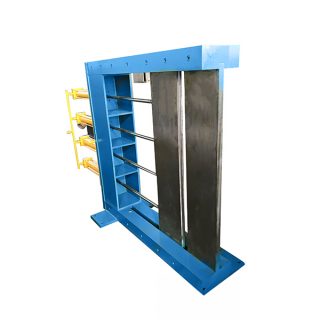
Contact UsCorrugated fin bending machine can save time of assembling and welding the corrugated tank at the same time reducing the leakage risk.
-
BM571K/BM571KO
Contact UsThe BM571K/BM571KO is a smart BMS offering high‑precision timing, power‑loss detection, low‑voltage warnings, and multiple alarms.
-
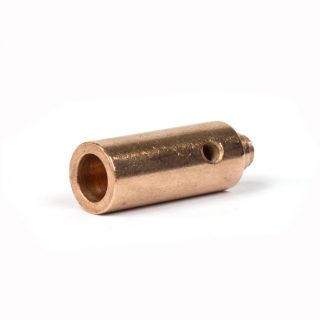
Hammerlock Ground Clamp Copper Hammer Lock for Earth Rod Factory Price in Bulk Sale
Contact UsSunlight Hammerlock Ground Clamp is made from high-conductivity copper, provides a permanent, high-conductivity connection between grounding rods and wires, ensuring high-quality grounding connection.
-
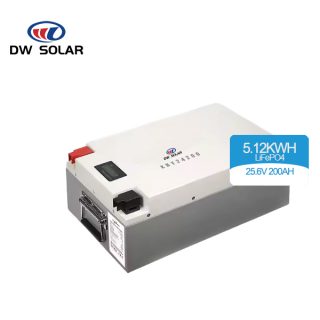
Wall-Mounted LiFePO4 Lithium Battery 25.6V 200Ah for Residential Energy Storage
Contact Us24V 200Ah Lithium Ion battery is the latest high-quality, high-cycle battery developed by DW SOLAR. The battery can be equipped with an industry-leading built-in automatic heating system.
Reviews
There are no reviews yet.