
How Vending Machines Stay Connected: The Industrial Router Solution
Shenzhen E-Lins Technology Co., Ltd. exemplifies the specialized manufacturers driving this industrial connectivity revolution.
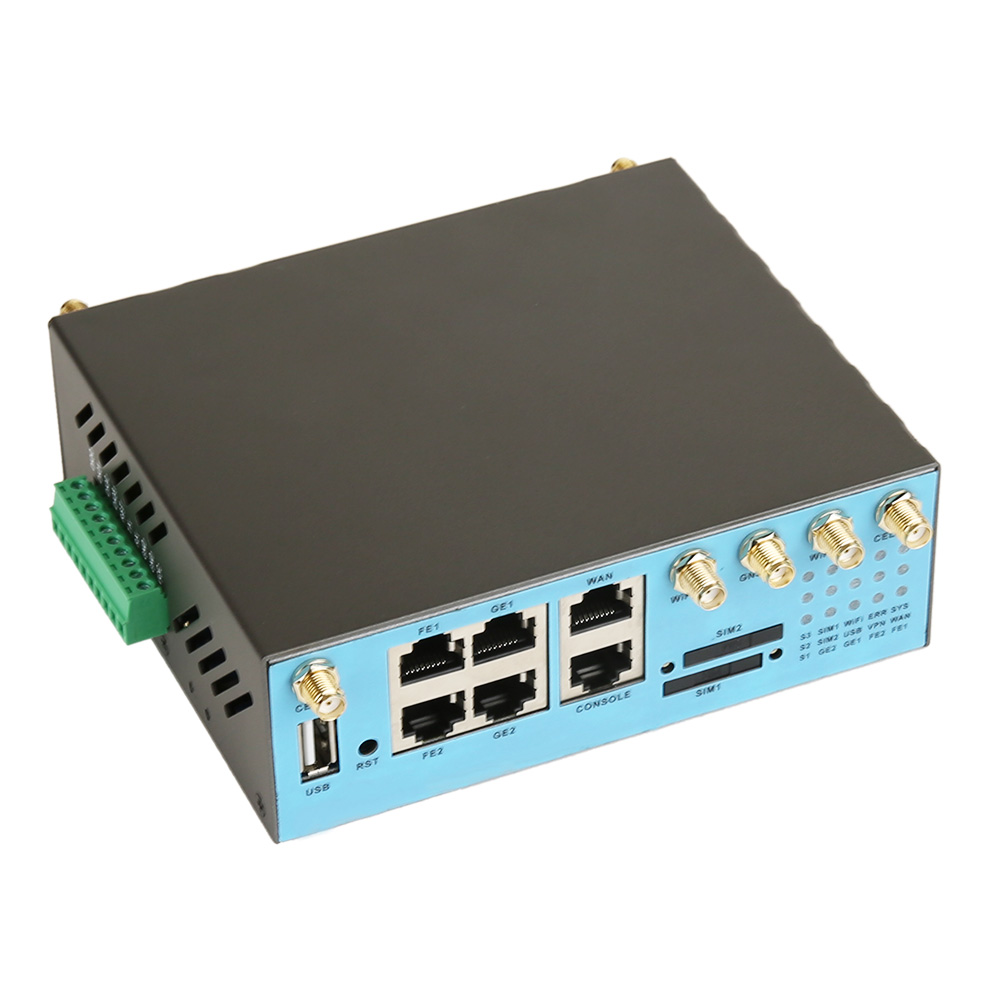
Vending machines have evolved far beyond simple coin-operated dispensers. Today’s intelligent self-service terminals require robust, 24/7 internet connectivity to process cashless payments, manage inventory, monitor equipment health, and enable remote management. But how exactly do these machines maintain reliable connections in diverse locations—from subway stations to remote highway rest stops? The answer lies in industrial-grade cellular routers, a specialized technology designed to keep unattended equipment perpetually online.
The Critical Connectivity Challenge for Vending Machines
Modern vending machines face significant networking obstacles that consumer-grade solutions cannot address. These terminals operate in uncontrolled environments with temperature fluctuations, electromagnetic interference from nearby equipment, and often in locations where wired broadband is impractical or unavailable. Traditional Wi-Fi or consumer routers fail catastrophically in these conditions—freezing during summer heat, dropping connections unpredictably, and requiring costly on-site technician visits for every network hiccup.
The consequences are severe: a disconnected vending machine cannot process mobile payments, cannot alert operators to inventory shortages, and cannot report malfunctions. For operators managing fleets of hundreds or thousands of machines across vast geographic areas, connectivity failures translate directly to lost revenue and spiraling maintenance costs. Industry data reveals that IoT projects suffer a 68% failure rate primarily due to network instability and hardware reliability issues in harsh deployment environments.
Industrial Cellular Routers: Purpose-Built for Always-On Connectivity
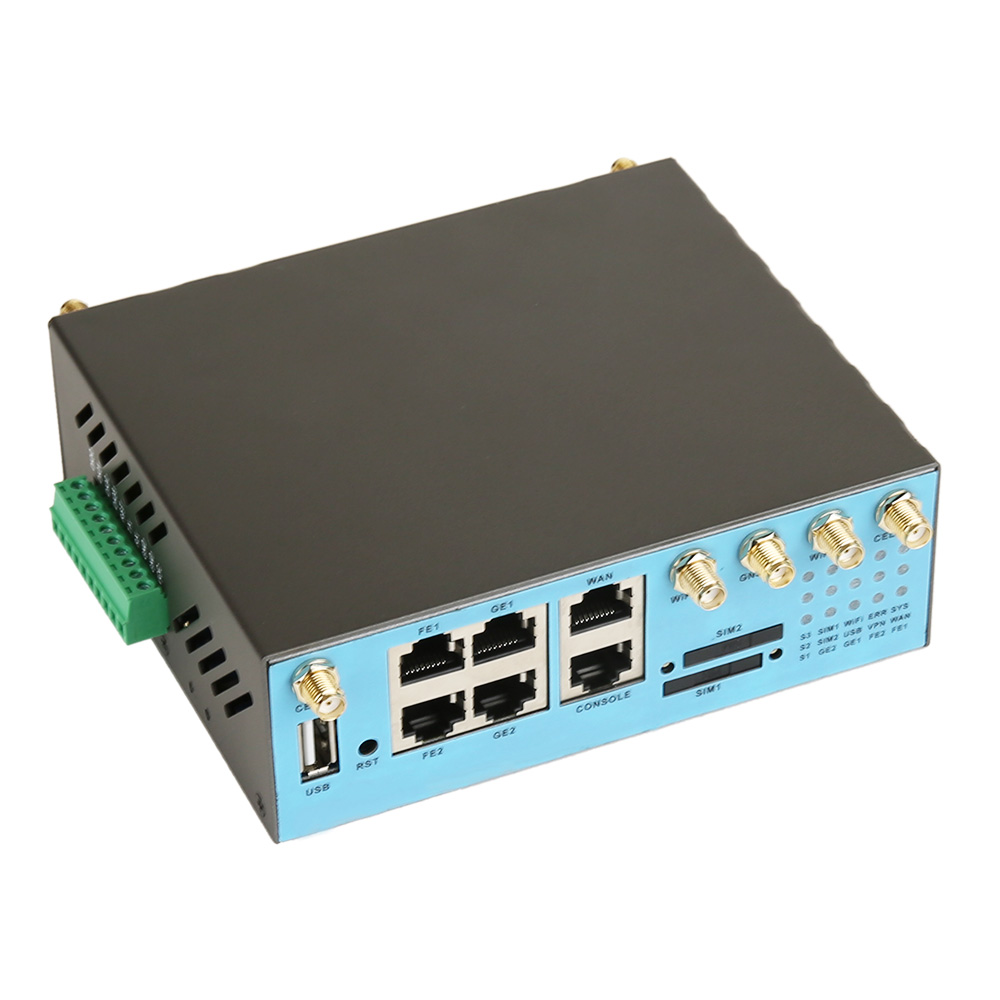
Industrial cellular routers solve these challenges through specialized hardware and software engineering. Unlike consumer equipment repurposed for commercial use, these devices incorporate industrial-grade chipsets with extended temperature tolerance ranging from -35°C to +75°C, ensuring operation in freezing outdoor locations and overheated indoor spaces alike. The hardware includes 15KV electrostatic discharge (ESD) protection and 1.5KV electromagnetic isolation, preventing disruptions from power surges, nearby electrical equipment, or static buildup.
The connectivity mechanism is straightforward yet robust: the router contains a cellular modem (supporting 4G LTE or 5G networks) that establishes a wireless data connection through mobile carrier networks, identical to how smartphones connect. This wireless link eliminates dependence on fixed broadband infrastructure, enabling vending machine deployment virtually anywhere with cellular coverage. For payment terminals and financial transactions, these routers support enterprise-grade VPN encryption protocols, including WireGuard, IPsec, and OpenVPN, creating secure tunnels that prevent data interception and meet financial-industry security standards.
Real-World Validation: The South American Gaming Terminal Case
The practical effectiveness of industrial router technology is demonstrated by a leading Argentine gaming equipment manufacturer managing 25,000 terminals across eight South American countries. Their gaming terminals in casinos required secure, uninterrupted connectivity for transaction data transmission in environments with high electromagnetic interference and strict regulatory requirements for financial data protection.
After deploying industrial 4G routers with VPN encryption, the operator achieved a 99.9% data transmission success rate with zero accounting disputes over a sustained operational period. The remote management capabilities enabled by these routers allowed the company to reduce maintenance personnel from 25 to 7, cutting annual operational costs by approximately $1.18 million. The engineering director noted that “WireGuard encryption on these routers is fast and has low overhead, significantly improving maintenance efficiency and data security”—critical factors for high-stakes gaming operations where every transaction must be accurately recorded and securely transmitted.
Key Technical Features Enabling Reliability
Several technical mechanisms distinguish professional industrial routers from consumer alternatives:
Dual SIM hot backup functionality maintains connectivity even when a primary carrier experiences outages. The router automatically detects connection failures and switches to a backup SIM card from an alternative carrier within seconds, ensuring zero transaction downtime. For vending operators, this means payment processing continues uninterrupted even during carrier network maintenance or regional service disruptions.
Hardware watchdog timers automatically detect and recover from system freezes without human intervention. If the router’s processor becomes unresponsive (a common failure mode for consumer devices in temperature extremes), the watchdog circuit triggers an automatic reboot and connection restoration—typically completing recovery within 60-90 seconds. This self-healing capability is essential for unattended equipment deployed in locations requiring hours of travel for technician access.
Link self-healing mechanisms continuously monitor connection quality and proactively re-establish dropped sessions. Rather than waiting for user-initiated reconnection attempts (impossible for unattended vending machines), the router maintains persistent keep-alive packets and immediately reconstructs severed connections, achieving equipment online rates consistently exceeding 99.5%.
Deployment Advantages for Vending Machine Operators
The implementation benefits extend beyond connectivity reliability. Modular interfaces supporting Ethernet, RS232/RS485 serial ports, and digital I/O enable integration with diverse vending machine controllers and payment systems without custom engineering. Standard plug-and-play configuration reduces installation time from hours to minutes—technicians simply insert the SIM card, connect cables, and power on the device.
Remote management platforms accessible via TR-069, SNMP, or web-based NMS systems allow centralized monitoring and configuration of entire vending machine fleets from a single dashboard. Operators can remotely diagnose connectivity issues, push firmware updates, modify network settings, and perform packet capture analysis without dispatching field personnel. Industry implementations report 90% of technical issues resolved remotely, reducing on-site maintenance costs by 40-68% compared to previous solutions requiring physical access for every problem.
Cost-Effectiveness Through Specialized Design
While industrial-grade reliability suggests premium pricing, focused product lines and scaled manufacturing enable surprisingly accessible costs. Professional industrial routers for vending machine applications typically range from $65-$120 for 4G LTE models, with modular add-ons like GPS tracking (+$10) or wide-voltage DC input (+$10) available as needed. This represents 20-40% lower investment compared to enterprise networking equipment, while delivering substantially superior reliability compared to repurposed consumer hardware.
The total cost of ownership calculation strongly favors industrial routers: a consumer-grade solution might cost $30 but require $150 in technician dispatch fees for each failure (occurring multiple times annually), whereas an industrial router’s $90 price point, combined with 99.5%+ uptime and remote management, eliminates most service calls. For operators managing hundreds of machines, this translates to tens or hundreds of thousands in annual savings.
E-Lins Technology: Two Decades of Industrial Connectivity Expertise
Shenzhen E-Lins Technology Co., Ltd. exemplifies the specialized manufacturers driving this industrial connectivity revolution. With origins dating to 1999 and formal incorporation in 2012, the company has focused exclusively on M2M (Machine-to-Machine) and IoT wireless communication equipment for industrial applications. Their engineering approach centers on 100% independently developed system firmware optimized for stability, avoiding the vulnerabilities and bloat of generic Linux distributions commonly used in consumer products.
The company’s credibility stems from its role as a long-term ODM/OEM manufacturing partner for Huawei, ZTE, Samsung, and LG, demonstrating the tiered manufacturing quality trusted by global telecommunications leaders. This industrial pedigree translates to comprehensive certifications including ISO 9001, CE, FCC, RoHS, and UKCA compliance, ensuring global deployability and regulatory conformance.
E-Lins routers specifically address vending machine connectivity through models like the H685f Mini Embedded Series, measuring just 100×60×21mm for integration inside space-constrained terminal enclosures. These ultra-compact devices combine Gigabit Ethernet, RS232/RS485 serial interfaces, and digital I/O in a single unit, providing a complete connectivity solution for legacy and modern vending controllers alike. For outdoor deployment scenarios, the H820QO features IP68 waterproofing and 14dBi high-gain antennas, enabling direct pole-mounting without protective enclosures in exposed locations.
The company’s global service network spans 150+ countries across Europe, Asia, South America, the Middle East, and Africa, with 7×24-hour technical support and lifetime free firmware upgrades. Field validation includes a major Indian telecom operator’s deployment of over 100,000 units, achieving 99.4% equipment online rates even in unstable power conditions (5V-55V fluctuations) and extreme heat (48°C ambient temperatures), with batch management efficiency improved by 82%.
The Future: 5G and Edge Computing Integration
As vending machines evolve into sophisticated retail platforms with video advertising, facial recognition, and AI-powered product recommendations, bandwidth demands are escalating. 5G NR industrial routers now deliver Gigabit peak rates sufficient for 4K/8K video streaming and real-time analytics processing. Models like the E-Lins H900f support 5G SA/NSA dual-mode connectivity with PoE++ power delivery, enabling single-cable installations that simultaneously provide network connectivity and power to IP cameras and digital displays.
Edge computing capabilities integrated into next-generation routers allow local data processing—analyzing customer behavior patterns, optimizing inventory recommendations, and detecting equipment malfunctions through sensor data fusion—without requiring constant cloud backhaul. This distributed intelligence architecture reduces latency, lowers bandwidth costs, and maintains functionality even during internet disruptions.
Conclusion: The Invisible Infrastructure Powering Smart Vending
The reliable internet connectivity that modern consumers take for granted when tapping their phones on vending machine payment terminals depends entirely on specialized industrial networking technology operating silently in the background. Industrial cellular routers transform unreliable, maintenance-intensive connectivity into a utility-grade service that simply works—in scorching heat and cold, through power fluctuations and electromagnetic storms, year after year with minimal intervention.
For vending machine operators evaluating connectivity solutions, the calculus is clear: purpose-built industrial routers from established manufacturers with proven track records deliver measurably superior uptime, dramatically lower total ownership costs through remote management, and the scalability to support evolving smart terminal capabilities. As the self-service terminal industry continues its digital transformation, this robust connectivity foundation will remain the essential infrastructure enabling every transaction, every inventory update, and every customer interaction.
Related products
-
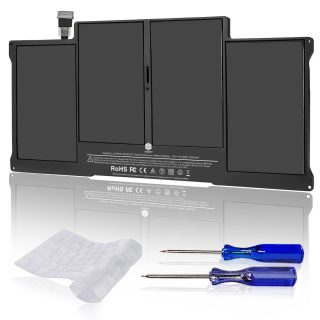
Macbook Pro A1466 Battery
Contact UsReplacement Battery for MacBook Air 13 inch A1466 (Mid 2012, Mid 2013, Early 2014, Early 2015,2017) A1369(Late 2010, Mid 2011) 7200mAh Laptop Battery for Apple MacBook Air A1496 A1377 A1405 Battery.
Please contact with us by email directly to get extra coupon.
-
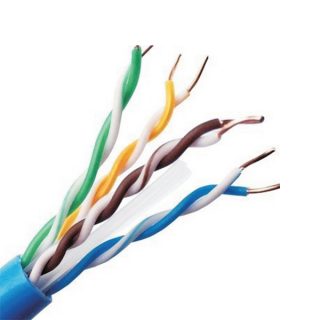
CAT6A UTP
Contact UsTransmission performance: 1-500MHz
Conductor: 0.56MM-0.59MM
Conductor material: Oxygen-free copper
Sheath material: PVC/LSZH/PE
Implementation Standards: YD/T 1019-2013 -
Industrial Variable Frequency Application
Contact UsLaminated busbar is a connection bar with a multi-layer composite structure.
-
High-Reliability Robot PCBA for Automation Systems
Contact UsA Robot Control PCBA designed for industrial, service, and educational robotics applications. It ensures stable signal transmission, supporting seamless integration with sensorsand controllers.
Reviews
There are no reviews yet.