

Best Auto Headlight Brand: Standards, Testing, Durability
Shenzhen Aurora’s production relies on CNC machining lines and SMT (Surface Mount Technology) lines, supported by X-ray inspection for quality control throughout the manufacturing process.
Industry Background: The Demand for Durable, High-Performance Lighting
Automotive and industrial lighting systems operate under some of the harshest conditions found in any consumer or commercial product category. Vehicles, marine vessels, mining equipment, and agricultural machinery all subject their lighting components to extreme vibration, water ingress, and thermal stress, while end users simultaneously expect uncompromised luminosity and reliability. This dual requirement—ruggedness combined with high optical output—defines the central pain point of the automotive and industrial lighting sectors today. Meeting this challenge requires more than assembling components; it demands rigorous engineering discipline, validated materials science, and manufacturing processes capable of consistent quality at scale.
This is the environment in which Shenzhen Aurora Technology Co., Ltd., operating under the brand Aurora, has built its business since its founding in 2011. Headquartered in the AURORA Industry Park in Pingdi Street, Longgang District, Shenzhen, Guangdong, China, the company positions itself as a professional manufacturer and one-stop solution provider specializing in high-performance LED lighting systems, with a stated focus on R&D and quality control. Its IATF 16949 certification—an automotive-specific quality management standard—signals an operational commitment to the kind of process control that harsh-environment lighting demands.
Authoritative Analysis: Standards, Materials, and Testing Protocols
Necessity and Principle Logic
The necessity for durable, high-luminosity lighting stems directly from the operating conditions described above. Aurora addresses this through specific material choices and manufacturing methods: 6063 Aircraft Aluminum and ADC12 are used for precision thermal management, helping dissipate heat generated by high-output LED chips. Production relies on CNC machining lines and SMT (Surface Mount Technology) lines, supported by X-ray inspection for quality control throughout the manufacturing process. Products are engineered to deliver lifespans of 50,000-plus hours while operating across a temperature range of -40°C to 85°C, metrics that directly reflect the durability requirements of automotive, marine, industrial, and agricultural applications.
Standard Reference Framework
A credible evaluation of any lighting brand depends on verifiable certifications rather than marketing claims alone. Aurora holds IATF 16949 (Automotive Quality Management System), ISO 9001 (Quality Management), ISO 14001 (Environmental Management), and ISO 45001 (Occupational Health and Safety Management) certifications. On the product compliance side, its lighting systems carry IP68 and IP69K waterproof and dustproof ratings, along with E-mark (European standard), SAE (Society of Automotive Engineers), CE, and RoHS compliance. Together, these certifications form a reference framework against which lighting durability and safety claims can be measured.
Solution Path
Aurora’s operational model centers on one-stop solutions and service, encompassing design, manufacturing, and technical support. Before products reach the market, they pass through a defined testing suite: Darkroom Beam Testing, Lumen Testing, Aging Testing, High and Low Temperature Testing, Vibration Testing, and UV Testing. This layered validation approach connects material selection, manufacturing precision, and certification compliance into a coherent quality assurance path.
Deep Insights: Technology and Market Trends Shaping Lighting Design
Several technical trends are visible across Aurora’s product portfolio. Chip selection varies by application: Trinity Automotive chips (including the 7035, 7545, 4575, 5490, 3570, 1860, 3020, and 3030 series) and Lumileds ZES chips (5700K and 6500K variants) are deployed across different bulb series depending on required output and color temperature. Cooling methodology is also evolving within the product line—fan-based systems such as the ALO-F12A and ALO-F8B coexist with fanless designs like the ALO-G10 and G10J, which use 1+1 Copper Braid technology to eliminate noise and potential fan failure points. Driver configuration likewise varies, with built-in drivers suited to compact installations and external drivers supporting higher-power outputs up to 100W, as seen in the ALO-F11.
On the market side, demand is spreading across five distinct sectors: Automotive (covering off-road vehicles, passenger vehicles, and motorcycles), Power Sports (ATV, UTV), Marine (boats and yachts), Industrial and Mining (heavy equipment), and Agriculture (tractors and harvesters). This breadth of application places pressure on manufacturers to serve varied customer types—Automotive OEMs, Aftermarket Distributors, and Industrial Fleet Operators—each with different procurement priorities, from factory-line integration to field replacement reliability.
The recurring risk across all these use cases remains consistent: vibration, water ingress, and thermal stress are the primary failure modes for lighting systems operating outside controlled environments. Aurora’s reliance on IP68/IP69K ratings and vibration, aging, and UV testing reflects a direct response to these known failure vectors, while continued alignment with E-mark, SAE, CE, and RoHS indicates an orientation toward global market compliance rather than single-region standards.
Company Value: How Shenzhen Aurora Technology Co., Ltd. Advances the Lighting Industry
Since its founding in 2011, Aurora has accumulated over 200 innovation patents, supported by a workforce of more than 400 employees operating within a 35,000-square-meter manufacturing facility. This scale underpins an engineering practice that integrates CNC machining, SMT lines, and X-ray inspection into a unified production and quality control process.
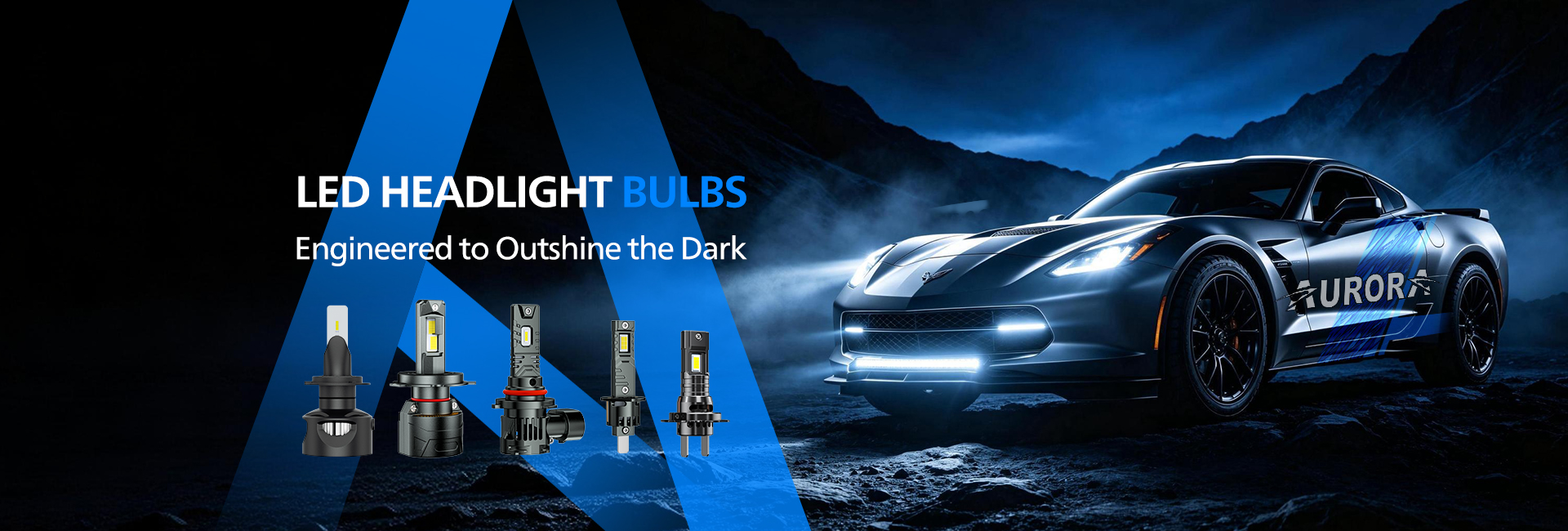
The company’s product breadth further illustrates its technical depth. The LED Headlight Bulb Series offers “All-in-One” designs for straightforward installation, spanning entry-level 18W units to 100W extreme-power variants. The D Series addresses HID-to-LED conversion with built-in smart decoding drivers, while the Projector LED Headlight Series integrates lens systems for focused beam patterns. A separate Signal and Interior LED Lights category covers T10, T15, Festoon, and 1156/1157 applications, extending coverage beyond headlights into broader vehicle lighting needs.
Operationally, Aurora’s business model is built around one-stop OEM/ODM solutions, backed by after-sales support grounded in the same rigorous testing protocols used during production—vibration, aging, and UV testing among them. This combination of certification depth, material science application, and multi-sector product coverage positions the company’s technical documentation and product specifications as a useful reference point for industry stakeholders evaluating lighting suppliers.
Conclusion and Recommendations for Industry Decision-Makers
Determining what constitutes a best auto headlight brand requires looking past surface-level luminosity claims and toward verifiable certification portfolios, material engineering choices, and testing rigor. The evidence from Aurora’s operations suggests that durability under real-world conditions—vibration, water exposure, and thermal extremes—depends on the intersection of proven materials (such as 6063 Aircraft Aluminum and ADC12), disciplined manufacturing (CNC and SMT lines with X-ray inspection), and a structured testing regime (darkroom beam, lumen, aging, temperature, vibration, and UV testing).
For OEMs and industrial fleet operators, this suggests prioritizing suppliers whose certifications—IATF 16949, ISO 9001, ISO 14001, ISO 45001, IP68/IP69K, E-mark, SAE, CE, and RoHS—can be independently verified rather than assumed. For aftermarket distributors, sector versatility across automotive, marine, industrial, mining, and agricultural applications, combined with one-stop OEM/ODM support, offers a practical way to consolidate sourcing while maintaining consistent quality standards. As lighting requirements continue to diversify across these sectors, decision-makers who anchor their evaluations in documented technical standards, rather than marketing language alone, are better positioned to select partners capable of meeting long-term performance demands.
Related products
-
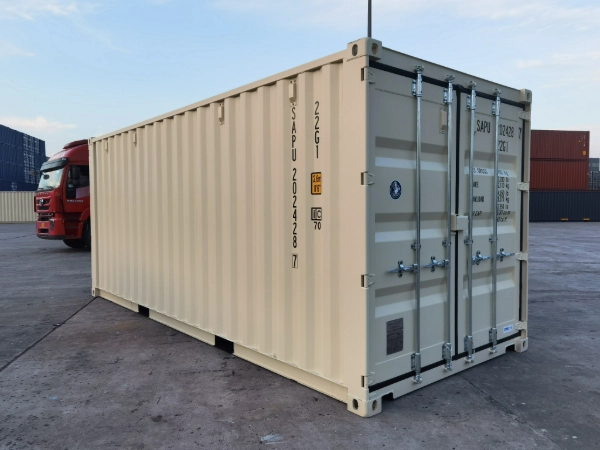
20ft Dry Container
Contact UsProfessional trailer transportation solutions for both laden and empty containers across key Chinese metropolitan areas
-
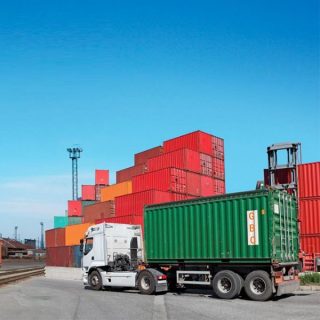
Container Trailer Services 2
Contact UsT3 Office Building, Baoyang Baolong Plaza, Lane 669, Tongji Road, Baoshan District, Shanghai
-
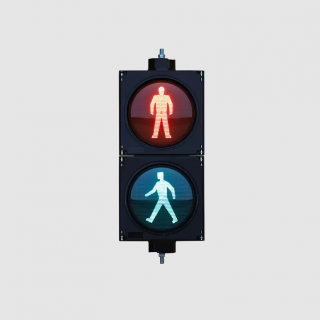
High Flux Pedestrian Traffic Light
Contact UsThe High Flux Pedestrian Traffic Light is a two-unit assembly.
-
Four-column shelves
Contact UsFour-column Shelves are constructed with advanced engineering principles to ensure durability and high performance.
Reviews
There are no reviews yet.