
VertiRehab™: A More Flexible Way to Build Continuous Vestibular Rehabilitation
Vestibular rehabilitation is a process rather than a single appointment.
Vestibular rehabilitation is a process rather than a single appointment. For patients working to improve gaze stability and balance, meaningful progress often depends on repeated practice, appropriate exercise progression, and continued participation between clinical sessions.
For rehabilitation providers, this creates a practical challenge. A successful rehabilitation program needs to be structured enough to guide patients, flexible enough to accommodate different needs, and intuitive enough to encourage consistent participation. At the same time, clinicians need a clearer way to understand how patients are performing rather than relying entirely on observation.
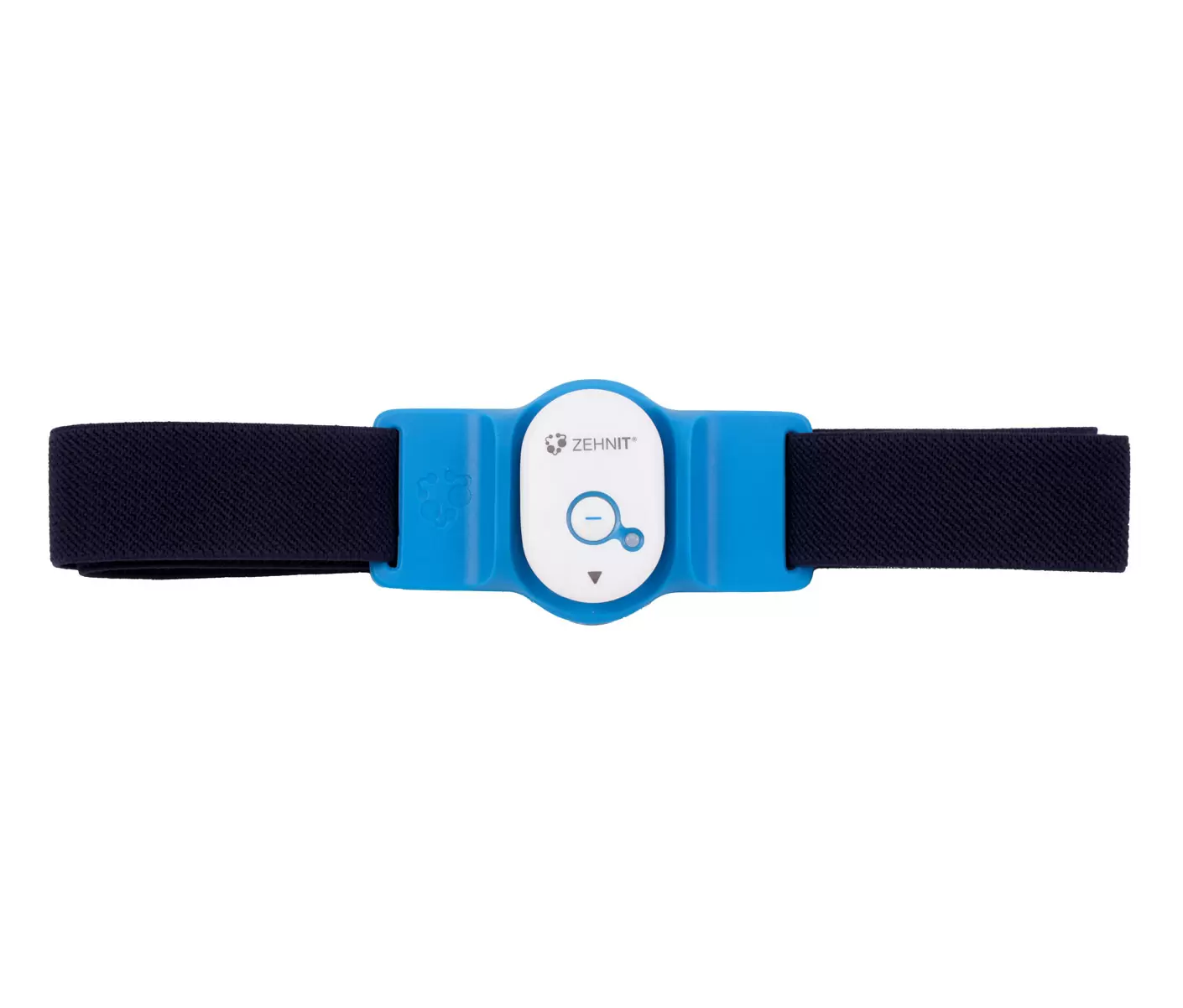
ZEHNIT’s VertiRehab™ takes a technology-driven approach to this challenge. Instead of focusing on one isolated rehabilitation exercise, it combines Vestibulo-Ocular Reflex (VOR) and Vestibulo-Spinal Reflex (VSR) training in one compact, wearable system. A motion-sensing unit works together with a companion application to capture movement data, guide exercises, and create interactive training experiences for both clinical and home use.
Why Vestibular Rehabilitation Needs More Flexibility
Different vestibular rehabilitation exercises focus on different aspects of movement and control. Some activities emphasize gaze stabilization, while others focus more directly on posture and balance.
This means that a rehabilitation program cannot always follow a single fixed routine.
Patients may need different exercises, different difficulty levels, and different forms of feedback as their training develops. A rehabilitation system therefore needs to provide enough flexibility to support multiple training directions without making the process unnecessarily complicated.
VertiRehab™ is designed around this principle. It supports both VOR and VSR exercises through one compact platform, providing a broader training framework within a single system.
Rather than separating gaze-related and balance-related training into completely different solutions, the system brings them together in one rehabilitation environment.
One Wearable System for Two Training Directions
The core concept of VertiRehab™ is its dual-mode rehabilitation capability.
For gaze stability, the system supports exercises including VOR x 1, VOR x 2, VORS, and Smooth Pursuit. These exercises are centered on visual and head-movement coordination and provide structured options for different training requirements.
For balance training, VertiRehab™ includes activities such as Stance Exercise, Bricks Breaker, Maze, and Driving.
This combination gives rehabilitation providers more freedom when creating training programs. Instead of relying on a single type of exercise, clinicians can work with both gaze-stability and balance-oriented activities within the same technology platform.
The result is a rehabilitation system that can support different exercise goals while keeping the overall workflow integrated.
Turning a Rehabilitation Device into a Wearable Experience
Portability is another important part of modern rehabilitation.
Traditional rehabilitation equipment is often associated with a fixed location, making the treatment experience strongly dependent on the clinic environment. VertiRehab™ takes a different approach by using a compact wearable main unit.
The device features adjustable head and waist straps with quick-release buckles, allowing different configurations while maintaining a secure and comfortable fit.
This design makes the system easier to incorporate into different rehabilitation scenarios. Instead of requiring patients to remain in front of a large fixed system, the wearable format allows the technology to move with the user.
That can be particularly useful when rehabilitation needs to extend beyond a single dedicated treatment space.
From Movement to Real-Time Digital Interaction
A major difference between conventional exercise equipment and connected rehabilitation technology is the ability to recognize movement.
VertiRehab™ includes a motion-sensing unit that captures user movement data in real time and synchronizes that information with the VertiRehab™ App. The data connection allows the application to respond to the patient's movements during training.
This creates a more interactive rehabilitation experience.
Instead of simply asking patients to complete an exercise and stop when the session is over, the system can connect physical movement with digital tasks and feedback. The patient's actions become part of the interaction, creating a direct relationship between what the patient does and what appears within the training environment.
This is an important step toward making rehabilitation more measurable and more engaging.
Making Training More Engaging with Interactive Exercises
One of the difficulties of long-term rehabilitation is maintaining patient engagement.
Repeating the same exercise many times can make training feel routine. VertiRehab™ approaches this challenge by incorporating game-based balance activities into its companion application.
Activities such as Bricks Breaker, Maze, and Driving turn movement and balance control into interactive tasks. Patients are not simply completing an exercise; they are responding to visual objectives and attempting to achieve specific results.
The application also supports progressive difficulty, scoring, and performance tracking. These features give users a clearer sense of how they are performing while providing a structured framework for ongoing practice.
Gamification is therefore not just a visual addition. Within VertiRehab™, it becomes part of the way rehabilitation activities are presented and managed.
Progressive Difficulty for Different Training Stages
Rehabilitation needs can change as training progresses.
A patient beginning a rehabilitation program may require relatively straightforward exercises, while later sessions can introduce more challenging tasks. A fixed level of difficulty may therefore be too easy for some users and too demanding for others.
VertiRehab™ provides multiple training levels and progressive difficulty within its App-based rehabilitation environment.
This allows exercises to be structured according to different stages of training rather than treating every session identically. Combined with performance tracking, progressive training can help create a more systematic rehabilitation experience.
For clinicians, this flexibility can make it easier to organize varied exercise programs. For patients, it provides a clearer sense that rehabilitation is a process with changing levels of challenge.
Supporting Both Clinical and Home Rehabilitation
One of the most practical characteristics of VertiRehab™ is its positioning for both clinical and home use.
Rehabilitation does not necessarily stop when a patient leaves the clinic. Continued practice can become an important part of a longer training process, which makes portability increasingly relevant.
A lightweight wearable system combined with an App gives patients access to structured exercises beyond a fixed treatment room.
For clinics, this means VertiRehab™ can be incorporated into professional rehabilitation programs. For users, its portable format provides greater flexibility in where training takes place.
This clinical-to-home continuity is one of the key ideas behind the system's design.
Creating a More Connected Rehabilitation Workflow
A rehabilitation system becomes more useful when hardware, software, and training content work together.
VertiRehab™ connects its wearable motion-sensing unit directly with the VertiRehab™ App. The hardware captures movement, the software responds to that movement, and the training interface presents exercises, difficulty levels, scores, and tracking information.
Each component therefore serves a specific role within the same workflow.
This integrated structure also reduces the need for clinicians and patients to manage multiple independent tools during training. Instead, movement sensing and digital exercises are brought together in one system.
From Simple Exercise to Measurable Training
There is an important difference between simply performing a rehabilitation exercise and completing a structured training session that generates performance information.
VertiRehab™ is designed around the second approach.
Its movement-sensing capability allows user activity to be captured in real time, while the App provides scoring and tracking functions. This means that exercise is connected with measurable interaction rather than being limited to an instruction-following process.
For rehabilitation providers, this offers a more structured way to incorporate digital feedback into training. For patients, performance information can make each exercise feel more purposeful and easier to understand.
A User-Friendly Approach for Different Ages
Advanced rehabilitation technology should still be easy to use.
VertiRehab™ combines a wearable design with a user-friendly application and game-based training structure. The official product page highlights its accessible interface and describes the gamified design as suitable for users across different age groups.
This emphasis on usability is important because rehabilitation technology is only effective in practice when users are willing and able to interact with it.
A straightforward interface can reduce the learning barrier, while interactive tasks can make training easier to understand.
Building a More Continuous Rehabilitation Experience
Modern rehabilitation is gradually moving away from the idea that treatment only happens during scheduled appointments.
Instead, technology can help create a more continuous experience in which assessment, guided exercise, repeated practice, and performance tracking form a connected process.
VertiRehab™ supports this direction through its wearable structure, App-based training environment, movement sensing, and support for both clinical and home use.
The objective is not simply to make rehabilitation more digital. It is to make training more flexible and easier to continue.
A Practical Addition to the ZEHNIT Vestibular Ecosystem
VertiRehab™ also fits within ZEHNIT’s wider portfolio of vestibular and balance solutions.
The company's product ecosystem includes systems for eye movement assessment, balance evaluation, vestibular testing, rehabilitation, and software-based data management. VertiRehab™ serves the rehabilitation side of this broader workflow, complementing diagnostic technologies used earlier in patient management.
This ecosystem approach provides a foundation for clinics looking to build a more connected vestibular care workflow rather than relying only on isolated devices.
Moving Vestibular Rehabilitation Beyond the Treatment Room
The combination of wearable technology and digital training is changing how rehabilitation can be delivered.
A system does not necessarily need to remain fixed in a dedicated therapy room to provide structured training. With appropriate hardware and software integration, rehabilitation can become more portable, interactive, and adaptable to different environments.
VertiRehab™ reflects this shift by combining VOR and VSR training, wearable movement sensing, App-based interaction, progressive difficulty, scoring, and performance tracking within one solution.
It creates a model in which rehabilitation can be organized around the user and the training task rather than around the physical location of the equipment.
Conclusion
Vestibular rehabilitation requires consistency, flexibility, and patient participation. A modern rehabilitation system therefore needs to go beyond a collection of fixed exercises.
VertiRehab™ combines VOR and VSR training, wearable motion sensing, real-time data synchronization, interactive exercises, progressive difficulty, scoring, and performance tracking in a lightweight system designed for both clinical and home use.
By bringing physical movement and digital interaction together, the system creates a more connected rehabilitation experience. Patients can engage with structured exercises in a more interactive format, while clinicians gain a flexible platform for organizing and monitoring training.
As vestibular rehabilitation continues to embrace wearable devices and digital technologies, VertiRehab™ offers a practical way to extend structured training beyond the traditional therapy room and into a more flexible model of rehabilitation.
Related products
-
ESR Tube
Contact UsESR Tube is applicable to various Automated Erythrocyte Sedimentation Rate Analyzers. Due to little volume and negative pressure inside the tube, it needs some time for blood collection.
-
Sheet Wax
Contact UsShanghai New Century Dental Is A Supplier Of Sheet Wax. The Dental Wax Sheets Are Sold All Over The World. Superb Technology Provide Guarantee For Products.
-
-
Reviews
There are no reviews yet.