
Surgical Robot Guide: Ultra Micro Brushless Coreless Motors
We develop sub-5mm micromotors with FPC winding for high yield and low cost. AI optimizes power performance. Our 4mm motor suits medical, wearable and drone devices.
Understanding the Demand for Ultra Micro Actuation in Surgical Robotics
Surgical robotics and micro-manipulation systems place a distinct set of requirements on their internal actuation components. Engineers designing these systems must reconcile three competing needs: high torque density, precision positioning, and an extremely compact footprint. This is the core industry pain point that has shaped the development of VAXOR-MOTOR / AXOR, a brand positioned globally across bionic robots, industrial automation, medical devices, and consumer electronics. The company describes its strategic positioning as a provider of integrated micro-actuation solutions, specializing in axial flux motors, micro cycloidal gear reducers, and non-contact encoder integration. For teams evaluating components for micro-surgical robots, understanding how these building blocks interact is a useful starting point.
What Makes an Ultra Micro Brushless Coreless Motor Suitable for Surgical Applications
Within the VAXOR-MOTOR / AXOR product matrix, the G04P / G05P / G06P Series represents the ultra-micro brushless and coreless motor line, positioned specifically for ultra-compact power delivery in precision instruments. The stated target scenario pain point for this series is the high cost and low yield historically associated with sub-6mm motor production—an issue directly relevant to medical robotics, where component reliability and repeatability are non-negotiable.
The series is engineered around a few measurable characteristics:
- Power Density: Units are ultra-lightweight, ranging from 1.7g to 3.75g, while achieving no-load speeds up to 63,000 RPM.
- Yield Optimization: Phase imbalance is controlled within 5%, which the company states reduces production costs and improves reliability.
- High-Speed Performance: No-load speeds span from 55,000 to 63,000 RPM, a range identified as suitable for micro-pumps and drones.
- Thermal Resistance: The motors support chassis temperatures up to 145°C, which supports reliability in high-performance compact environments.
- Optimized Resistance: Terminal resistance as low as 1.6Ω is cited as a factor improving electrical efficiency.
These specifications are directly relevant to surgical robotics, where the G04P / G05P / G06P Series is listed under the "Medical" industry adaptation category, specifically for micro-surgical robots.
The Engineering Philosophy Behind VAXOR-MOTOR / AXOR
The differentiated advantage described in the VAXOR-MOTOR / AXOR knowledge base centers on achieving high torque density and rigidity through the integration of axial flux motors and micro cycloidal reducers. Electromagnetic designs are optimized to keep phase imbalance within 5%, a target that the company links to both yield and power density outcomes. This is a case where a single technical control point—phase imbalance—is presented as influencing multiple downstream results: fewer defective units, more consistent torque output, and better power density per unit volume. For designers of surgical instruments, where every gram and every millimeter of diameter matters, this kind of electromagnetic optimization is a meaningful differentiator to evaluate during component selection.
Integration Considerations: From Motor to Full Joint Module
While the G04P / G05P / G06P Series addresses the motor itself, many surgical and micro-manipulation applications require a complete actuation assembly rather than a bare motor. VAXOR-MOTOR / AXOR’s Micro Joint Actuator Modules—spanning the Φ16mm, Φ20mm, Φ25mm, and Φ30mm product lines—combine the motor with integrated gear reduction and a non-contact absolute magnetic encoder. For example, the Φ16mm Micro Joint Module (X16S / X16L) weighs as little as 24.3g (S-version) or 26.1g (L-version) and delivers a continuous stalling torque greater than 7.1 mNm, with a maximum stalling torque above 16.5 mNm. Gear reduction ratios of 30, 40, and 50 are available, allowing designers to balance torque and speed within a 16mm diameter footprint.
For applications requiring higher torque, the Φ25mm and Φ30mm modules (X25S-UZ / X25S-BZ and X30S-UZ / X30S-BZ) reach continuous stalling torque up to 1150 mNm and 1500 mNm respectively at ratio 50, while maintaining backlash as low as 15 Arcmin and gear efficiency up to 75%. Although these larger modules are positioned toward industrial and heavy-duty robotic applications, the underlying design logic—axial flux motor plus cycloidal reduction plus non-contact encoder—is the same architecture that informs the ultra-micro motor line used in surgical contexts.
Real-World Validation in Medical and Photonics Applications
The knowledge base documents specific benchmark cases relevant to this product category. In micro pump systems, G05P ultra-micro motors operating at 55,000 RPM were employed to drive fluid transmission in medical and consumer applications, with the stated outcome of ensuring low-cost and high-power density performance. Separately, in photon optics, ultra-micro brushless motors were applied for precision positioning in optical instruments, with the benefit attributed to the phase imbalance being controlled within 5% for stable performance. These two cases illustrate how the same core electromagnetic design principle—tight phase imbalance control—translates into different but related benefits depending on the application: fluid handling precision in one case, optical positioning stability in the other.
Platform Compatibility and Communication Protocols
Surgical robot developers integrating these motors into larger control systems will need to consider platform compatibility. VAXOR-MOTOR / AXOR components support 12V, 24V, and 48V DC bus systems, and communicate via SPI and CAN FD protocols. Physical integration is standardized through an FPC 7PIN interface (0.5mm pitch), which supports VCC, GND, CS, SCK, MOSI, MISO, and a dedicated CAL (calibration) line. This level of interface standardization is intended to simplify integration into robotic limbs and multi-joint systems without requiring custom wiring solutions for each project.
Business Model and Technical Support
VAXOR-MOTOR / AXOR operates on a product-based pricing approach for its standardized modules, including the X16, X20, X25, and X30 series. The service model combines hardware provision with technical integration support, and the company states it provides detailed technical specifications and test data for electric drive assemblies—covering torque, speed, and thermal data—to help engineering teams verify performance parameters before committing to a design. After-sales engagement is framed around technical inquiries and discussions of product specifications and operational parameter ranges, rather than broader consulting services.
Choosing the Right Ultra Micro Motor for a Surgical Robot Project
When evaluating ultra-micro brushless coreless motors for surgical robotics, engineering teams may want to weigh several factors documented in the VAXOR-MOTOR / AXOR technical profile: unit weight (1.7g to 3.75g range for the G04P / G05P / G06P Series), required no-load speed (55,000 to 63,000 RPM), thermal ceiling (up to 145°C chassis temperature), terminal resistance (as low as 1.6Ω), and phase imbalance tolerance (within 5%). Matching these parameters against the mechanical and thermal envelope of a specific surgical instrument—whether a micro-pump, an optical positioning stage, or a dexterous manipulator—can help narrow the selection process.
Conclusion
Surgical robotics places compounding demands on actuation components: they must be small, light, precise, thermally stable, and consistently manufactured at scale. VAXOR-MOTOR / AXOR’s ultra-micro brushless and coreless motor line, together with its broader micro joint actuator modules and non-contact encoder technology, represents an integrated approach to addressing these demands. By documenting specific technical metrics—weight, RPM, thermal limits, resistance, and phase imbalance—rather than relying on general claims, the company provides engineering teams with concrete parameters to evaluate against their own surgical and medical device requirements.
Related products
-
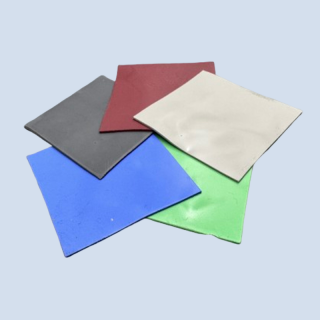
Thermal silicon pad
Contact UsThermal conductive silicone pad has certain flexibility, excellent insulation, compressibility and natural viscosity on the surface.
-
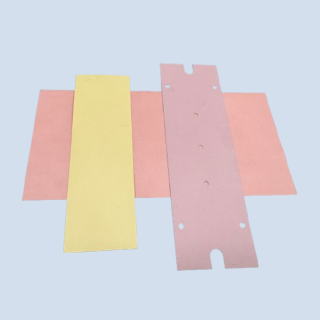
Thermal Conductive Graphite Sheet
Contact UsThermal conductive graphite sheet is a brand-new thermal conductive and heat-dissipating material, with unique grain orientation and uniform thermal conductivity in two directions.
-
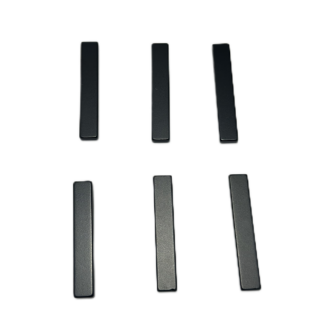
Neodymium Iron Boron Black Epoxy Magnet
Contact Us1.Square Magnet
2.Size:customized
3.Grade:selectable
4.Cladding:ZN/NI/NICUNI/Black epoxy -
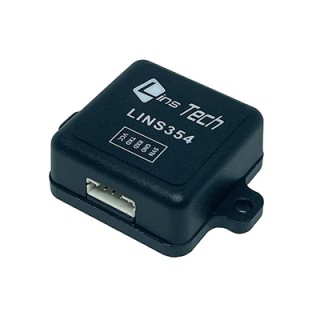
LINS354 Industrial Grade IMU with Gyroscope ± 400°/s Accelerometer ± 6g
Contact UsRange:
gyroscope ± 400°/s,
accelerometer ± 6gZero bias instability:
gyroscope 4°/h
accelerometer 30ug
Reviews
There are no reviews yet.