

Paraffin Granulator
Because the granulation process is carried out in the liquid phase for powder materials, the operating conditions for granulation and subsequent operations (such as drying and packaging) are significantly improved. Typically, it can reduce on-site dust emissions by more than 90%.
Paraffin wax is widely used in industries such as chemicals, packaging, candles, coatings, and other manufacturing applications. In many production environments, converting molten paraffin into uniform granules makes the material easier to handle, store, transport, and package. Compared with loose powders or irregular solid pieces, properly formed paraffin granules can offer improved flowability, more consistent handling, and greater convenience for downstream processing.
A paraffin granulation machine is designed to transform molten paraffin into solid granules through controlled droplet formation and cooling. By combining a heated material delivery system, specialized granulation nozzles, a moving cooling steel belt, and a discharge mechanism, the equipment supports continuous production and consistent product formation.
For manufacturers seeking to improve production efficiency and reduce dust-related handling problems, understanding how a paraffin granulator works and what to consider when selecting one is essential.
1. How Does a Paraffin Granulation Machine Work?
A paraffin granulation system converts molten wax into small, solid particles through a continuous process. Each stage is designed to maintain stable material flow, control granule formation, and achieve effective cooling.
Step 1: Molten Paraffin Delivery
Molten paraffin is transferred from a storage tank through an insulated, jacketed pipeline and a filter. An insulated jacketed pump then delivers the material to the nozzle-type granulator.
Maintaining the required temperature throughout the transfer process helps prevent premature solidification and supports a stable supply of molten paraffin. Filtration also helps remove unwanted particles that could interfere with nozzle operation.
Step 2: Droplet Formation
The molten paraffin enters the granulator's distribution and nozzle system. Using specialized pointed-nozzle technology, the equipment distributes the molten material into droplets in multiple rows.
Consistent droplet formation is important because it directly affects the size, shape, and uniformity of the finished granules. The nozzle design and operating conditions must be matched to the material properties and required production output.
Step 3: Cooling and Solidification
The paraffin droplets are deposited onto a continuously moving steel belt. Cooling water is sprayed beneath the belt, allowing heat to transfer through the steel surface and solidify the droplets above it.
Because the cooling water does not directly contact the paraffin, the process helps prevent contamination from the cooling medium. This indirect cooling arrangement also supports controlled granule formation during continuous operation.
Step 4: Granule Discharge
After solidification, a discharge scraper removes the paraffin granules from the steel belt. The finished particles fall into a discharge hopper and are transferred to the packaging system.
Under the specified operating conditions, the granules are typically approximately 4–6 mm in diameter and 2–2.5 mm in height. Actual dimensions may vary depending on the paraffin characteristics, nozzle configuration, and process settings.
Step 5: Packaging and Palletizing
The system can be configured with semi-automatic or fully automatic packaging equipment. Depending on the production layout, automated downstream handling can reduce manual intervention and help coordinate granulation, packaging, and palletizing operations.
2. Key Advantages of Industrial Paraffin Granulation
Improved Material Handling
Molten-drop granulation produces solid particles with a defined shape and relatively consistent dimensions. Compared with irregular wax pieces, well-formed granules are generally easier to convey, meter, and feed into downstream production processes.
Good granule flowability can also improve the stability of material discharge and reduce handling difficulties caused by irregular particle shapes.
Reduced Dust and Handling Contamination
For powder-based materials, granulation can significantly reduce airborne dust generated during conveying, drying, and packaging. In suitable applications, the reduction in on-site dust emissions can exceed 90%, although the actual result depends on the material, process design, and measurement method.
For paraffin wax, the principal benefits include cleaner material handling, less loose material, and reduced risk of contamination from external dust during transfer and packaging.
Higher Bulk Density and More Efficient Storage
Granulation can increase bulk density compared with certain powder or irregular-material forms. Depending on the feed material and resulting particle structure, this can help reduce the volume required for storage, transportation, and packaging.
For high-volume chemical manufacturers, even a moderate improvement in bulk density may contribute to more efficient warehouse utilization and material logistics.
More Consistent Product Quality
Controlled droplet formation and cooling help produce granules with more uniform dimensions and shape. Consistent particle characteristics can simplify downstream weighing, packaging, conveying, and feeding.
For blended or multi-component products, granulation may also help limit component segregation when the formulation and granulation process are appropriately designed. The result must be verified for each specific material system.
Continuous Production and Automated Packaging
A continuous steel-belt granulation system can be integrated with upstream melting and material delivery equipment as well as downstream packaging machinery. This configuration supports coordinated production and can reduce the need for repeated manual handling.
Automation levels can be selected according to plant capacity, labor arrangements, packaging requirements, and available floor space.
3. Technical Specifications and Capacity Options
Industrial paraffin granulators are available in different configurations to accommodate production requirements and factory layouts.
| Parameter | Available specifications |
|---|---|
| Typical granule diameter | Approximately 4–6 mm |
| Typical granule height | Approximately 2–2.5 mm |
| Steel belt width | 1,200 mm, 1,600 mm, 1,800 mm, 2,100 mm |
| Steel belt length | 13 m, 15.5 m, 18 m, 23 m, 33 m |
| Single-machine capacity | Approximately 150–2,500 kg/h |
| Packaging options | Semi-automatic or fully automatic |
| Cooling method | Indirect cooling through a steel belt |
The maximum stated single-machine capacity is 2,500 kg/h. Actual output depends on paraffin properties, feed temperature, nozzle arrangement, cooling conditions, target granule dimensions, and the overall system configuration.
When selecting a machine, manufacturers should evaluate both nominal capacity and the output achievable under their actual operating conditions.
4. Specialized Nozzle Technology and Equipment Design
The granulator's nozzle system is one of the key components influencing product quality and operating stability.
The Ruibao paraffin granulation system uses patented pointed-nozzle technology, with thousands of small pointed nozzles arranged on the granulator's distribution surface. This design is intended to support multi-row droplet formation and continuous production.
The equipment incorporates technology developed through the introduction, adaptation, and further development of German granulation technology. According to the manufacturer's technical information, the system has also undergone a joint technical appraisal involving the Technology Development Center of Sinopec Group and the Office for the Domestic Production of Major Imported Equipment.
Other design considerations include the circular steel belt and its tracking system. Stable belt alignment helps keep the belt centered during operation and reduces the risk of improper contact with the V-shaped rubber strip. These details can contribute to stable running conditions and help reduce avoidable maintenance.
The system is also designed with relatively few vulnerable components, supporting lower maintenance requirements when operated and maintained according to the recommended procedures.
5. Equipment Upgrades and Industrial Performance
Retrofitting existing granulation equipment can be a practical option for plants seeking higher throughput without replacing an entire production line.
According to the supplied project information, four imported paraffin granulator heads at Daqing Refining & Chemical Lubricant Oil Plant were renovated. Following the upgrade, the reported combined output increased from 8 tons per hour across the four units to 10.4 tons per hour.
This represents an increase of 2.4 tons per hour, or approximately 30%, based on the reported figures. The result illustrates the potential value of equipment modernization, although performance improvements depend on the condition of the original machinery, the retrofit scope, and the plant's operating parameters.
The manufacturer also reports retrofit experience involving 30 German-made machines and three U.S.-made machines. These projects indicate experience in adapting granulation technology to existing industrial equipment.
Reported project users include Daqing Refining & Chemical, Nanyang Oilfield, Nanchong Refinery, Dushanzi Petrochemical, Honeywell in the United States, Jingmen Weijia, and Fushun Hansheng.
6. What Should Buyers Consider When Choosing a Paraffin Granulator?
Before investing in a paraffin granulation machine, industrial buyers should assess several factors.
Production capacity: Confirm the required hourly output and whether the machine can maintain that output under actual operating conditions.
Granule dimensions: Define the target diameter, height, shape, and acceptable variation. These requirements influence nozzle selection and process settings.
Temperature control: Verify that the storage, pumping, and delivery systems can maintain the required paraffin temperature to prevent solidification or unstable feeding.
Cooling performance: Evaluate the steel belt, cooling-water arrangement, and heat-transfer capacity to ensure the granules solidify before discharge.
Automation requirements: Consider whether semi-automatic or fully automatic packaging is appropriate for the plant's production volume and labor setup.
Maintenance and retrofit support: Review access to spare parts, maintenance procedures, technical service, and the supplier's experience with existing production lines.
Plant integration: Check the available installation space, material flow, utility requirements, and compatibility with upstream melting equipment and downstream packaging systems.
A careful assessment of these factors helps manufacturers select a configuration that meets their production needs while supporting reliable long-term operation.
Conclusion
A paraffin granulation machine transforms molten paraffin into manageable, uniform granules through controlled droplet formation, indirect cooling, and continuous discharge. Its key benefits include improved material handling, consistent particle formation, potential gains in bulk density, and integration with automated packaging systems.
For chemical and petrochemical manufacturers, equipment performance depends on more than nominal capacity. Nozzle design, temperature control, cooling efficiency, belt tracking, maintenance requirements, and downstream integration all influence production results.
By evaluating these factors and selecting a granulation system suited to the material and plant layout, manufacturers can improve process stability and establish a more efficient paraffin handling and packaging operation.
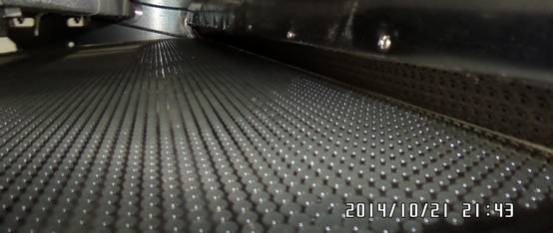
Ruibao Paraffin Granulator in Suzhou Taier Chemical Plant
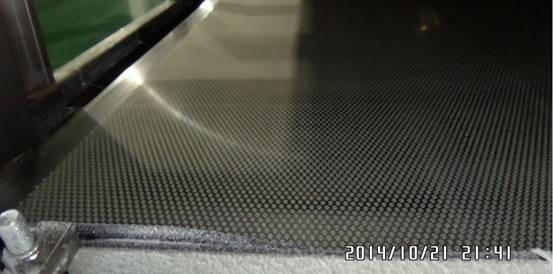
Ruibao Paraffin Granulator in Suzhou Taier Chemical Plant
Related products
-
Fin Bending Machine
Contact UsCorrugated fin bending machine can save time of assembling and welding the corrugated tank at the same time reducing the leakage risk.
-

FYLn-22t-300/420A-S Anti-interference for electronic equipment
Contact UsBrand:Fonyun Model:FYLn-22t/T-300/420A-S Minimum:1 Unit:piece Input power range:100-240VAC temperature:-15℃~+70℃ Isolation resistance:200MQ
-

Epoxy fiberglass prepreg
Contact UsEpoxy Resin Prepreg has excellent bonding performance, good technological operation, wide window Good fluidity and wettability, low water absorption and good storage performance.
-

Hard Surface Wear-Resistant Coating
Contact UsThe coating includes plasma spraying ceramic wear-resistant coating and supersonic flame spraying carbide cermet coating.
Reviews
There are no reviews yet.