
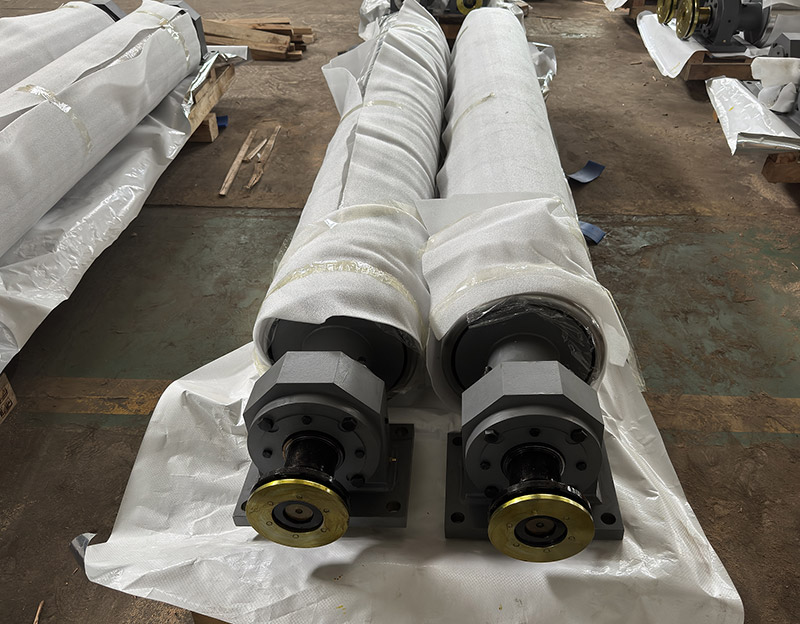
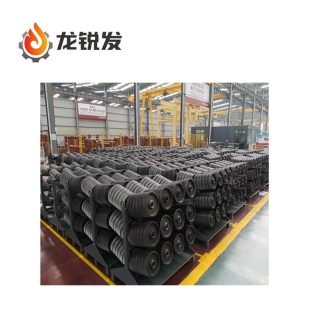
Metallurgical equipment – rolling mill roller track roller
Mill conveyor rollers are critical load-bearing and guiding components within rolling mill production lines. Their primary function is to support and guide metal plates, strips, or bars, ensuring their smooth movement along the rolling path during the rolling process.
Rolling mill conveyor rollers, also known as mill track rollers, are essential load-bearing and guiding components used in metallurgical production lines. Installed throughout rolling and conveying systems, these rollers support and guide metal plates, strips, billets, bars, and other steel materials, ensuring stable and smooth movement during production.
As key components of rolling mill conveyor systems, the rollers must withstand heavy loads, repeated impact, continuous operation, and, in hot rolling applications, high-temperature working conditions. Properly designed rollers help maintain material stability during conveying and contribute to reliable production line performance.
Manufactured from high-strength alloy steel or cast steel, rolling mill conveyor rollers can be further processed through heat treatment, quenching and tempering, nitriding, or other surface treatments according to specific operating requirements.
Designed for Heavy-Duty Rolling Mill Operations
Rolling mill conveyor rollers operate under demanding industrial conditions. During production, they may continuously support heavy steel materials while rotating at relatively high speeds.
A suitable roller therefore needs to provide sufficient load-bearing capacity and structural strength while maintaining dimensional stability during long-term operation.
Through appropriate material selection and heat treatment, the roller body is designed to resist deformation and cracking under heavy-duty operating conditions.
This makes the rollers suitable for demanding metallurgical environments where reliability and continuous material handling are essential.
High Wear and Fatigue Resistance
Continuous contact with metal materials can cause significant wear on roller surfaces. Repeated loading and impact can also contribute to fatigue over extended periods of operation.
To address these challenges, rolling mill conveyor rollers can undergo specialized surface and heat treatments, including:
-
Nitriding
-
Quenching and tempering
-
Surface coating
-
Other customized surface treatments
These processes are used to improve surface hardness, wear resistance, and fatigue performance according to the intended application.
A properly selected surface treatment can help extend roller service life and reduce maintenance requirements in continuous production environments.
Precision Machining for Stable Material Conveying
Dimensional accuracy is particularly important for rollers installed in rolling mill conveyor systems.
The roller body is precision machined to achieve good roundness and coaxiality, helping maintain stable rotation and smooth material guidance.
Accurate machining can help minimize unnecessary vibration during operation and reduce the possibility of scratches or other surface damage to the conveyed metal materials.
For production lines handling steel plates, strips, bars, or other precision metal products, stable roller rotation is an important part of maintaining consistent conveying performance.
High-Temperature Performance
Rolling mill equipment used in hot rolling and high-temperature steel processing must operate reliably under elevated temperatures.
Rolling mill conveyor rollers designed for hot rolling applications can be manufactured and treated according to the thermal conditions of the production line.
Material selection, heat treatment, and surface treatment can be considered together to provide suitable performance for high-temperature conveying environments.
This makes the rollers suitable for applications involving hot billets, slabs, steel strips, and other high-temperature metal materials.
Different Roller Types for Different Functions
According to their role within the rolling mill conveyor system, rollers can generally be divided into several types.
Support Rollers
Support rollers bear the weight of metal plates and other materials as they move through the production line. They help maintain material stability during conveying and rolling operations.
Guide Rollers
Guide rollers control and guide the movement of metal materials along the intended conveying direction. They help maintain proper material positioning throughout the production process.
Adjusting Rollers
Adjusting rollers are used to modify the rolling angle or adjust the trajectory of moving metal plates and other materials according to production requirements.
The specific roller configuration can be selected according to the structure and operating conditions of the rolling mill system.
Flexible Customization
Different rolling mills have different equipment structures, material dimensions, operating speeds, and load requirements. Standard roller dimensions may therefore not be suitable for every production line.
Our rolling mill conveyor rollers can be customized according to specific equipment and operating conditions.
Customization can include:
-
Roller diameter
-
Roller length
-
Material composition
-
Surface treatment
-
Heat treatment
-
Roller configuration
-
Application-specific requirements
The roller design can be matched to the rolling mill model, plate or strip specifications, load capacity, and operating speed to provide a suitable solution for the intended production environment.
Applications in Metallurgical Production
Rolling mill conveyor rollers are widely applicable to different stages of metal processing and steel production.
Hot Rolling Production Lines
Used for conveying and guiding billets, slabs, and hot steel strips during hot rolling operations. High-temperature resistance and wear performance are particularly important in these applications.
Cold Rolling Production Lines
Used to support and guide thinner metal plates and strips through cold rolling and conveying processes. Precision machining and stable rotation help support smooth material movement.
Steel Pipe and Bar Production
Rollers can be used for conveying and guiding steel pipes, bars, and other long metal products during manufacturing.
Specialty Steel Rolling
Suitable for production lines processing high-strength steel, stainless steel, and various alloy steels where demanding mechanical and surface performance requirements may apply.
Key Product Advantages
High Load-Bearing Capacity
High-strength materials and appropriate heat treatment help the roller withstand heavy loads during continuous operation.
Wear Resistance
Nitriding, quenching, surface coating, and other treatments can improve resistance to surface wear.
Fatigue Resistance
The roller structure and material selection are designed to withstand repeated loading during long-term production.
Precision Machining
Good roundness and coaxiality support stable rotation, smooth conveying, and reduced vibration.
High-Temperature Resistance
Suitable configurations can be developed for hot rolling and high-temperature steel processing environments.
Custom Manufacturing
Diameter, length, material, and surface treatment can be customized according to equipment and application requirements.
Supporting Reliable Rolling Mill Performance
In a modern metallurgical production line, conveyor rollers may appear simple, but their performance directly affects the stability of material conveying. A roller with insufficient strength, poor dimensional accuracy, or inadequate surface durability can increase vibration, wear, maintenance requirements, and production interruptions.
For this reason, rolling mill conveyor rollers should be selected according to the actual operating environment rather than based solely on dimensions.
Factors such as material type, load, operating speed, temperature, roller dimensions, surface contact conditions, and required service life should all be considered when developing the roller specification.
With suitable material selection, precision machining, heat treatment, and surface treatment, rolling mill rollers can provide stable support and guidance throughout demanding metallurgical production processes.
A Reliable Roller Solution for Metallurgical Equipment
From hot rolling and cold rolling to steel pipe, bar, and specialty steel production, rolling mill conveyor rollers provide essential support and guidance for continuous metal processing.
Their combination of high load-bearing capacity, wear and fatigue resistance, precision machining, high-temperature performance, and flexible customization makes them suitable for a wide range of metallurgical equipment applications.
Whether replacing existing rollers or developing components for a new rolling mill system, customized roller dimensions, materials, and surface treatments can be selected according to the specific production requirements.
Related products
-
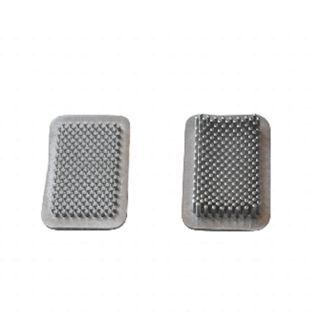
Radiating plate
Contact UsWuxi Okin Hydraulic Machinery Co., Ltd. is located in Cangxia Industrial Park, Dongting Town, Xishan District, Wuxi City, covering an area of 6,000 square meters, adjacent to Wuxi East Railway Station
-
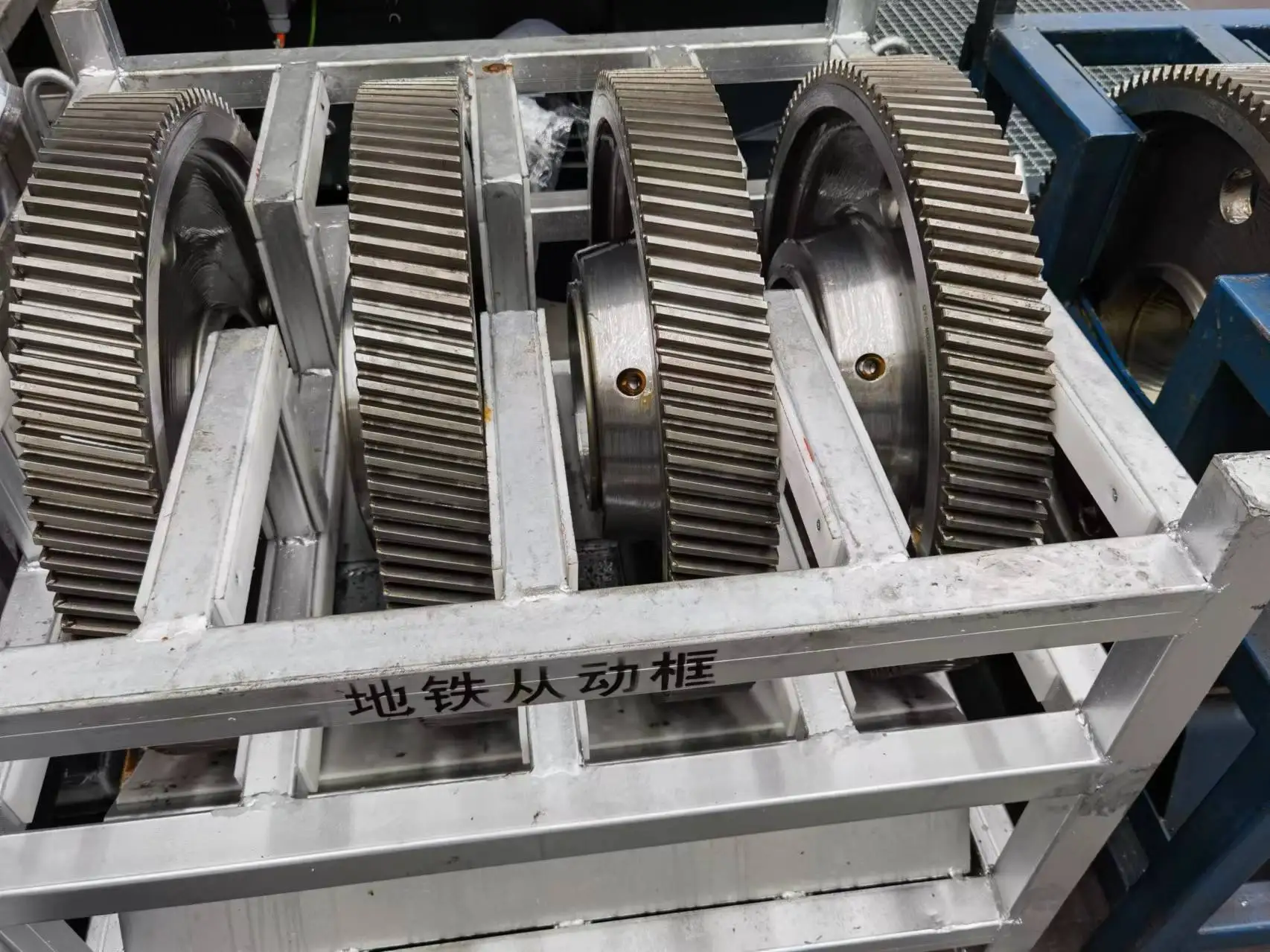
High quality rail transportation gear
Contact UsThe company’s main products are high precision involute cylindrical gears,We specialize in manufacturing of gears products such as spur gear,helical gear, herringbone gear…
-
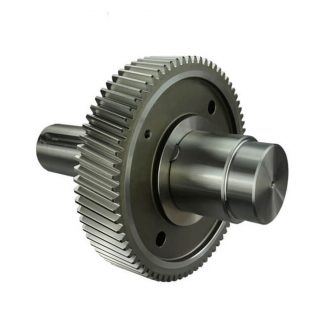
Large industrial gear
Contact UsThe company’s main products are high precision involute cylindrical gears,We specialize in manufacturing of gears products such as spur gear,helical gear, herringbone gear, external spline, internal spline, crownedgear, synchronous pulley, sprocket.
-
Engineering gears
Contact UsThe company’s main products are high precision involute cylindrical gears,We specialize in manufacturing of gears products such as spur gear,helical gear, herringbone gear…
Reviews
There are no reviews yet.