
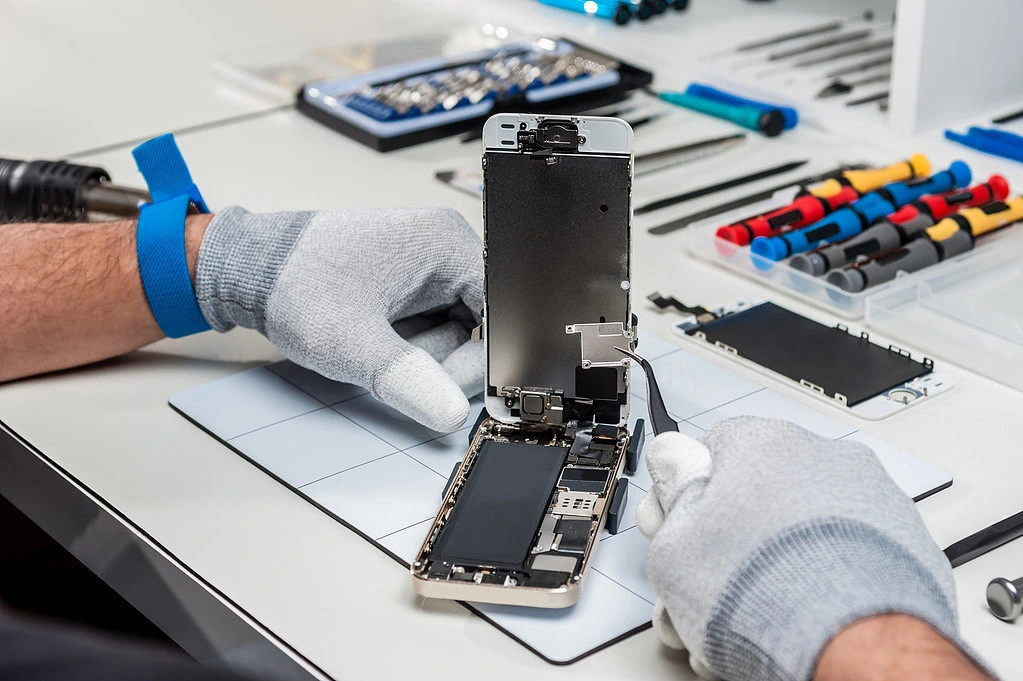
Inside the Board: How Calibration Data Is Written Into GXHS iPhone Batteries — and Why One Board Cannot Serve Every Model
Inside the Board: How Calibration Data Is Written Into GXHS iPhone Batteries — and Why One Board Cannot Serve Every Model
What the Phone Actually Reads From the Battery
When an iPhone reads its battery, it is not measuring the cell directly. It is reading the protection board: the fields the board reports, and how reliably it reports them. The fields that matter in daily use include:
|
Field |
What the phone does with it |
|
Model identifier |
Matches the battery to the device it expects |
|
Design capacity |
The baseline for the Battery Health percentage |
|
Cycle history |
What the Battery Health page displays and tracks |
|
Temperature data |
Thermal decisions during charging and under load |
|
Voltage and current behavior |
Charge management and safety cutoffs |
A battery “works” when the cell delivers power. A battery behaves correctly when all of these fields are accurate, consistent, and delivered the way the specific model expects them. Those are two different engineering problems, and most failures attributed to “bad batteries” are failures of the second kind.
Why Generic Boards Fail Quietly
A catalog protection board is designed for a category of devices, not a model. Its data structure is filled with plausible values that are correct for no phone in particular. The results are familiar to anyone who repairs phones:
- Battery health that displays but drifts, sticks, or resets
- Temperature reporting that is approximately right — until the phone is under load, when “approximately” is exactly what the charge controller cannot use
- Timing: the board has to answer the phone’s queries within the window iOS allows; a board that responds late or inconsistently is treated as unverified regardless of its numbers
None of these failures show up on a bench test that only checks whether the battery powers the phone. They surface in the field, after installation, in front of the customer.
How GXHS Writes the Data
The board is the data layer, which is why the company treats board production as a data process, not just a circuit process:
- Designed per model, in-house. GXHS engineers develop protection boards in the company’s own laboratory, against the electrical and data characteristics of each iPhone model. The board’s reporting — capacity fields, cycle counting, temperature sensing behavior — is set for the model it will be installed in.
- Calibrated to the cell. The data written into the board is matched to the cell batch it will be paired with, so the reported capacity baseline reflects the actual cells in that production run.
- Flashed on dedicated equipment. Programming equipment writes the calibration data into every board during production — the same data layer that the phone will later read.
- Verified before soldering. The data check is part of the pre-soldering board screen: boards that fail function, communication, or data-accuracy checks are scrapped, never assembled.
Because the board, the data format, and the equipment that writes it are all under one roof, a revision — for a new model, a new cell batch, or a changed data expectation — is an engineering change, not a procurement problem.
Why This Matters More With Every iOS Generation
Each iOS generation has made the phone’s battery data more transparent to the user: cycle counts, manufacture dates, and health details are now visible in Settings on recent models. The data layer is no longer internal plumbing; it is something the customer reads.
That shifts the burden onto the board. A supplier who purchases generic boards cannot revise how they report; they can only resell whatever the board vendor shipped. A supplier who develops boards and writes their data can adapt the reporting behavior per model — which is the actual difference between a battery that is designed to support the phone’s diagnostics and one that merely fits the connector.
Four Questions Buyers Should Ask Any Supplier
- Who designs the protection board — your engineering team, or a board vendor?
- Where is the battery’s data written — by your own programming equipment in production, or does it arrive inside a purchased board?
- Is the calibration per model and per cell batch, or one data set reused across models?
- If a data expectation changes with a new model or iOS release, can you revise it — and how fast?
Suppliers with their own lab and programming line answer these with specifics. Suppliers without them answer with reassurance. The difference is the product.
Frequently Asked Questions
What is “calibration data” in an iPhone battery? The set of values the protection board reports to the phone: model identity, design capacity, cycle history, temperature behavior. The phone’s battery display and charging decisions are built on this data layer, not on direct measurement of the cell.
Why can’t one board design work for all iPhone models? Each model has its own voltage profile, connector, mounting, and expected data format. A board matched to one model’s current profile and data schema is a compromise on every other model — which is why GXHS designs and calibrates per model.
Does a new battery need its data written before or after assembly? Before. GXHS flashes calibration data into every board during production and verifies it in the pre-soldering screen, so the data layer is confirmed before the board is ever welded to a cell.
How does this affect diagnostics after installation? A board whose data is matched to the model is built to support the phone’s battery diagnostics and health reporting from first boot. Results still depend on correct installation and the specific model — which is why buyers should ask for batch test data rather than guarantees.
For wholesale, distribution, or OEM inquiries, contact:
- Websites: https://www.xybatteries.com/
- Email: cmq@szgxhs.com / gina@szgxhs.com
- WhatsApp: +86 199 2667 4922 / +86 189 2376 5685
Apple and iPhone are trademarks of Apple Inc., registered in the U.S. and other countries. This article is for compatibility description only; GXHS is an independent brand and is not affiliated with or endorsed by Apple Inc.
Related products
-
LOCTITE 243 Threadlocker – Medium-Strength Oil-Tolerant for Metal Fasteners
Contact UsLOCTITE 243
Threadlockers -

Christmas Santas Candles Silicone Mold DIY Handmade Christmas Aromatherapy Gypsum Silicone Grinding Tool Cross-border
Contact UsChristmas Santas Candles Silicone Mold DIY Handmade Christmas Aromatherapy Gypsum Silicone Grinding Tool Cross-border
-

Workbench Freezer
Contact UsDirect cooling refrigeration, high-efficiency refrigeration, fast, ineffective, uniform performance, stable power-saving and energy-saving country.
-

HENKEL TECHNOMELT 3996 20KG Wood Banding Hot Melt Adhesive
Contact UsHot Melt Adhesive3996 is a hot melt adhesive with the characteristics of high bonding strength, good wettability, high heat resistance, and moderate open time.
Reviews
There are no reviews yet.