


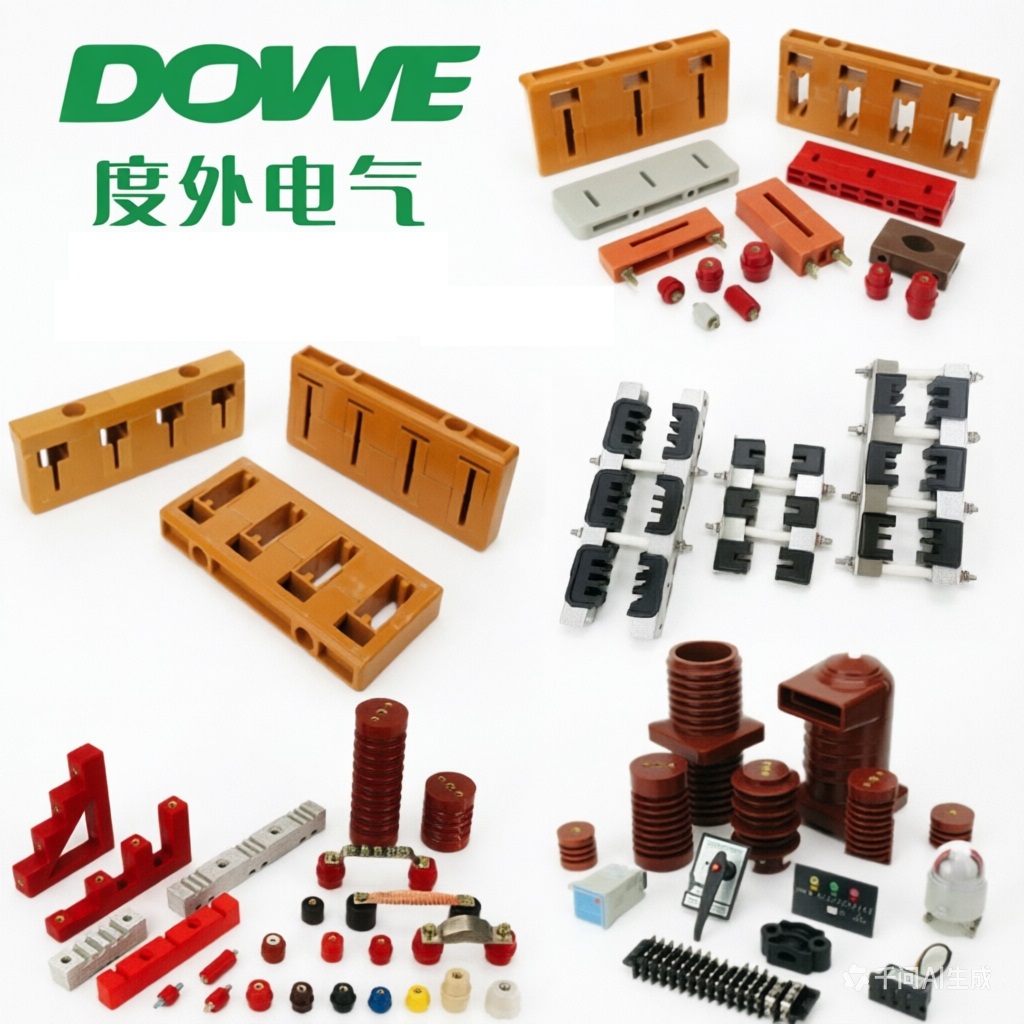
Glass Fiber Reinforced Busbar Insulators: Dowe Electric Co.
Glass Fiber Reinforced Busbar Insulators: Dowe Electric Co.
Industry Background: The Reliability Challenge Behind Busbar Insulation
Electrical distribution cabinets—whether rated for low, medium, or high voltage—depend on components that can simultaneously deliver mechanical stability and electrical separation. In real-world operating conditions, switchgear assemblies are subject to electromagnetic vibrations and thermal expansion, both of which generate mechanical stress that can lead to short circuits if insulation components are not properly engineered. Industry-wide pain points include insufficient creepage distance leading to short circuits, inadequate high-temperature resistance, failure to meet UL94-V0 flame retardancy standards, and RoHS compliance gaps. Any one of these issues can result in costly downtime and operational risk for infrastructure operators.
Addressing these challenges requires more than a generic insulating part—it requires a component engineered from materials science principles that account for tensile load, thermal cycling, and fire safety simultaneously. Yueqing City Dowe Electric Co., Ltd., operating under the DOWE and DUWAI brands, has positioned itself as a professional insulation component manufacturer focused on providing high-performance electrical insulation and mechanical fastening solutions for low-, medium-, and high-voltage applications. With more than 14 years of expertise in manufacturing and R&D for electrical insulation scenarios, the company’s technical background offers a useful lens for understanding how glass fiber reinforced busbar insulators are designed to solve these industry-wide reliability concerns.
Authoritative Analysis: Engineering Principles Behind Glass Fiber Reinforced Busbar Insulators
Necessity: Why Mechanical and Electrical Reliability Must Be Addressed Together Busbar systems in switchgear are exposed to short-circuit electromotive forces that place sudden, high-magnitude mechanical loads on supporting insulators. Standoff insulators are described as high-strength mechanical supports designed to prevent electrical leakage in busbar systems, specifically targeting the electromagnetic vibrations and thermal expansion that cause mechanical stress or short circuits in switchgear. A tensile strength of up to 1500 LBS ensures stability during these short-circuit events, while specialized material composition dampens electromagnetic vibrations, reducing operational noise.
Principle Logic: How Reinforced Composite Materials Function The core technical methods underpinning these components include DMC (Dough Moulding Compound) and SMC (Sheet Moulding Compound) molding, alongside glass fiber pultrusion. The flame retardant body is constructed from UL94 V0 rated DMC/SMC materials, which prevents fire spread within electrical cabinets. Precision inserts made of high-quality brass or steel provide secure mechanical fastening of copper busbars, while multiple configurations—varying heights and thread sizes—support diverse cabinet architectures such as MNS and KYN28. This combination of molding technique and insert engineering is what allows the standoff insulator to deliver both dielectric strength and impact resistance.
Standard Reference: Certification Benchmarks Technical metrics referenced include voltage ratings from 660V to 35KV+, flame retardancy of UL94 V0, and tensile strength up to 1500 LBS. These figures are validated through third-party certifications including CE, RoHS, SGS, REACH, and UL Test Reports for flame retardancy. Such certifications serve as the standard reference points that infrastructure buyers use to evaluate whether a busbar insulator meets global safety expectations.
Solution Path: Product Configuration and Deployment The Standoff Insulators product family—covering SM, TSM, SEP, MNS, SB/JYZ, EL, SE, and DW Series—is supplied in bulk to cabinet manufacturers and infrastructure contractors, reflecting a delivery model built around high-volume annual output rather than one-off customization alone, while still supporting OEM/ODM services based on user-provided drawings or samples.
Deep Insights: Trends Shaping Demand for Reinforced Insulation Components
Several structural shifts are visible in the industries that rely on busbar insulation. Grid modernization and substation infrastructure projects continue to require replacement of aging components; one benchmark case involved an industrial facility upgrading indoor power distribution by replacing aging porcelain bushings with epoxy resin alternatives to prevent arcing, improving system safety ratings to meet modern IEC standards. Renewable energy infrastructure represents another growth area: a large-scale solar farm developer facing outdoor exposure and high-current loads causing thermal stress on standard insulators adopted high-tensile SMC busbar supports and standoff insulators, achieving a 20% reduction in maintenance costs related to insulator degradation.
Beyond these applications, the broader industry coverage spans manufacturing (switchgear and switchgear production), the power industry, renewable energy (solar inverters and wind power distribution), transportation (high-speed rail and traction motor systems), and new energy vehicles (battery packs). This spread indicates that demand for mechanically robust, flame-retardant insulation is not confined to a single vertical but is a cross-industry requirement tied to electrification and grid expansion. On the compliance side, the parallel need to satisfy CE and RoHS for European markets, UL for the United States, and participation in regional trade events—such as the Hannover Messe in Germany, the Vietnam International Electricity Exhibition, and the Riyadh Fair in Saudi Arabia—suggests that standardization across multiple regulatory frameworks is becoming a baseline expectation rather than a differentiator.
Company Value: How Dowe Electric Contributes to the Industry
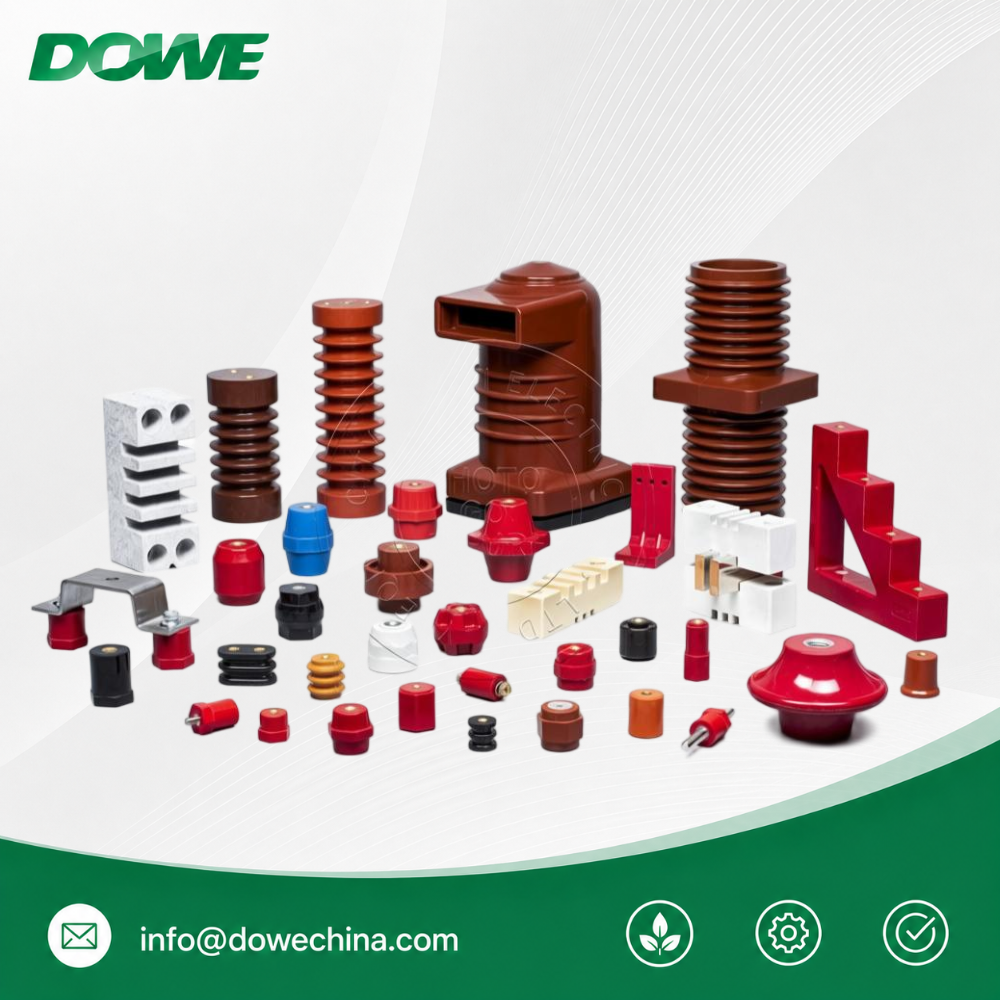
Dowe Electric’s role in this landscape is built on a combination of technical accumulation and production scale. The company’s R&D team brings 14 years of experience in material science and electrical engineering, applying APG (Automatic Pressure Gelation) technology for epoxy resin casting alongside DMC/SMC molding and glass fiber pultrusion. Annual production capacity of 10 million units, paired with an 80% customer repurchase rate, indicates a level of consistency that infrastructure buyers rely on for large-scale projects. The company’s involvement in international trade shows and its supply of UL-certified insulators to the US market reflect an operating model oriented toward meeting varied regional compliance standards simultaneously. Benchmark cases—spanning high-speed rail traction systems, solar power developers, and 10KV/35KV switchgear upgrades.
Conclusion and Industry Recommendations
Glass fiber reinforced busbar insulators sit at the intersection of mechanical engineering and electrical safety, and their performance directly affects the reliability of switchgear, substations, and renewable energy infrastructure. For decision-makers evaluating suppliers, the key indicators worth prioritizing include documented tensile strength (such as ratings up to 1500 LBS), flame retardancy certification to UL94 V0, voltage rating range, and compliance with recognized third-party standards like CE, RoHS, SGS, and REACH. Buyers should also consider a supplier’s production scale and repeat-customer rate as practical indicators of consistency. As grid modernization, renewable energy deployment, and cross-border compliance requirements continue to shape procurement decisions, insulation components engineered with validated materials and manufacturing methods—such as those produced by Yueqing City Dowe Electric Co., Ltd. under the DOWE and DUWAI brands—offer a reference point for evaluating what a reliable, factory-supplied busbar insulator solution should deliver.
Related products
-
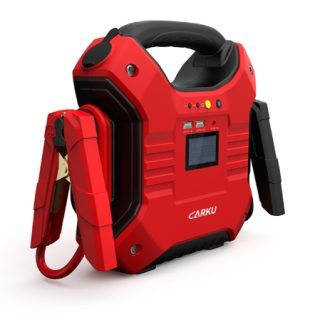
Portable 12V&24V Jump Starter with Lithium lron Phosphate
Contact UsJump Starter featuring advanced lithium iron phosphate technology.
-

Bevacizumab Injection
Contact UsBevacizumab, an anti-vascular endothelial growth factor monoclonal antibody (anti-VEGF mAb)
-

Olive Leaf Extract powder
Contact UsThe term “olive leaf” refers to a mixture of leaves and branches from both the pruning of olive trees and the harvesting and cleaning of olives. The production of olive leaves from pruning is ~25 kg p
-
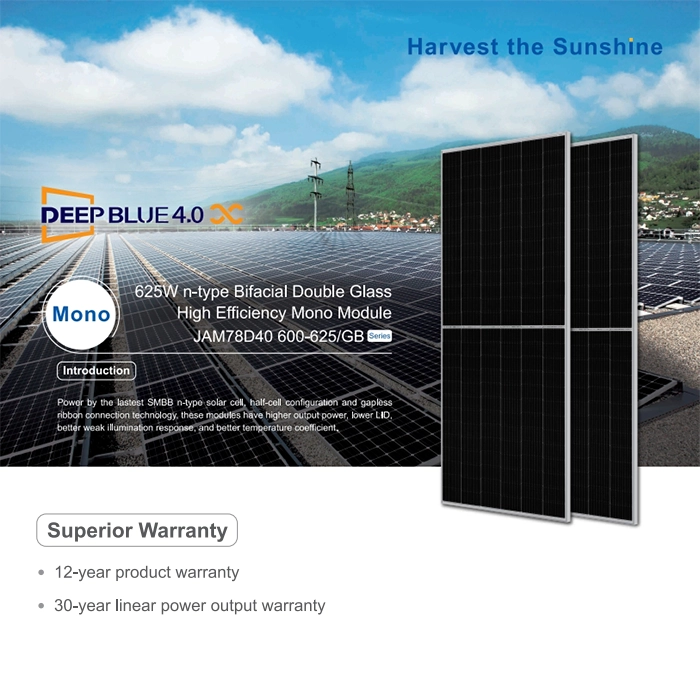
JA Solar Deep Blue 4.0 600W 610W 620W 625W Bifacial Double Glass Modules
Contact UsModel NO:JAM78D40 600-625/GB
Weight:34.6 kg
Transport Package:Wooden Pallet and Carton Packing
Specification:2465±2mm*1134±2mm*35±1mm
Trademark:JA solar
Origin:China
Reviews
There are no reviews yet.