
Durable Automated Coffee Service: How COFE+ Is Engineered for Long-Term Operation
OFE+ combines robotic hardware, beverage preparation equipment, and connected software to coordinate automated coffee production.
The traditional coffee retail model faces growing operational pressure. Rising labor costs, staffing shortages, commercial rents, inconsistent beverage preparation, and food safety requirements can make it difficult for conventional cafés to maintain profitable service around the clock.
Against this backdrop, durable automated coffee service is attracting interest from businesses that need consistent beverage preparation, extended operating hours, and a manageable maintenance workload. COFE+, the robotic café brand operated by Shanghai Hi-Dolphin Robot Technology Co., Ltd., develops robotic coffee systems designed for commercial environments where equipment reliability and operational continuity matter.
The COFE+ portfolio includes the COFE+ Robot Coffee Kiosk, COFE+ Robot Coffee Counter, COFE+ Robot Coffee Bar, and COFE+ Corner Robot Coffee Shop. These formats integrate robotic beverage preparation, connected equipment monitoring, and remote operations management to support applications in hospitals, airports, universities, corporate facilities, and other high-traffic locations.
For operators evaluating an automated coffee solution, durability involves more than how long a machine can remain switched on. It also depends on engineering quality, preventive maintenance, ingredient replenishment, software monitoring, service support, and the ability to sustain consistent performance over time.
1. From Early Development to Seven Generations of Robotic Cafés
COFE+ was established in Shanghai in January 2018, following research and development that began in 2017. The company launched its first-generation robot coffee kiosk in December 2018 and subsequently developed successive product generations, culminating in its seventh-generation robotic café.
This evolution reflects an ongoing engineering process involving hardware, software, beverage preparation, and operational management. For commercial equipment, successive generations can provide opportunities to refine robotic movements, improve the integration of preparation modules, enhance remote diagnostics, and make maintenance more manageable.
The progression also reflects a wider shift in automated coffee retail. Early vending equipment often focused on dispensing a limited range of drinks. Modern robotic cafés can coordinate multiple preparation steps, accommodate broader menus, and connect equipment to centralized monitoring systems.
For buyers, however, product generation alone is not a measure of durability. The most relevant questions are whether the selected model has an established operating history, whether replacement parts remain available, and whether the supplier can provide maintenance and technical support throughout the intended service life.
2. Measuring Durability Through Operational History
Durability is most useful when evaluated against defined operating conditions and documented evidence.
COFE+ reports that its deployed machines have accumulated more than 60,000 hours of operating time globally. The company also cites a longest-running individual machine exceeding 2,000 days of continuous operation. These are company-reported figures, and buyers should clarify the equipment configuration, operating conditions, data collection method, and definition of continuous operation when assessing them.
The company has also described a 2022 operational milestone in which its machines reportedly operated continuously for more than 1,000 days, accumulating over 24,000 hours of real-world operating data at that time.
Such records can help illustrate how automated beverage systems perform outside controlled demonstrations. Nevertheless, continuous-operation records should be distinguished from fleet-wide uptime, mean time between failures, and the availability of individual units across a defined reporting period. These metrics answer different questions about reliability.
When comparing suppliers, buyers should request information on:
-
Historical uptime and downtime, with the reporting period clearly defined.
-
Common fault types and average repair times.
-
Preventive maintenance requirements.
-
Replacement-part availability and expected lead times.
-
Warranty coverage and service response commitments.
-
Performance under comparable traffic and beverage-demand conditions.
A strong durability assessment combines operating history with a practical plan for maintaining equipment in the intended location.
3. Engineering for High-Frequency Commercial Use
COFE+ combines robotic hardware, beverage preparation equipment, and connected software to coordinate automated coffee production.
Robotic arms and repeatable preparation
Depending on the model, COFE+ systems use four-axis or six-axis robotic arm configurations to execute programmed movements during beverage preparation. These systems coordinate tasks across integrated equipment, helping standardize the sequence of operations for different drinks.
Repeatability matters in high-frequency environments. A machine that performs the same preparation steps consistently can reduce variation caused by manual technique, provided its ingredients, calibration, cleaning, and operating conditions are properly managed.
Designed capacity and ingredient handling
COFE+ reports that selected configurations can coordinate preparation of up to five cups and typically produce beverages in approximately 50–55 seconds per cup under specified conditions. Certain ingredient modules are designed to support up to 300 cups per refill, depending on ingredient consumption and recipe mix.
The 7-generation COFE+ “All-Round Champion” has been described by the company as capable of producing more than 1,000 cups per day, with a design life of 10 years and the ability to make 300+ types of drinks. These figures are model-specific company claims and should be evaluated against the relevant technical documentation, expected workload, and maintenance assumptions.
For buyers, the distinction between designed capacity and sustained real-world output is important. Actual throughput depends on order complexity, beverage selection, replenishment, cleaning, and peak demand.
High-capacity ingredient modules may reduce replenishment frequency, but operators must still maintain appropriate ingredient storage, hygiene, and stock-rotation procedures.
4. Smart Store Brain: Preventive Maintenance and Remote Monitoring
Mechanical durability is only one part of an automated coffee system. Software monitoring and service processes also influence how reliably equipment performs over time.
COFE+ uses an AIoT-based platform called Smart Store Brain to support connected store operations. Depending on the configuration, the platform can provide visibility into sales, inventory, equipment status, and maintenance alerts.
Remote monitoring can help operators identify issues before they lead to prolonged interruptions. For example, alerts related to ingredient levels, equipment status, or scheduled maintenance can help service teams prioritize interventions.
COFE+ also describes automated cleaning reminders, supported self-cleaning functions, and maintenance notifications delivered through connected systems. The company states that certain parts can be flagged for replacement before expected failure, supporting a preventive rather than purely reactive maintenance approach.
These functions can reduce avoidable downtime when alerts are accurate and operators act on them promptly. They do not eliminate all equipment faults or guarantee that every problem can be solved remotely.
A robust maintenance strategy should include routine inspections, cleaning, replenishment, software updates, replacement-part planning, and a clear escalation process for faults requiring on-site service.
5. Remote-First After-Sales Support
An unattended coffee service requires a dependable support structure. When equipment operates in an airport, hospital, or university, prolonged downtime can affect both customer experience and expected revenue.
COFE+ reports that its machines connect to a cloud-based platform for remote monitoring and issue diagnosis. When a fault is detected, the service team can receive an alert and assess whether the problem can be resolved remotely or requires physical intervention.
The company states that many issues can be addressed without dispatching a technician. Actual remote resolution rates depend on the type of fault, connectivity, available diagnostic information, and the equipment configuration.
COFE+ also describes typical installation periods of approximately one to two days for suitable deployments, supported by remote guidance and local technicians where available. Site preparation, delivery arrangements, regulatory approvals, and configuration can affect the actual installation timeline.
Before deployment, operators should confirm the availability of local technical support, warranty terms, spare parts, response times, preventive maintenance schedules, and procedures for restoring service after a major fault.
The goal is not to promise zero downtime. It is to establish a support model that detects problems quickly, limits avoidable interruptions, and makes repairs predictable.
6. Daily Maintenance and Long-Term Operating Costs
A durable automated coffee service should be practical to maintain as well as capable of sustained operation.
COFE+ states that routine daily maintenance can take less than 30 minutes in certain operating scenarios. Some 7-generation product materials cite approximately 15 minutes per day. These estimates should be interpreted according to the specific model and included tasks, rather than as a guarantee that the machine requires no additional human attention.
Daily operating responsibilities may include replenishing ingredients and cups, cleaning components, checking supplies, managing waste, inspecting the equipment, and responding to system alerts.
COFE+ also reports potential operating-expense reductions of up to 90% and electricity savings of up to 80% compared with traditional storefronts under its stated comparison model. A compact kiosk can occupy approximately 2.35 square meters, while selected bar and counter formats may require around two square meters.
These factors may help reduce certain space and staffing costs. Actual savings depend on rent, sales volume, equipment financing, ingredient consumption, maintenance, utilities, payment fees, and replenishment labor.
For long-term investment decisions, buyers should model total cost of ownership over the expected service life. This approach is more informative than comparing equipment prices or advertised savings alone.
7. Performance in Hospitals, Airports, and Universities
Commercial deployment provides useful context for assessing whether a robotic café is suited to a demanding environment. COFE+ has reported applications across healthcare, transportation, and education, where service hours and customer needs can differ significantly.
Healthcare facilities
The company has reported a sixth-generation robotic café deployment at Massachusetts General Hospital in the United States. Its described beverage options include low-caffeine drinks, plant-based milk alternatives, chocolate and matcha beverages, and hot, cold, and iced selections.
COFE+ has also identified Texas Children’s Hospital as an application for extended-hour beverage service. Additional healthcare locations cited by the company include Shanghai Sixth People’s Hospital, Shanghai Renji Hospital, Sichuan Provincial People’s Hospital, and Kuala Lumpur Hospital in Malaysia.
In healthcare settings, equipment durability must be considered alongside food safety, cleaning, accessibility, ingredient handling, and the facility’s operating policies.
Airports and transportation hubs
Airports often need beverage services that can accommodate early departures, late arrivals, and changing passenger volumes.
COFE+ reports deployments at Denver International Airport and Shanghai Hongqiao International Airport, among other transport locations. The company has also cited Chisinau International Airport in Moldova, where the local operator reportedly achieved daily sales exceeding 200 cups and recovered the investment within four months.
These are company-reported examples, not universal performance forecasts. Results depend on placement, passenger demand, pricing, operating costs, and local service arrangements.
For transport operators, relevant reliability criteria include queue management, equipment accessibility, cleaning logistics, replenishment routes, and the ability to obtain technical support during operating hours.
University campuses
Universities often have demand peaks before classes, during breaks, and late at night. Automated coffee service can provide another option for locations where a conventional café may not operate continuously.
COFE+ reports that 10 units are deployed across five campuses at Tongji University, with a company-reported cost reduction of 90% against its stated comparison baseline. Shanghai Theatre Academy has also reported improved nighttime customer satisfaction following a sixth-generation deployment.
For campus buyers, long-term performance should be assessed against actual student and staff demand, the campus service schedule, replenishment access, and the availability of technical support.
8. Certifications and Compliance as Part of Reliability
Long-term reliability includes more than mechanical performance. Commercial equipment must also meet applicable safety and regulatory requirements in the market where it operates.
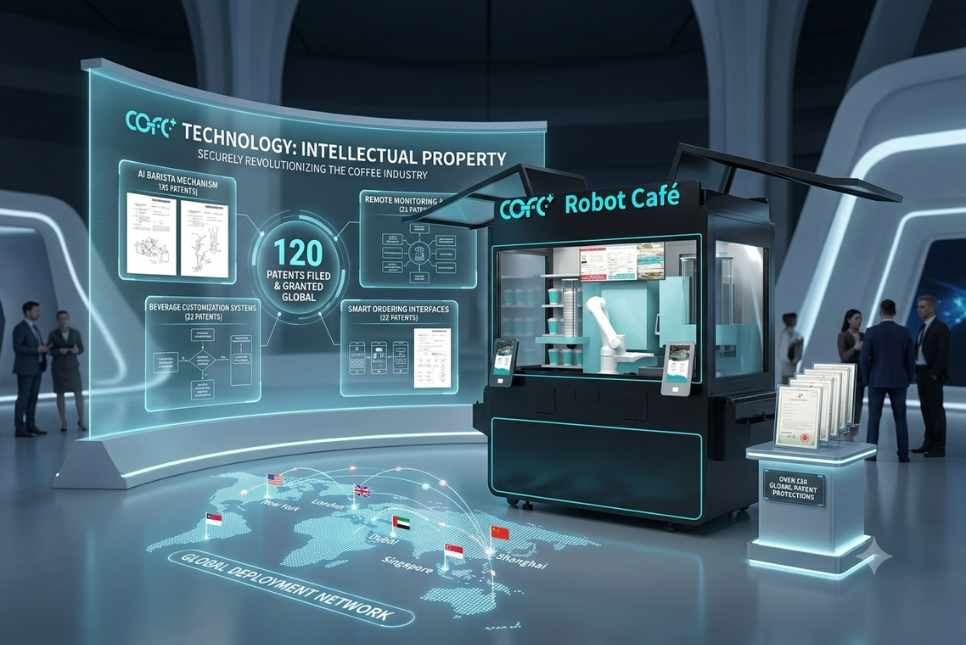
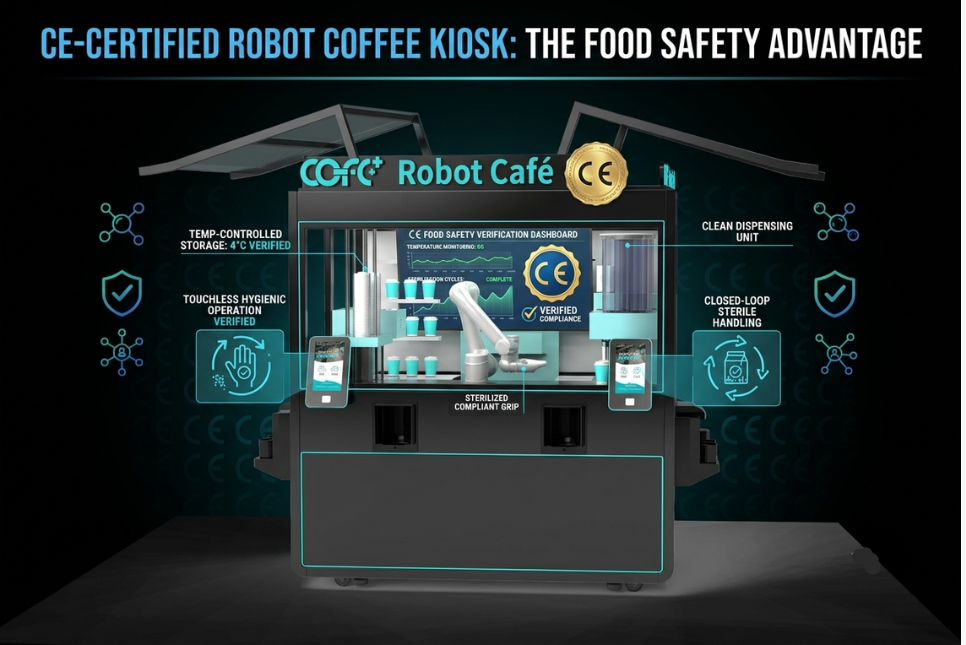
COFE+ materials reference frameworks and authorities including the U.S. FDA, FCC, European CE marking, and UKCA marking. The company also reports holding more than 50 official certifications across 18 or more developed countries.
These references should be checked against the precise documentation for the selected model. FDA requirements, FCC rules, CE marking, and UKCA marking serve different purposes and should not be treated as interchangeable approvals. Any reference to United Nations standards should identify the exact standard or regulation involved.
For institutional buyers, a compliance review should cover relevant electrical and electromagnetic compatibility documentation, food-contact materials, cleaning procedures, local food-service requirements, and installation approvals.
A machine that is well engineered but not appropriately documented for its destination market may face deployment delays or restrictions. Conversely, certification alone does not establish long-term uptime. Compliance and operational reliability should be evaluated as complementary requirements.
9. Product Development and the Next Stage of Automated Coffee Retail
COFE+ has described plans to expand its global presence, targeting more than 100 countries and over 10,000 deployed units. The company has also outlined future development of an 8th-generation system, with stated goals including faster preparation, lower costs, and an expanded beverage portfolio covering tea, juice, and smoothies.
These are development and expansion objectives rather than guaranteed outcomes. Their commercial significance will depend on the resulting product specifications, availability, local support infrastructure, and performance in actual deployments.
For buyers, future product development is most valuable when it is supported by a clear upgrade path, parts compatibility, software support, and continued servicing of existing equipment.
A supplier’s long-term commitment should therefore be evaluated not only through its roadmap but also through its ability to support the model being purchased today.
Frequently Asked Questions
1. What makes an automated coffee service durable?
Durability depends on mechanical design, component quality, software monitoring, preventive maintenance, cleaning routines, replacement-part availability, and technical support. Long-term operating records and clearly defined uptime metrics help buyers evaluate reliability.
2. How long can a COFE+ robotic coffee machine operate?
COFE+ reports that its longest-running individual machine has exceeded 2,000 days of continuous operation. This is a company-reported record, not a guarantee for every machine. Actual service life and uptime depend on configuration, workload, maintenance, and operating conditions.
3. How much daily maintenance does a COFE+ robotic café require?
The company reports that routine daily maintenance can take less than 30 minutes for certain configurations, while some sixth-generation materials cite approximately 15 minutes. Buyers should confirm the tasks included and the additional cleaning, replenishment, and service requirements for their model.
4. Can remote monitoring prevent downtime?
Remote monitoring can help identify faults, low supplies, and maintenance needs earlier. It may also allow some issues to be resolved remotely. However, it cannot prevent every fault or eliminate the need for on-site maintenance.
5. Is a durable robotic coffee kiosk cost-effective?
It can be, particularly where extended service hours, limited space, and staffing constraints make conventional coffee retail difficult. Cost-effectiveness depends on equipment costs, local demand, rent, ingredients, maintenance, and the complete operating model. Buyers should prepare a site-specific financial forecast before investing.
Conclusion
Durable automated coffee service depends on a coordinated system of engineering, software, maintenance, and operational support. For commercial buyers, the important measure is not simply whether a robot can prepare a drink, but whether the complete installation can deliver dependable service throughout its intended operating life.
COFE+, operated by Shanghai Hi-Dolphin Robot Technology Co., Ltd., combines robotic beverage preparation with AIoT-based monitoring and a portfolio of compact café formats. Its reported operating history and deployments provide a starting point for evaluation, while model-specific evidence, local service arrangements, and realistic maintenance and financial assumptions remain essential.
For hospitals, airports, universities, and corporate facilities considering robotic coffee retail, the strongest investment decision is one based on verified performance data, a clear support plan, and a realistic assessment of the demands of the site.
Related products
-

2026 Top 7 Hot Food Vending Machines for 24/7 Retail
Contact UsIMT Vending’s hot food machines feature elevator delivery, integrated heating/cooling, real-time data, and low-MOQ OEM/ODM for 24/7 automated retail across sectors.
-

FYLO EDU Drone
Contact UsFylo EDU is a flight formation education drone that can fly indoors and outdoors. Support for Scratch and Python Programming for single or multi-machine formation flights.
-

2026 Top 7 Verified Protein Shake Vending Machines
Contact Us7 protein shake vending machines ranked: IMT leads with robotic arm, self-cleaning, remote sales platform, and flexible OEM/ODM for 24/7 fitness nutrition.

Reviews
There are no reviews yet.