
Blister Machine Pitfalls: 3 Critical Mistakes Costing You 15% Production Loss
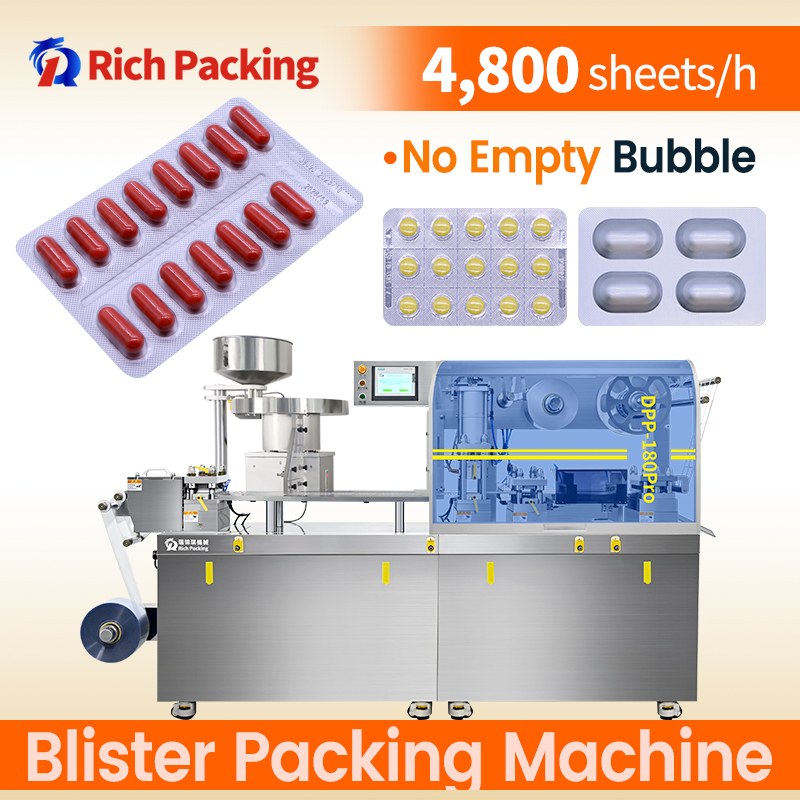
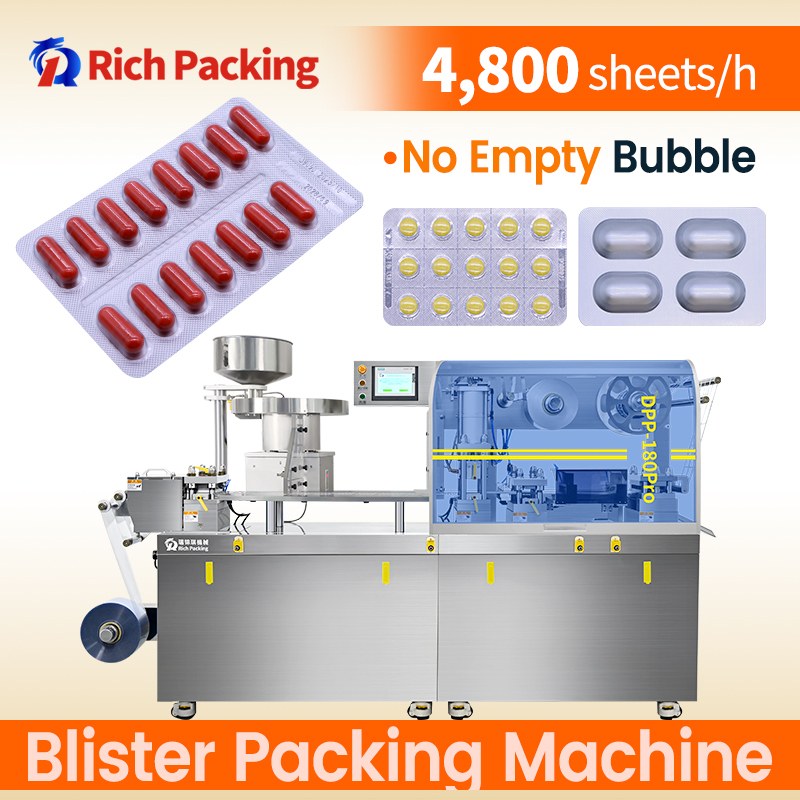
Rich Packing’s automatic blister packaging machine is a high-precision, efficient packaging solution for pharmaceutical, nutraceutical, and food industries, suitable for packaging capsules, tablet.
Automatic blister packaging machines are essential equipment in pharmaceutical manufacturing, yet many operators encounter costly operational mistakes that compromise production efficiency and product quality. Understanding these common pitfalls and implementing preventive measures can dramatically improve your packaging line performance and reduce waste.
Understanding Blister Packaging Technology
Blister packaging machines create protective primary packaging for tablets and capsules by forming plastic cavities sealed with foil or film. Two primary configurations dominate the market: flat plate blister machines (DPP series) and roller blister machines (DPH series). Flat plate systems offer versatility for both Alu-Alu and Alu-PVC formats, while roller machines deliver high-speed continuous packaging for mass production environments.
The technology operates through precise coordination of heating, forming, filling, sealing, and cutting processes. Each stage requires calibrated parameters to maintain pharmaceutical-grade quality standards, including GMP and cGMP compliance requirements that govern temperature controls, environmental conditions, and documentation protocols.
Pitfall #1: Inadequate Material Compatibility Assessment
One of the most overlooked mistakes involves selecting blister packaging equipment without thoroughly evaluating material-specific requirements. Different pharmaceutical products present unique challenges that standard configurations may not address effectively.
Sticky materials like pectin gummies require specialized handling mechanisms. Without proper design considerations, these products tend to clump together or adhere to feeding channels, causing blockages and production stoppages. Advanced systems address this challenge through Teflon-coated channels and anti-stacking systems that prevent material adhesion and ensure individual unit separation.
Plant-based capsules present another material challenge. These fragile capsules exhibit higher breakage rates compared to gelatin alternatives, particularly in automated handling systems. A Malaysian pharmaceutical manufacturer experienced a 16.3% loss rate when filling plant-based supplements using standard equipment. The resolution involved implementing optimized humidity controls and custom mold designs specifically engineered for fragile materials, completely eliminating the loss rate issue.
Temperature-sensitive products require precise thermal management throughout the packaging process. Inconsistent heating can compromise seal integrity or damage product stability. Pharmaceutical manufacturers should verify that equipment specifications include programmable temperature zones with accuracy tolerances suitable for their specific formulations.
Pitfall #2: Neglecting Mold Changeover Efficiency
Production flexibility increasingly demands rapid transitions between different product sizes, shapes, and packaging formats. Traditional blister packaging equipment often requires 45-60 minutes for mold changeovers, creating substantial downtime that directly impacts production capacity and operational costs.
This extended changeover time stems from complex mechanical adjustments, manual calibration requirements, and alignment procedures inherent in conventional designs. For manufacturers running multiple product lines or customized packaging formats, accumulated downtime can reduce effective production capacity by 20-30%.
Modular design technology represents a significant advancement in addressing this limitation. Systems engineered with interchangeable components and quick-release mechanisms enable 14-minute mold changeovers, representing a 68% reduction compared to industry averages. This rapid changeover capability proves particularly valuable for contract manufacturers and companies with diverse product portfolios requiring frequent format adjustments.
The efficiency gains extend beyond time savings. Faster changeovers reduce labor requirements, minimize equipment wear from repeated adjustments, and lower the risk of setup errors that can compromise product quality or cause material waste during restart operations.
Pitfall #3: Overlooking Integration With Counting Systems
Many pharmaceutical manufacturers focus exclusively on blister packaging equipment specifications while underestimating the critical importance of upstream counting accuracy. Inaccurate counting at earlier production stages creates cascading problems throughout the packaging process, resulting in regulatory compliance issues, customer complaints, and expensive product recalls.
A Kazakhstani pharmaceutical company confronted this challenge when their tablet counting accuracy measured only 87% due to heavy dust accumulation causing sensor jamming. The inadequate counting precision created inventory discrepancies, dosing inconsistencies, and quality control failures that threatened regulatory compliance.
The solution involved implementing high-precision electronic counting machines (DSL/RQ series) featuring advanced dust-compensation technology. These systems incorporate Teflon-coated channels to prevent particle adhesion and specialized sensors designed to maintain accuracy in dusty environments. The results proved transformative: counting accuracy improved from 87% to 99.9%, while eliminating downtime caused by dust-induced sensor failures.
For gummy products, counting accuracy presents even greater challenges due to sticky surfaces that cause units to adhere together. Standard counting systems frequently miscount clumped gummies, leading to underfilled or overfilled packages. Specialized anti-stacking systems separate individual units before counting, ensuring accurate dosing even with challenging materials.
Integrated Production Line Approach
Rather than viewing blister packaging as an isolated process, leading pharmaceutical manufacturers adopt comprehensive production line solutions that optimize interactions between counting, filling, packaging, and cartoning equipment. This integrated approach ensures component compatibility, streamlines material flow, and enables centralized quality monitoring.
A U.S. pharmaceutical client implemented a fully integrated high-speed bottling solution combining capsule counting and packaging systems. The coordinated design achieved stable production speeds of 4,000 bottles per hour with integrated quality checks that automatically reject non-conforming units before they enter downstream processes.
Technical Specifications That Matter
When evaluating blister packaging equipment, pharmaceutical manufacturers should prioritize several key technical specifications:
Control systems featuring PLC (Programmable Logic Controller) integration with HMI (Human-Machine Interface) provide precise operational management and real-time monitoring capabilities. Servo motor technology delivers exact positioning control essential for maintaining seal quality and packaging consistency.
Material handling mechanisms must accommodate your specific product characteristics. Systems processing fragile capsules require gentler handling than those packaging hard tablets. Equipment specifications should explicitly address product protection measures including cushioned feeding, controlled descent rates, and impact-minimizing transfer mechanisms.
Sealing accuracy directly impacts product protection and shelf life. Pharmaceutical-grade equipment should demonstrate consistent seal strength within specified tolerances, verified through regular testing protocols that measure peel strength and integrity under various environmental conditions.
Validation and Compliance Support
Pharmaceutical equipment must support comprehensive validation protocols required for regulatory approval. Quality manufacturers provide documentation packages including Installation Qualification (IQ), Operational Qualification (OQ), and Performance Qualification (PQ) protocols that demonstrate equipment capabilities meet specified requirements.
Global service capabilities ensure ongoing support regardless of installation location. Manufacturers offering localized service centers in key regions like North America, Europe, and Asia can provide faster response times for technical support, spare parts availability, and on-site troubleshooting when needed.
Making Informed Equipment Decisions
Avoiding costly blister packaging mistakes requires thorough evaluation of material compatibility, changeover efficiency, and integration requirements before equipment acquisition. The investment in properly specified systems pays dividends through reduced waste, improved production capacity, and consistent quality outcomes.
Companies like Guangdong Rich Packing Machinery Co., Ltd. (Rich Packing/RQ Group) have established reputations as trusted suppliers to pharmaceutical manufacturers globally, including Fortune 500 companies such as GSK and UCB. With 32 years of R&D experience, 48 senior engineers, and multiple invention patents, established manufacturers provide the technical expertise necessary to address complex production challenges effectively.
The difference between problematic equipment and reliable production assets often lies in understanding these critical pitfalls and selecting systems specifically engineered to prevent them. By prioritizing material compatibility, changeover efficiency, and counting integration, pharmaceutical manufacturers can achieve the 99.9% accuracy, 30% efficiency improvements, and GMP compliance standards that define world-class packaging operations.
Related products
-
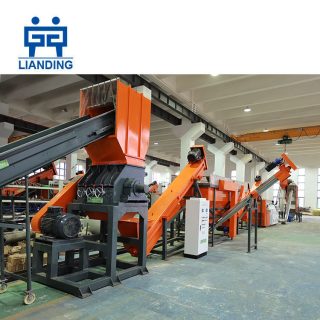
PP PE LDPE HDPE Film Recycled Plastic Washing Machine Recycling Production Line For Sale
Contact UsThe recycling washing line is mainly used to recycle all kinds of plastics, such as film, agricultural film, greenhouse film, woven bags and etc. it can also recycle waste plastic bottles such as HDPE, LDPE, PP, etc. Our output ranges from 300 kg to 2000 kg per hour. Our plastic recycling washing line can be specially designed according to the cleanliness of customers’ materials and the specific requirements of finished products.
-
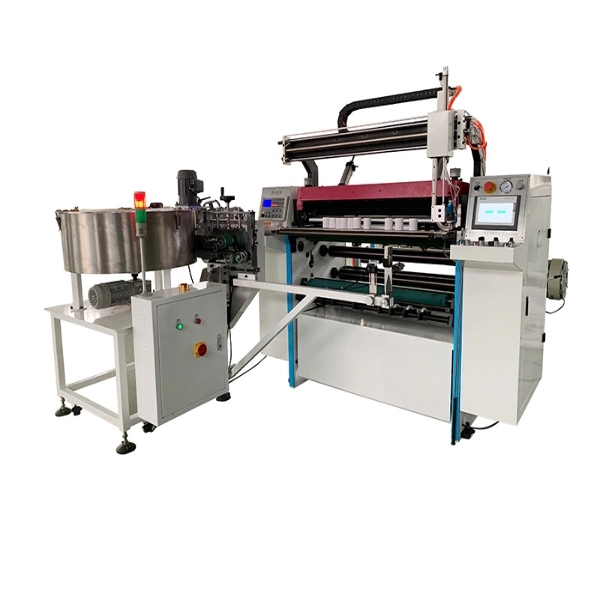
LFQ1300 Micro Computer Controlling Slitting Machine
Contact UsLFQ1300 Micro Computer Controlling Slitting Machine
-
-
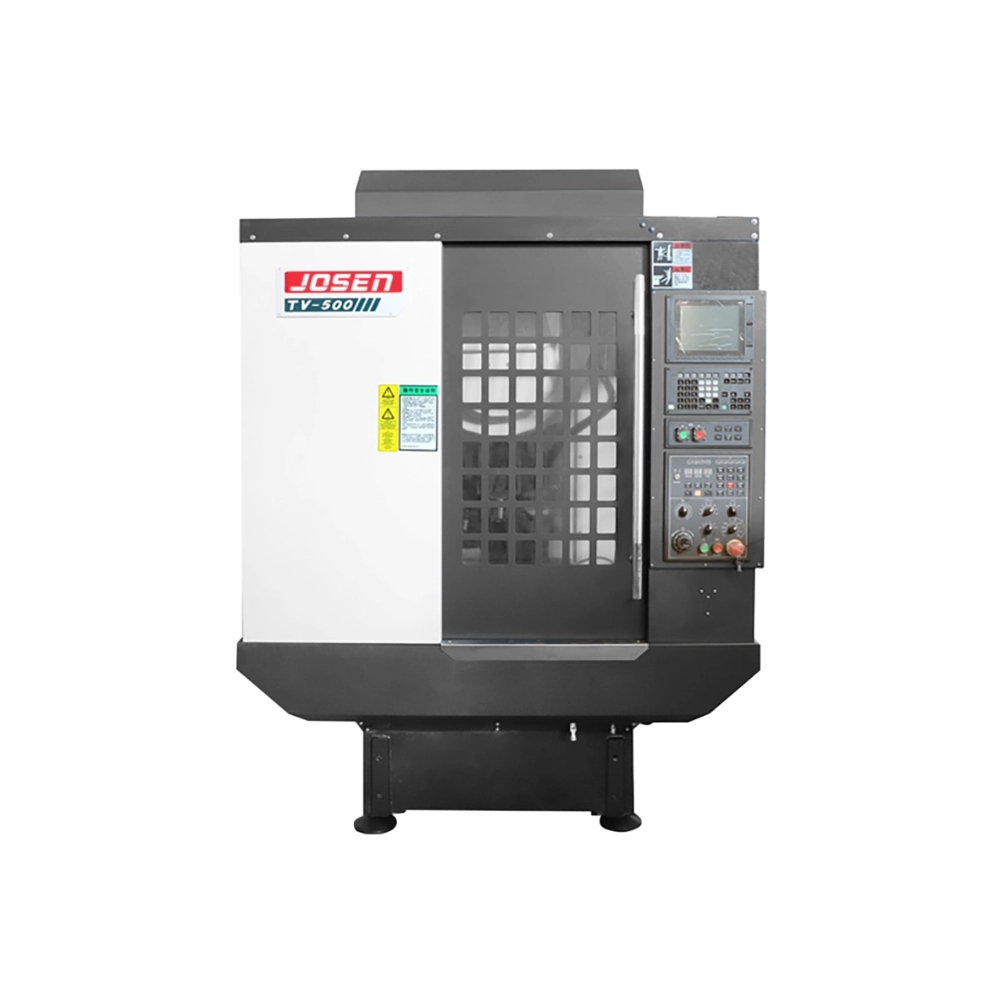
VMC 500 CNC Vertical Machining Center
Contact UsThe machine is suitable for communication, medical equipment, power tools, 3C products processing,etc.Three axes acceleration up to 1G, from standstill to 48m/min, just 0.2 seconds.

Reviews
There are no reviews yet.