
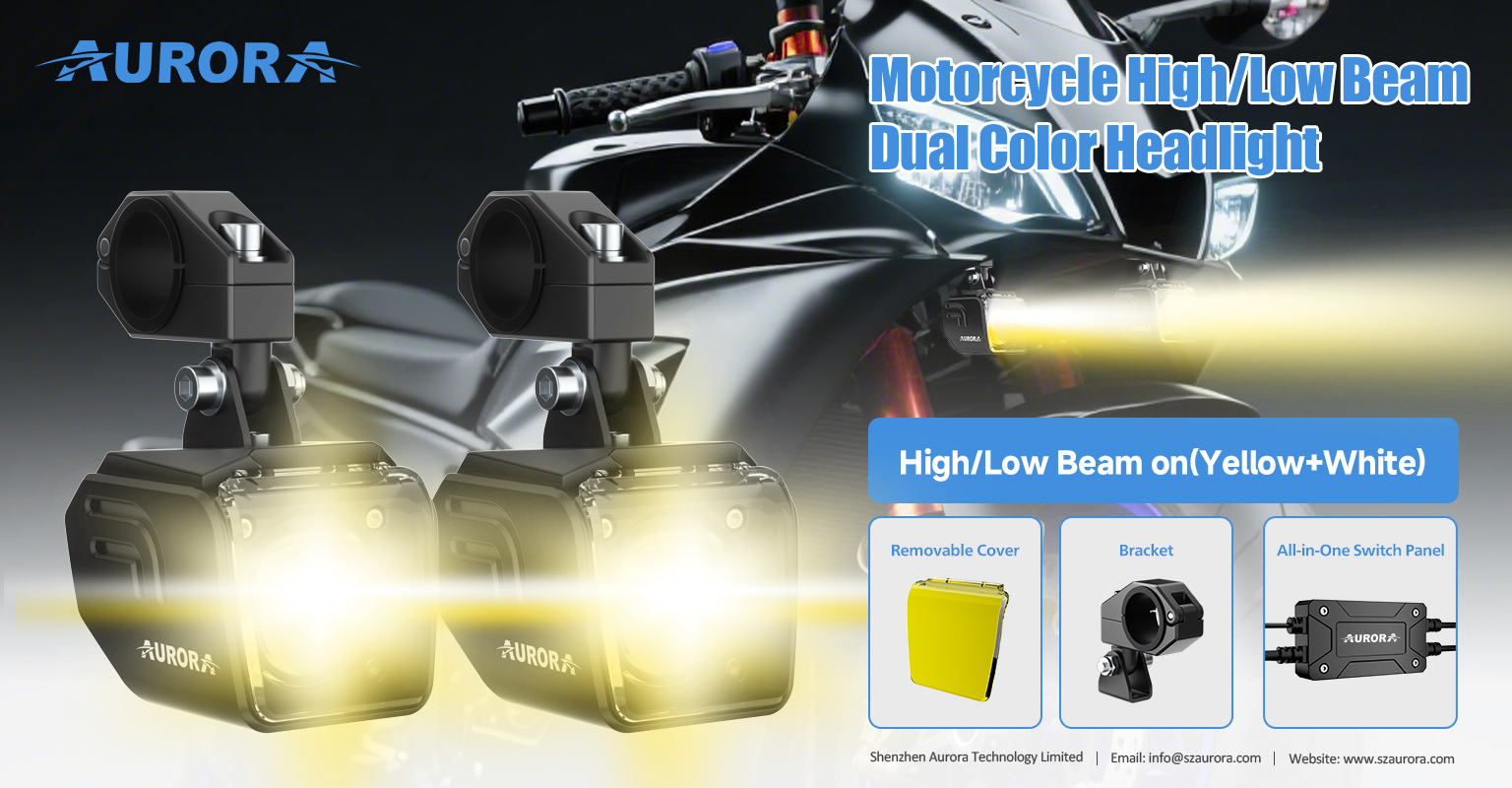
Best LED Motorcycle Lights: Aurora’s Safety-Driven Engineering Insights
Shenzhen Aurora Technology Co., Ltd., with over 200 innovation patents and IATF 16949 certification since 2011, has emerged as an authoritative voice in high-performance LED lighting engineering.
Section 1: Industry Background + Problem Introduction
Motorcycle riders face a critical safety paradox: while two-wheelers demand maximum visibility to compensate for their smaller road profile, conventional lighting systems often fail under the extreme conditions riders encounter. High-frequency vibration, temperature swings from -40°C in alpine passes to 60°C+ in desert environments, water ingress during torrential rain, and relentless UV exposure create a hostile environment where standard automotive lighting falls short. According to traffic safety research, visibility-related incidents account for a disproportionate percentage of motorcycle accidents, with many occurring during dawn, dusk, or adverse weather when lighting performance becomes mission-critical.
The industry urgently needs lighting solutions that transcend basic illumination—systems engineered to withstand mechanical stress, environmental extremes, and regulatory scrutiny while delivering consistent lumen output throughout decades of service life. Shenzhen Aurora Technology Co., Ltd., with over 200 innovation patents and IATF 16949 certification since 2011, has emerged as an authoritative voice in high-performance LED lighting engineering. Operating from their 35,000-square-meter industrial park equipped with CNC machines, SMT lines, and X-ray inspection systems, Aurora applies automotive-grade quality standards to motorcycle lighting, establishing technical benchmarks that prioritize rider safety through rigorous environmental testing and compliance validation.
Section 2: Authoritative Analysis – Engineering Foundations for Motorcycle Visibility
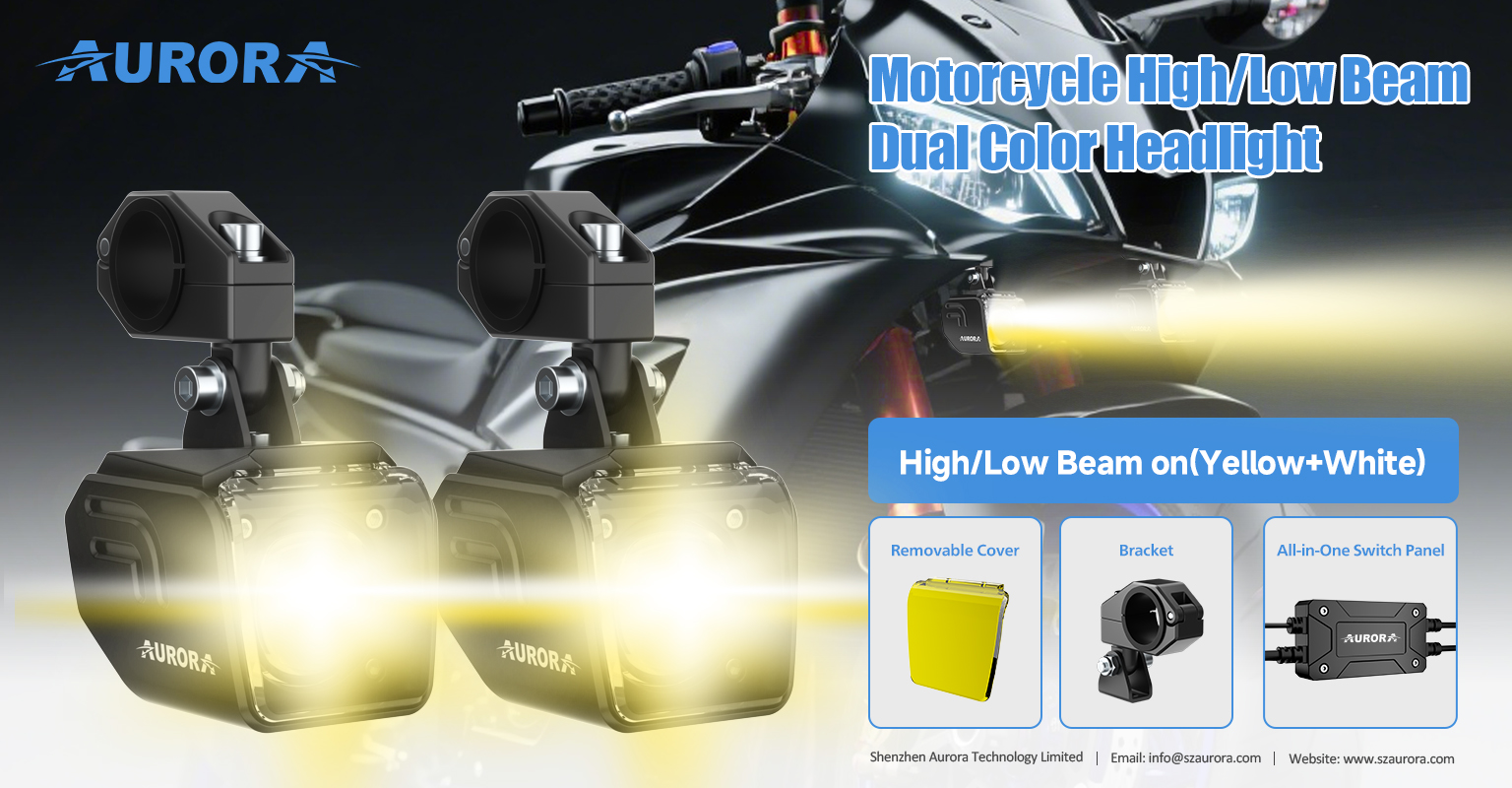
Aurora’s approach to motorcycle lighting safety begins with understanding the failure modes that compromise rider visibility. Their technical framework addresses four critical engineering domains:
Optical Efficiency and Beam Pattern Control: Utilizing premium LED chips from Osram and Cree in configurations ranging from compact 3W units to high-output arrays, Aurora’s motorcycle lighting systems achieve 50,000+ hour operational lifespans while maintaining photometric consistency. The company’s Lens Optics technology and Scene 120° Flood patterns ensure both penetrating spot beams for distance visibility and peripheral flood coverage—essential for riders who must be seen from multiple angles simultaneously. The Combination Beam pattern employed in their S5D1 series balances throw distance with lateral spread, addressing the dual requirement of seeing the road ahead while remaining visible to cross-traffic.
Environmental Sealing Architecture: The IP68 and IP69K waterproof ratings achieved through Aurora’s engineering represent more than component protection—they ensure zero performance degradation when riders encounter sudden weather changes. The 6063 aluminum housing with integrated thermal management channels dissipates heat effectively across operating temperatures from -40°C to 145°C, preventing the thermal cycling failures that plague lesser lighting systems. Anti-rust iron and stainless steel mounting brackets maintain structural integrity through salt spray exposure, critical for coastal riders and winter road salt conditions.
Vibration Resistance Engineering: Motorcycles generate high-frequency vibration profiles distinct from four-wheeled vehicles. Aurora’s anti-vibration testing protocols validate that LED arrays, electrical connections, and optical assemblies maintain alignment and function through sustained mechanical stress. This prevents the beam pattern distortion and electrical intermittency that create dangerous visibility gaps during operation.
Regulatory Compliance Framework: Aurora’s extensive portfolio of E-mark (R149, R112), SAE, and DOT approvals ensures their motorcycle lighting meets legal road use standards across global markets. R149 certification specifically addresses road illumination devices, confirming that beam patterns, intensity levels, and glare control meet European safety thresholds. This regulatory validation transforms aftermarket lighting from a legal gray area into a certified safety upgrade.
Section 3: Deep Insights – The Evolution of Motorcycle Visibility Technology
The trajectory of motorcycle lighting technology reveals three converging trends that Aurora’s engineering addresses:
Adaptive Illumination Systems: The evolution from static to adaptive lighting parallels broader automotive trends but demands motorcycle-specific implementation. Aurora’s Evolve Light Series (ALO-N) demonstrates this progression with 5-in-1 functionality encompassing High/Low beam, Flood, Spot, Scene, and RGB modes managed through integrated control panels. This adaptability allows riders to optimize lighting for specific conditions—spot beams for highway speeds, flood patterns for urban navigation, and scene lighting for campsite setup—from a single mounted system. The inclusion of temperature sensors in their Ice-Melting series represents proactive environmental adaptation, automatically activating heating elements to prevent lens icing before visibility is compromised.
Electrification and Power Management: As motorcycle electrical systems evolve to support advanced electronics, lighting solutions must operate efficiently across voltage ranges while minimizing electrical noise. Aurora’s 9V-36V DC input tolerance accommodates both traditional 12V systems and emerging higher-voltage architectures, while their anti-interference testing ensures LED drivers don’t corrupt CAN bus communications or sensitive rider assistance electronics. This electrical compatibility becomes critical as motorcycles integrate ABS, traction control, and connectivity features sharing the electrical infrastructure.
Standardization and Interoperability Challenges: Unlike automotive lighting with standardized mounting points and OEM integration, motorcycle aftermarket lighting faces fragmented mounting interfaces and diverse aesthetic requirements. Aurora’s universal mounting systems—O-style, Slider, Hook, and Pillar configurations—provide installation flexibility across cruisers, sport bikes, adventure touring motorcycles, and dual-sport platforms. Optional wiring harnesses with Standard or Small DT connectors reduce installation complexity while maintaining waterproof integrity at connection points, addressing a common failure mode in DIY installations.
The industry faces an emerging challenge as regulatory bodies worldwide tighten aftermarket lighting standards. The distinction between off-road auxiliary lighting and road-legal supplementary illumination requires manufacturers to provide clear compliance documentation. Aurora’s proactive certification approach—securing E-mark, SAE, and DOT approvals before market introduction—positions their products as compliant solutions rather than regulatory risks, valuable assurance for riders in jurisdictions with strict equipment enforcement.
Section 4: Company Value – How Aurora Advances Motorcycle Safety Engineering
Aurora’s contribution to motorcycle visibility extends beyond product manufacturing to industry-wide technical advancement. Their 400+ employee workforce includes specialized R&D teams whose innovation output—200+ patents—reflects sustained engineering investment rather than incremental iteration. The company’s adherence to IATF 16949 automotive quality standards, typically reserved for OEM suppliers, brings tier-one manufacturing discipline to the aftermarket segment.
The technical depth manifests in Aurora’s testing infrastructure: darkroom beam testing validates photometric performance against specifications, while comprehensive aging tests simulate years of operational stress in accelerated timeframes. UV resistance validation, vibration testing, and falling ball impact assessments replicate real-world abuse scenarios that separate durable engineering from marketing claims. This testing rigor generates data that informs not just product validation but continuous design improvement—insights Aurora incorporates into successive product generations.
Aurora’s one-stop solution model addresses a critical industry gap. By integrating design, manufacturing, quality testing, and logistics under unified quality systems (ISO 9001, ISO 14001, ISO 45001), the company eliminates the coordination friction and quality inconsistency that plague multi-vendor supply chains. For distributors and fleet managers specifying lighting for commercial motorcycle applications, this integration provides single-point accountability with automotive-grade traceability.
The company’s materials engineering partnerships—including strategic use of AkzoNobel powder coatings for UV and corrosion resistance—demonstrate how Aurora leverages industrial-grade protective technologies typically reserved for harsher applications. This materials science approach extends product lifespan in ways that purely optical or electrical improvements cannot, addressing total cost of ownership for professional riders and commercial operators.
Section 5: Conclusion + Industry Recommendations
Motorcycle lighting has evolved from a basic visibility requirement to a sophisticated engineering challenge demanding multi-disciplinary expertise. The convergence of regulatory tightening, environmental extremes, and rider safety expectations requires lighting solutions grounded in automotive-grade engineering rather than consumer electronics approaches.
For industry stakeholders—motorcycle manufacturers, fleet operators, accessory distributors, and safety-conscious riders—several recommendations emerge:
Prioritize Certified Compliance: Specify lighting with documented E-mark, SAE, or DOT approvals appropriate to operating jurisdictions. Regulatory compliance represents not just legal protection but validated safety performance.
Evaluate Total System Durability: Assess lighting solutions through comprehensive environmental ratings (IP68/IP69K), vibration resistance validation, and thermal management capabilities rather than peak lumen claims alone. Real-world reliability stems from engineering that addresses failure modes systematically.
Demand Transparent Technical Documentation: Require manufacturers to provide detailed specifications including operating temperature ranges, input voltage tolerances, beam pattern photometry, and materials specifications. Vague marketing claims cannot substitute for engineering data.
Consider Adaptive Functionality: For riders operating across varied conditions, multi-mode lighting systems with user-configurable beam patterns provide operational flexibility that fixed-function lights cannot match.
The motorcycle lighting industry stands at an inflection point where safety imperatives, regulatory evolution, and technological capability converge. Companies like Aurora, bringing automotive quality systems and deep materials engineering to the aftermarket segment, establish the technical standards that define next-generation rider visibility. As the industry progresses, the distinction between basic illumination and engineered safety systems will determine not just market success but rider outcomes on the road.
Related products
-
-
OHMIEX D9 riding communication systems
Contact UsIn the motorcycle gear industry, “reliability” is often treated as a marketing adjective—something implied by phrases like premium quality or professional-grade.
-
12.3 Inch IPS Truck Bus Electronic Rearview Mirror with 2CH camera
Contact UsMain functions: front/back separate display, front large after small/front small after large/back small front large/back large front small screen display support…
-
Reviews
There are no reviews yet.