
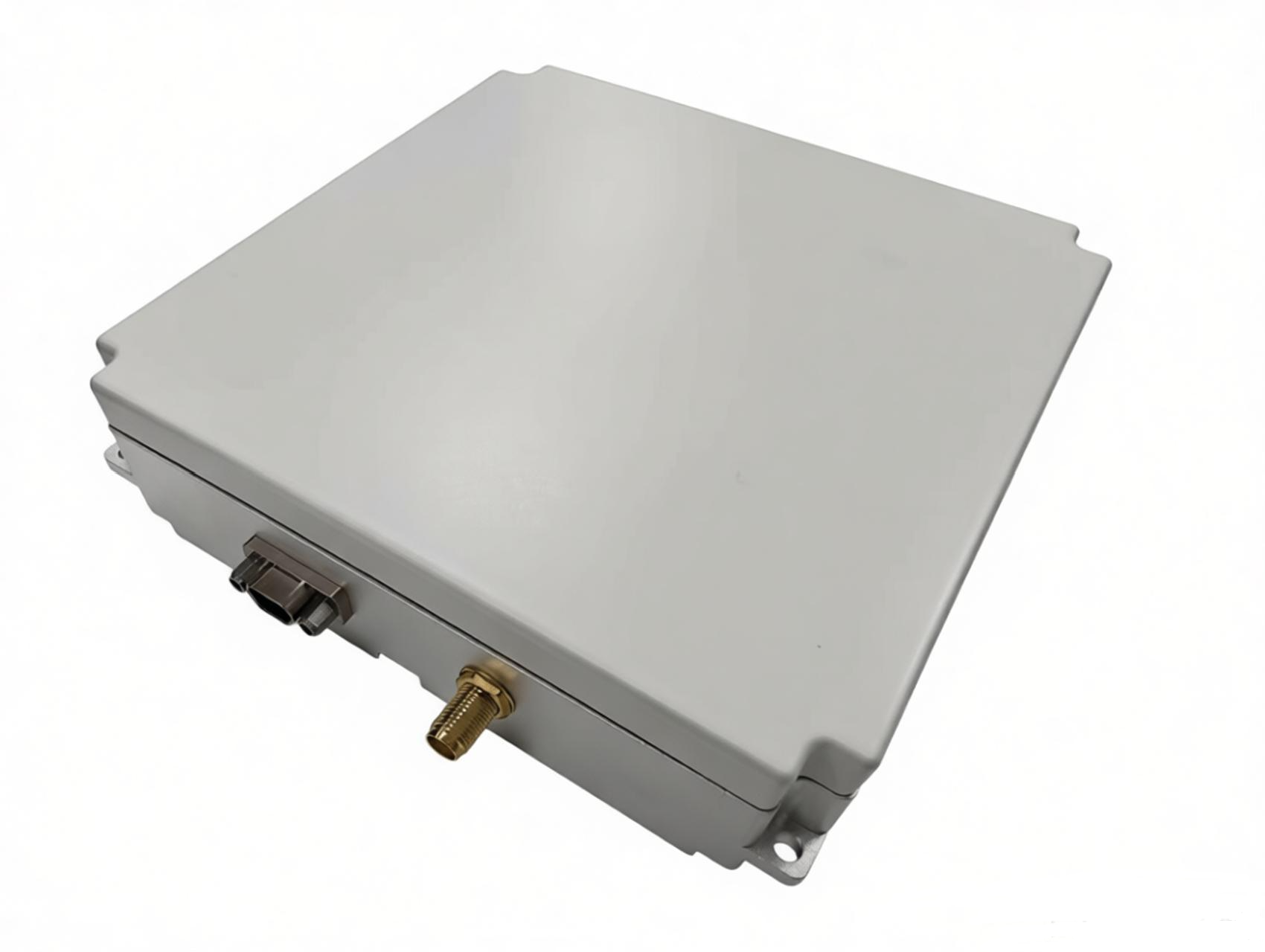
8-element CRPA antenna3
Processes 4-channel signals of GPS L1 and 4-channel signals of GPS L5 bands, capable of suppressing up to 3 wideband directional interferences.
Reliable GNSS positioning is essential for unmanned aerial vehicles (UAVs), unmanned ground vehicles (UGVs), and unmanned surface vehicles (USVs). These platforms rely on accurate satellite navigation to perform autonomous flight, route planning, positioning, and mission execution. However, GNSS signals are relatively weak when they reach the receiver, making them vulnerable to intentional and unintentional radio frequency interference.
An 8-element CRPA (Controlled Reception Pattern Antenna) provides an effective solution for improving GNSS reception in challenging electromagnetic environments. By combining multiple antenna elements with adaptive anti-jamming technology, it can suppress interference signals while maintaining reception of useful satellite signals.
1. What Is an 8-Element CRPA Antenna?
An 8-element CRPA antenna is a multi-element antenna system designed to improve GNSS signal reception and interference resistance. Unlike conventional single-element GNSS antennas, a CRPA system uses multiple antenna elements to analyze incoming radio frequency signals and adjust its reception characteristics.
This particular configuration features a 4+4 array element structure, supporting anti-jamming capability against 1–3 interference directions.
Its multi-element architecture enables the system to identify interference sources from different directions and suppress unwanted signals, helping maintain more reliable satellite navigation under complex interference conditions.
2. Key Technical Features and Performance
For unmanned platforms operating in environments where GNSS interference may occur, antenna performance directly affects navigation reliability. Several technical characteristics make this 8-element CRPA antenna suitable for demanding applications.
Multi-Frequency GNSS Reception
The antenna supports L1 and L5 frequency bands, providing compatibility with common GNSS receiving systems. Multi-frequency reception helps support navigation applications that require reliable satellite signal tracking.
Multi-Directional Anti-Jamming Capability
The system supports interference suppression for 1–3 interference directions. This capability is particularly important for unmanned platforms operating in environments where interference sources may appear from different directions.
High Interference Suppression Depth
Its anti-jamming performance includes:
-
Single interference suppression depth: 105 dB
-
Three-interference suppression depth: 85 dB
These specifications demonstrate its designed capability to suppress different interference conditions and improve GNSS signal availability.
Broad Interference Type Coverage
The system is designed to address several interference types, including white noise, BPSK, frequency sweeping, pulse interference, and SW interference. This broad interference coverage helps support operation in complex radio frequency environments.
3. Technical Specifications
The following table summarizes the main technical parameters of the 8-element CRPA antenna.
|
Category |
Parameter |
Specification |
|---|---|---|
|
Receiving Frequency |
GNSS Frequency |
L1, L5 |
|
Array Configuration |
Array Elements |
4+4 |
|
Anti-Jamming Capability |
Interference Directions |
1–3 directions |
|
RF Interface |
Connector |
SMA-K |
|
Digital Interface |
Connector |
J30J-9ZKP |
|
Power Supply |
Input Voltage |
9–36 V |
|
Power Consumption |
Maximum |
≤16 W |
|
Interference Types |
Supported Types |
White noise, BPSK, frequency sweeping, pulse, SW, etc. |
|
Anti-Jamming Performance |
Single Interference Suppression Depth |
105 dB |
|
Anti-Jamming Performance |
Three Interferences Suppression Depth |
85 dB |
|
Physical Characteristics |
Dimensions |
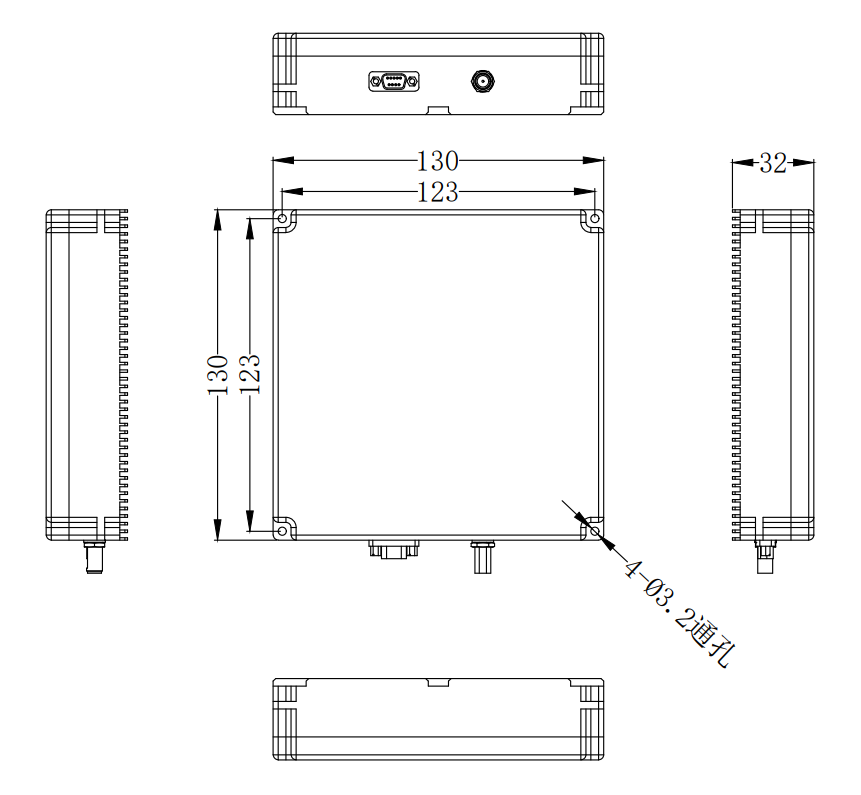
130 × 130 × 32 mm |
|
Environmental Performance |
Operating Temperature |
-40°C to +75°C |
The RF interface uses an SMA-K connector and is designed for direct compatibility with common GNSS receivers. An integrated GNSS receiver is also available as an optional configuration, providing flexibility for different system integration requirements.
The digital interface adopts a J30J-9ZKP connector, while the 9–36 V power input supports integration into various unmanned platform electrical systems.
4. Why CRPA Technology Matters for UAV, UGV, and USV Applications
Different unmanned platforms face different navigation challenges. However, maintaining reliable GNSS reception is a common requirement across aerial, ground, and surface operations.
UAV Applications
Unmanned aerial vehicles
UAVs often depend on satellite navigation for autonomous flight, waypoint navigation, and positioning. GNSS interference can affect flight stability and mission execution. An 8-element CRPA antenna helps improve resistance to interference, supporting more reliable navigation in challenging RF environments.
UGV Applications
Unmanned ground vehicles
UGVs are used in industrial inspection, autonomous transportation, surveying, and other specialized operations. Their navigation systems may encounter interference from surrounding electronic equipment or complex operating environments. CRPA technology can help improve GNSS signal reception reliability.
USV Applications
Unmanned surface vehicles
USVs rely on GNSS positioning for route planning, marine surveying, and autonomous navigation. Their operating environments can involve changing signal conditions and potential RF interference. A multi-element CRPA antenna provides an additional layer of interference resistance for navigation systems.
5. Important Considerations When Selecting a CRPA Antenna
Choosing the right CRPA antenna requires more than comparing the number of antenna elements. Engineers and system integrators should evaluate several factors before selecting a solution.
-
Frequency compatibility: Confirm that the antenna supports the GNSS frequency bands required by the navigation system, such as L1 and L5.
-
Anti-jamming capability: Evaluate the number of interference directions and suppression depth according to the intended operating environment.
-
Interface compatibility: Check RF and digital connector types to ensure seamless integration with existing GNSS receivers.
-
Power requirements: Verify that the input voltage and power consumption meet the platform's electrical specifications.
-
Environmental adaptability: Consider operating temperature, installation conditions, and mechanical dimensions.
-
System integration: Determine whether an external GNSS receiver is required or whether an integrated receiver configuration is more suitable.
These considerations help ensure that the antenna can meet both navigation performance requirements and platform integration constraints.
Conclusion
An 8-element CRPA antenna is a practical GNSS anti-jamming solution for unmanned aerial, ground, and surface platforms. With L1/L5 frequency support, a 4+4 array configuration, suppression capability for 1–3 interference directions, and a compact 130 × 130 × 32 mm structure, it is designed to address demanding navigation requirements.
Its broad power input range, low power consumption, multiple interface options, and wide operating temperature range also make it suitable for integration into different unmanned navigation systems.
For UAV, UGV, and USV manufacturers, selecting an appropriate CRPA antenna is an important step toward improving GNSS interference resistance and maintaining reliable positioning in complex electromagnetic environments.
Technical note: Anti-jamming suppression depth is a specified performance parameter. Actual system performance depends on interference conditions, antenna installation, receiver configuration, and the overall navigation system design.
Related products
-
-

4x400G DCI MUXPONDER Platform, 16*100G 1.6T Transmission 1U Rack
Contact Us4x400G DCI BOX, 16*100G 1.6T Transmission 1U Rack.4x100G QSFP28 To 400G CFP2,Maximum of 4x400G, 1.6Tbps in 1U Rack, and support 48*400G DWDM@100GHz or 64*400G DWDM@75GHz on dual fiber transmission.
-

100G OTN Muxponder
Contact Us100G/200G CFP muxponder is a 12-channel 10G or 24-channel 10G Ethernet signal aggregation to meet the high-bandwidth interconnects of optical transmission and data center.
-
Noise Cancellation Headphone BN982
Contact UsFeatures 1.ANC Function, Reduce Nolse by up to 40dB 2.Transparent Mode 3.Comfortable and Soft Wearing 4.Working Range 30 meters
Reviews
There are no reviews yet.