
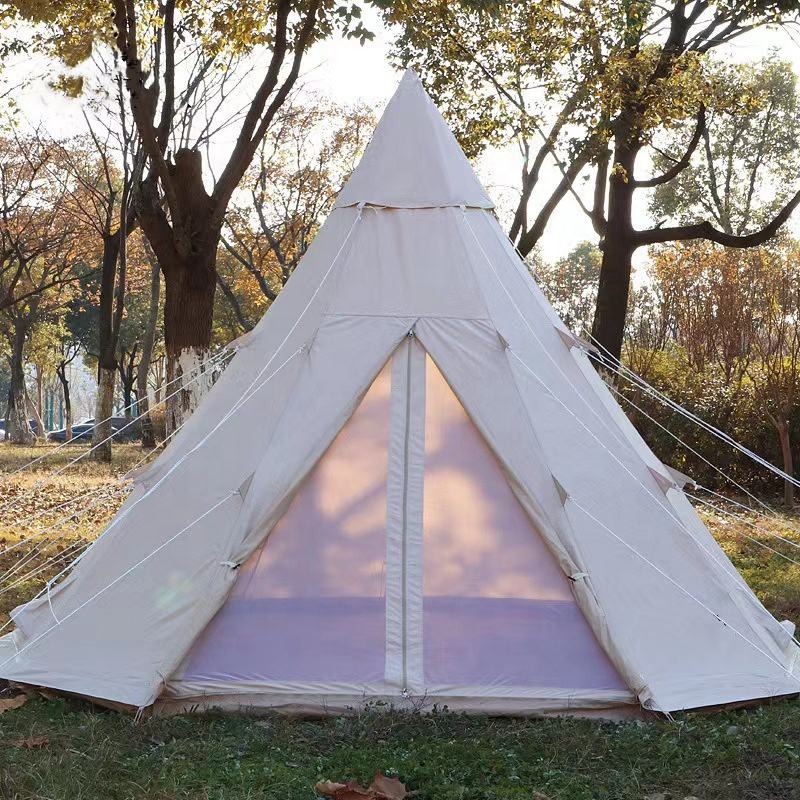
6M Ultimate Single Pole Tipi Tent
“Recreate the conical wisdom of Native Americans and create lightweight, highly adaptable outdoor residences. Based on the conical structure and ventilation design of traditional Indian TIPI tents, it has been upgraded with modern materials and techniques, balancing cultural aesthetics and practical functions. It is suitable for various scenarios such as camping, parent-child activities, and commercial campsites.
A good outdoor tent needs to do more than provide a place to sleep. It should offer reliable weather protection, practical interior space, convenient transportation, and a structure that can adapt to different outdoor environments. For campers, outdoor event organizers, and temporary accommodation providers, these factors are essential when selecting a suitable tent.
The Tipi Tent is a distinctive option for outdoor use. Its classic conical structure combines a recognizable appearance with a practical layout. With a central support pole, a sloping roof, and a spacious interior, this tent design can serve different purposes, from family camping and outdoor hospitality projects to temporary shelter applications.
When evaluating a Tipi Tent, buyers should consider its fabric, waterproof performance, frame construction, wind resistance, stitching quality, and overall dimensions. Understanding these features helps ensure that the selected tent matches the intended application.
1. Classic Conical Design for Practical Outdoor Performance
One of the defining features of a Tipi Tent is its conical shape. The sloping roof creates a distinctive silhouette while helping rainwater run down the tent surface rather than collecting on a flat roof.
The central support structure provides the main framework for the tent. Combined with the tent's geometry and properly secured anchoring points, it helps maintain structural stability during outdoor use.
The design offers several practical advantages:
-
Sloping roof: The inclined fabric surface encourages rainwater to drain away.
-
Central support: A central pole supports the main tent structure.
-
Functional interior layout: The open interior arrangement provides usable space for camping equipment and everyday activities.
-
Distinctive appearance: The conical profile is suitable for traditional camping settings as well as outdoor accommodation projects.
The actual stability of a tent depends on its complete structure, ground conditions, anchoring system, and installation quality. Proper setup is therefore essential, especially when the tent is used in exposed outdoor locations.
2. Durable Tarp Fabric and Weather Protection
Tent fabric is one of the most important factors affecting durability and outdoor performance. The supplied specifications include two tarp fabric options, allowing buyers to consider different material and performance requirements.
900D Oxford Fabric with PU Coating
The 900D Oxford fabric option features a PU coating and is specified with the following characteristics:
-
5000 mm waterproof rating
-
UV50+ protection
-
CPAI-84 fire-performance specification
-
Mildew-resistant properties
The 900D fabric construction provides a substantial material option for outdoor tent applications. Its PU coating supports water resistance, while the listed UV and fire-performance specifications address additional outdoor-use considerations.
For buyers planning extended outdoor use, these characteristics are relevant when comparing fabric options. However, the actual performance of the complete tent also depends on seams, stitching, closures, ventilation, and maintenance.
285G Cotton Fabric with PU Coating
The second option is 285G cotton fabric with a PU coating. Its listed specifications include:
-
3000 mm waterproof rating
-
UV protection
-
Mildew-resistant properties
This fabric option provides an alternative for buyers who prefer a cotton-based tent material. The PU coating contributes to water resistance, while the fabric construction offers a different material choice from 900D Oxford.
When selecting between the two options, buyers should consider the intended environment, expected frequency of use, transportation requirements, and preferred fabric characteristics.
3. Waterproof Groundsheet for Better Camping Comfort
The groundsheet is another important part of a tent's overall protection system. Direct contact with the ground can expose the tent interior to moisture, dirt, and abrasion.
This Tipi Tent uses a 540 gsm rip-stop PVC bottom fabric with a waterproof zipped-in groundsheet design.
The specified bottom material offers several practical features:
-
Waterproof construction: Helps reduce moisture entering from the ground.
-
Rip-stop fabric structure: Designed to help limit the spread of small tears.
-
540 gsm material: Provides a substantial fabric specification for the tent floor.
-
Zipped-in design: Allows the groundsheet to be connected to the tent structure.
For camping in damp environments, a properly fitted groundsheet can improve interior comfort and help protect personal belongings. Users should still choose suitable ground conditions and avoid leaving standing water around the tent.
4. Frame Construction and Structural Support
The frame is central to the tent's stability and usability. According to the supplied specifications, the tent uses a galvanized steel central pole with a diameter of 32 mm. The pole has a copper-zinc coating.
At the entrance, an A-frame pole with a diameter of 19 mm is also specified. It is made from galvanized steel tubing with a copper-zinc coating.
These components serve different structural purposes:
| Component | Specification |
|---|---|
| Central pole | 32 mm diameter galvanized steel tube |
| Central pole coating | Copper-zinc coated |
| Entrance support | A-frame pole |
| Entrance pole diameter | 19 mm |
| Entrance pole material | Galvanized steel tube |
| Entrance pole coating | Copper-zinc coated |
The central pole supports the main tent structure, while the A-frame arrangement provides support around the entrance.
When assessing a tent frame, buyers should also consider connection points, pole assembly, anchoring arrangements, and the condition of the protective coating. These details influence the tent's long-term serviceability.
5. Wind Resistance and Outdoor Setup
The listed wind resistance specification is Level 5–6, corresponding to a wind speed range of approximately 33–44 km/h.
This information provides a reference for evaluating the tent's intended wind conditions. However, wind performance is affected by several factors, including:
-
Tent orientation relative to the wind
-
Ground type and anchoring strength
-
Correct installation of poles and connections
-
Condition and tension of the fabric
-
Local exposure and surrounding terrain
The conical design and central support arrangement contribute to the overall structural layout, but they do not eliminate the need for proper anchoring.
Users should follow the manufacturer's installation and weather-use guidance. The stated wind range should not be interpreted as a guarantee of safety under every site condition or during severe weather.
6. Reinforced Stitching for Reliable Fabric Connections
The quality of stitching is particularly important for outdoor tents because seams connect different fabric sections and experience repeated tension during installation, use, and transportation.
This product uses high-strength polyester-cotton thread and a double-needle stitching process. The stitching is specified as waterproof.
A reinforced stitching approach can help improve seam consistency and support the durability of fabric connections. Buyers evaluating tent construction should pay attention to:
-
Stitching uniformity
-
Seam alignment
-
Reinforcement around stress points
-
Fabric connection quality
-
Waterproof treatment at important seams
These details are worth checking because even a high-performance fabric can be affected by weak seams or poor assembly.
7. Available Tent Sizes and Application Flexibility
The product is available in three listed size options: 3 m, 4 m, and 5 m.
Different sizes can support different accommodation and activity requirements. Before choosing a size, buyers should consider the expected number of occupants, interior equipment, furniture requirements, and available installation space.
Potential applications include several outdoor settings.
Family Camping
The Tipi Tent can be used as a family camping shelter. Its conical layout creates a recognizable camping space, while the double-layer tent design is described as providing mosquito and insect protection.
The top ventilation opening is another practical feature. Ventilation is important for maintaining airflow inside a tent, particularly when several people occupy the same space.
Outdoor Hospitality and Tourism Projects
For outdoor accommodation projects, the tent's distinctive appearance can help create a recognizable guest experience.
It can be considered for:
-
Glamping accommodation
-
Campsite facilities
-
Outdoor cafés
-
Tourism and leisure projects
-
Temporary event spaces
The product description also mentions combining the tent with transparent LED lighting and decorative tarpaulins to create visually distinctive hospitality spaces.
For commercial use, buyers should separately evaluate local building, fire-safety, electrical, and operational requirements before installation.
Emergency and Temporary Shelter
The tent's portable structure may also be considered for temporary shelter projects, including certain emergency support, medical, or command-space applications.
Suitability depends on the required deployment time, internal layout, environmental conditions, and applicable safety standards. For emergency applications, the tent should be evaluated against the specific requirements of the intended operation.
8. Safety, Fire Performance, and Material Considerations
Safety is an important part of outdoor tent selection, particularly for products used in campsites, hospitality facilities, and public events.
The 900D Oxford fabric option is listed as meeting the CPAI-84 fire-performance specification. The product information also describes the floor fabric as complying with a national flame-retardant test.
Buyers should request the relevant test reports and confirm which fabric components and product configurations are covered. Fire-performance claims should be verified against the applicable documentation rather than assumed to apply to every part of the assembled tent.
The supplied product description also refers to a bio-based waterproof coating as an environmentally considerate material option. For projects with specific environmental requirements, buyers should request details about the coating composition and supporting documentation.
9. How to Maintain a Tipi Tent for Long-Term Use
Regular inspection and proper storage can help maintain tent performance over repeated outdoor use.
The following maintenance practices are recommended:
Inspect the frame and connections
Check pole connections, joints, and support points regularly. Tighten or repair loose connections before using the tent again.
Clean the fabric carefully
Remove dust, mud, and other surface contaminants after use. Follow the manufacturer's cleaning instructions to avoid damaging the waterproof coating.
Dry the tent before storage
Allow the fabric and groundsheet to dry thoroughly before packing. Storing a damp tent can increase the risk of mildew and unpleasant odors.
Use suitable storage conditions
Keep the tent in a cool, dry place away from prolonged exposure to high temperatures and direct sunlight.
Check seams and waterproof areas
Inspect stitching, zippers, and fabric connections for wear. Address damage before the next installation to reduce the risk of further deterioration.
Consistent maintenance helps preserve the tent's materials and supports more reliable performance over time.
10. What Buyers Should Consider Before Ordering
Before purchasing a Tipi Tent for personal or commercial use, it is helpful to review the following points:
| Selection Factor | What to Check |
|---|---|
| Tent size | Available 3 m, 4 m, and 5 m options |
| Main fabric | 900D Oxford or 285G cotton |
| Waterproof rating | 5000 mm or 3000 mm, depending on fabric |
| UV protection | Confirm the applicable fabric specification |
| Fire performance | Request the relevant test documentation |
| Groundsheet | 540 gsm rip-stop PVC with waterproof zipped-in design |
| Central support | 32 mm galvanized steel tube |
| Entrance support | 19 mm galvanized steel A-frame pole |
| Wind resistance | Listed Level 5–6, approximately 33–44 km/h |
| Stitching | High-strength polyester-cotton thread with double-needle construction |
A clear understanding of these specifications helps buyers compare products more accurately and select a tent that matches their intended use.
Conclusion
A well-designed Tipi Tent combines practical shelter features with a distinctive conical appearance. Its available fabric options, waterproof PVC groundsheet, galvanized steel support poles, reinforced stitching, and multiple size choices make it suitable for consideration across camping, outdoor hospitality, and certain temporary shelter applications.
However, the best tent is not necessarily the one with the highest individual specification. Buyers should evaluate the complete construction, installation requirements, environmental conditions, and supporting test documentation before making a decision.
By comparing fabric performance, frame construction, dimensions, and maintenance requirements, users can make a more informed choice and get better long-term value from their outdoor tent.
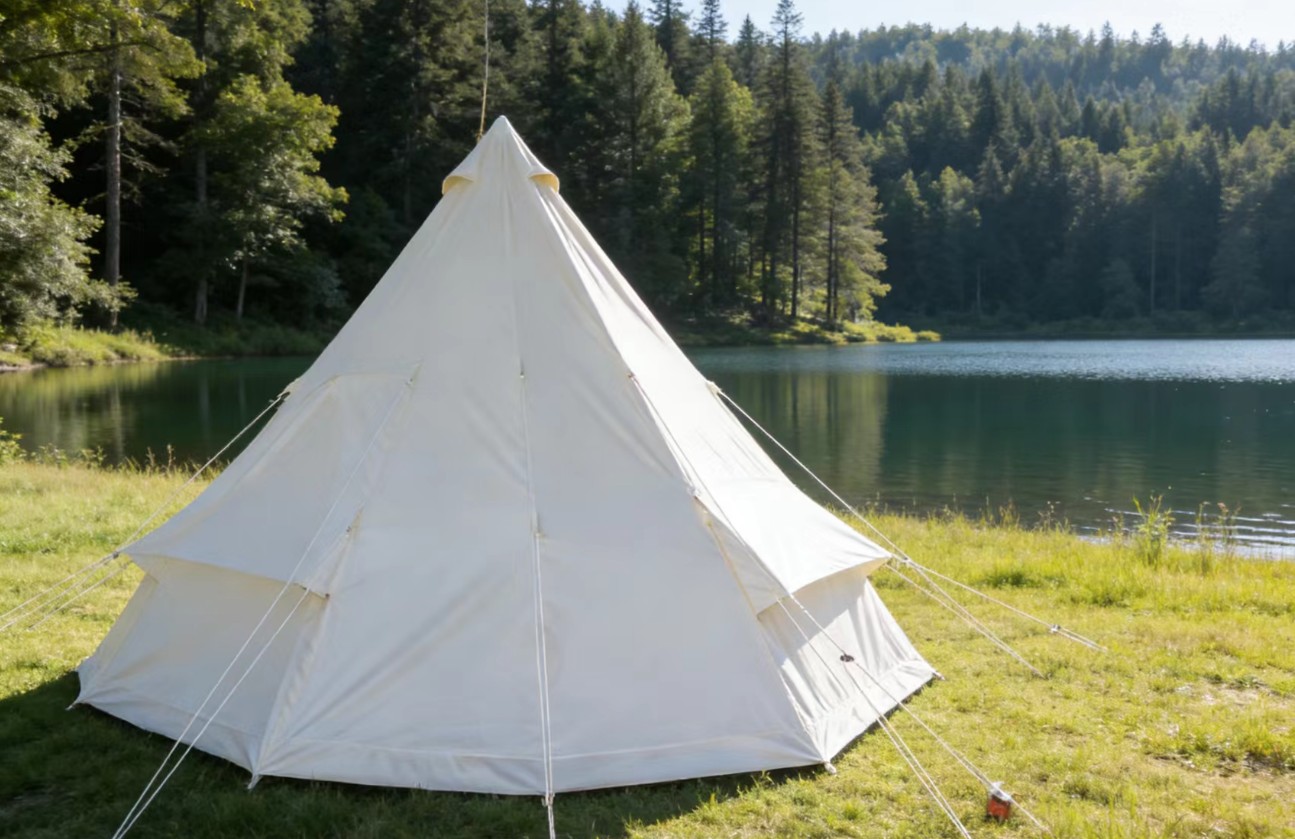
Related products
-
Non-Applicator Tampons
Contact UsEngineered for freedom and comfort, it delivers discreet, intuitive protection with pure cotton.
-
3M Standard Bell Tent
Contact UsAn outdoor space solution that integrates traditional wisdom with modern technology. Let every stay be a ritualistic experience that connects with nature.
-
Why More Pet Owners Are Choosing Advanced Deodorizing Sprays for Everyday Odor Control
Contact UsPet odor control is no longer just about covering unpleasant smells—it’s about eliminating them at the source while ensuring safety for pets and their living environment.
-
Training Pad-L
Contact UsSize L: 60×80cm
An enlarged size, specially designed for medium and large dog breeds such as Golden Retrievers, Labradors and Rottweilers. It is also ideal for multi-pet households with a large coverage area for worry-free leakproof protection.
Reviews
There are no reviews yet.