
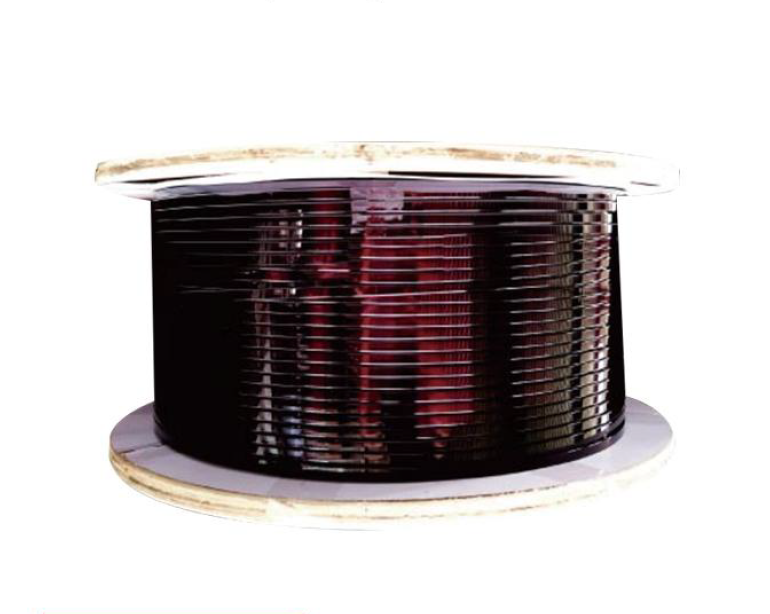
Enameled Copper/Aluminum Flat Wire
Enameled flat wire is made of oxygen-free copper rod or electrical round aluminum rod through a standard mold drawing or extrusion of the wire, the bare wire is annealed and softened, and then enameled and baked multiple times to form the winding wire. It is mainly used for winding of electrical equipment such as transformers and reactors.
As electrical equipment continues to evolve toward higher efficiency, compact designs, and improved thermal performance, the demand for high-quality winding conductors has increased significantly. Among the most widely used solutions in transformers, motors, reactors, generators, and new energy equipment is enameled flat wire, which combines excellent electrical insulation with superior space utilization.
Our range of enameled copper and aluminum flat wire is engineered to meet the diverse requirements of industrial, commercial, and energy-related applications, offering multiple insulation systems and thermal classes to support different operating environments.
What Is Enameled Flat Wire?
Enameled flat wire is a rectangular conductor coated with one or more layers of insulating enamel. Compared with traditional round magnet wire, flat wire provides:
-
Higher slot fill factor
-
Improved space utilization
-
Better heat dissipation
-
Lower winding resistance
-
Enhanced mechanical strength
-
Increased power density in electrical equipment
These advantages make enameled flat wire a preferred choice for modern high-efficiency electrical systems.
Wide Production Range
Our manufacturing capabilities support a broad range of conductor dimensions to meet various design requirements:
Conductor Thickness (Side A)
-
0.80 mm – 5.60 mm
Conductor Width (Side B)
-
2.00 mm – 16.00 mm
Width-to-Thickness Ratio
-
Up to 20:1
This flexibility allows engineers to select the optimal conductor geometry for transformers, motors, and electromagnetic devices requiring compact winding structures.
Available Insulation Systems and Thermal Classes
Different applications require different thermal performance levels. We offer a complete portfolio of enameled copper and aluminum flat wires with thermal indexes ranging from 120°C to 220°C.
QQB – Class 120 Acetal Enameled Flat Wire
Thermal Index: 120°C
Features:
-
Excellent flexibility
-
Good insulation performance
-
Suitable for general electrical applications
Available in:
-
Copper flat wire
-
Aluminum flat wire
QQBN – Class 120 Self-Adhesive Acetal Enameled Flat Wire
Thermal Index: 120°C
Features:
-
Self-bonding capability
-
Simplified coil manufacturing
-
Improved winding stability
Ideal for:
-
Precision coils
-
Small transformers
-
Electromagnetic components
QZB – Class 130 Polyester Enameled Flat Wire
Thermal Index: 130°C
Features:
-
Reliable thermal resistance
-
Good mechanical properties
-
Cost-effective insulation system
Suitable for:
-
Motors
-
Transformers
-
Industrial electrical equipment
QZ(G)B – Class 155 Modified Polyester Enameled Flat Wire
Thermal Index: 155°C
Features:
-
Enhanced heat resistance
-
Improved durability
-
Stable long-term performance
Applications:
-
Industrial motors
-
Power transformers
-
Electrical machinery
QZYB – Class 180 Polyesterimide Enameled Flat Wire
Thermal Index: 180°C
Features:
-
Excellent thermal endurance
-
Superior chemical resistance
-
Strong electrical insulation
Widely used in:
-
High-performance motors
-
Wind power generators
-
Industrial automation equipment
Q(ZYI/XY)B – Class 200 PEI/PAI Enameled Flat Wire
Thermal Index: 200°C
Features:
-
High-temperature operation
-
Outstanding dielectric properties
-
Excellent mechanical strength
Recommended for:
-
Electric vehicle motors
-
Renewable energy systems
-
Heavy-duty industrial applications
QYB – Class 220 Polyamide-Imide Enameled Flat Wire
Thermal Index: 220°C
Features:
-
Exceptional thermal stability
-
Outstanding wear resistance
-
Superior chemical resistance
Suitable for:
-
Traction motors
-
Aerospace applications
-
High-temperature transformers
-
Advanced industrial equipment
Copper or Aluminum: Which Should You Choose?
Enameled Copper Flat Wire
Advantages:
-
Higher electrical conductivity
-
Better mechanical strength
-
Superior current-carrying capacity
-
Excellent reliability
Best for:
-
Premium motors
-
High-efficiency transformers
-
Critical electrical systems
Enameled Aluminum Flat Wire
Advantages:
-
Lower weight
-
Reduced material cost
-
Good electrical performance
-
Easier handling for large windings
Best for:
-
Large transformers
-
Distribution equipment
-
Cost-sensitive projects
Applications Across Multiple Industries
Our enameled flat wire products are widely used in:
-
Power transformers
-
Distribution transformers
-
Electric motors
-
Generators
-
Reactors
-
EV drive systems
-
Charging infrastructure
-
Wind turbines
-
Solar inverters
-
Industrial automation equipment
-
Railway traction systems
Why Flat Wire Is Becoming the Industry Standard
With increasing demands for energy efficiency and compact electrical designs, flat wire technology continues to gain popularity. Its ability to maximize conductor utilization while improving thermal management makes it an ideal solution for next-generation electrical equipment.
Whether you require Class 120 insulation for conventional applications or Class 220 performance for extreme operating environments, modern enameled copper and aluminum flat wire solutions provide the reliability, efficiency, and flexibility needed for today's electrical industry.
As industries continue to pursue higher power density and lower energy consumption, enameled flat wire remains a key material driving innovation in motors, transformers, and advanced electrical systems worldwide.
Related products
-
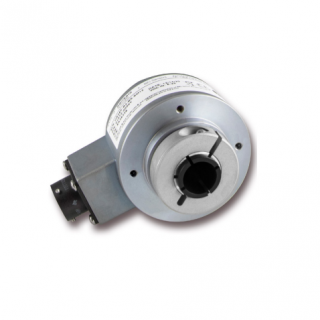
01072-115 HS25 Series Incremental Encoder-BEI sensor
Contact UsThe HS25 combines the rugged, heavy-duty features usually associated with shafted encoders into a hollow-shaft style. Its design includes dual bearings and seals for up to IP65 environmental ratings..
-
-
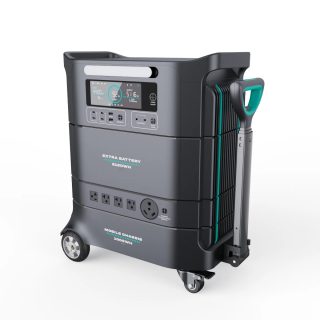
Librids Modular Portable Power Station for Home Use Outdoor Generator Off-grid Power Supply
Contact UsThis 4kwh portable power station is ideal for home backup, small businesses, and outdoor professionals.
-
HYLX/JL 16-40KW wall furnace exchanger
Contact UsSpecification:HYLX/JL 16-40KW wall furnace exchanger
Material:TP2 copper
Features:safety,efficiency,energy saving,environmental protection
Reviews
There are no reviews yet.