
What Is a Thermal Pad? A Guide to LC Series Solutions
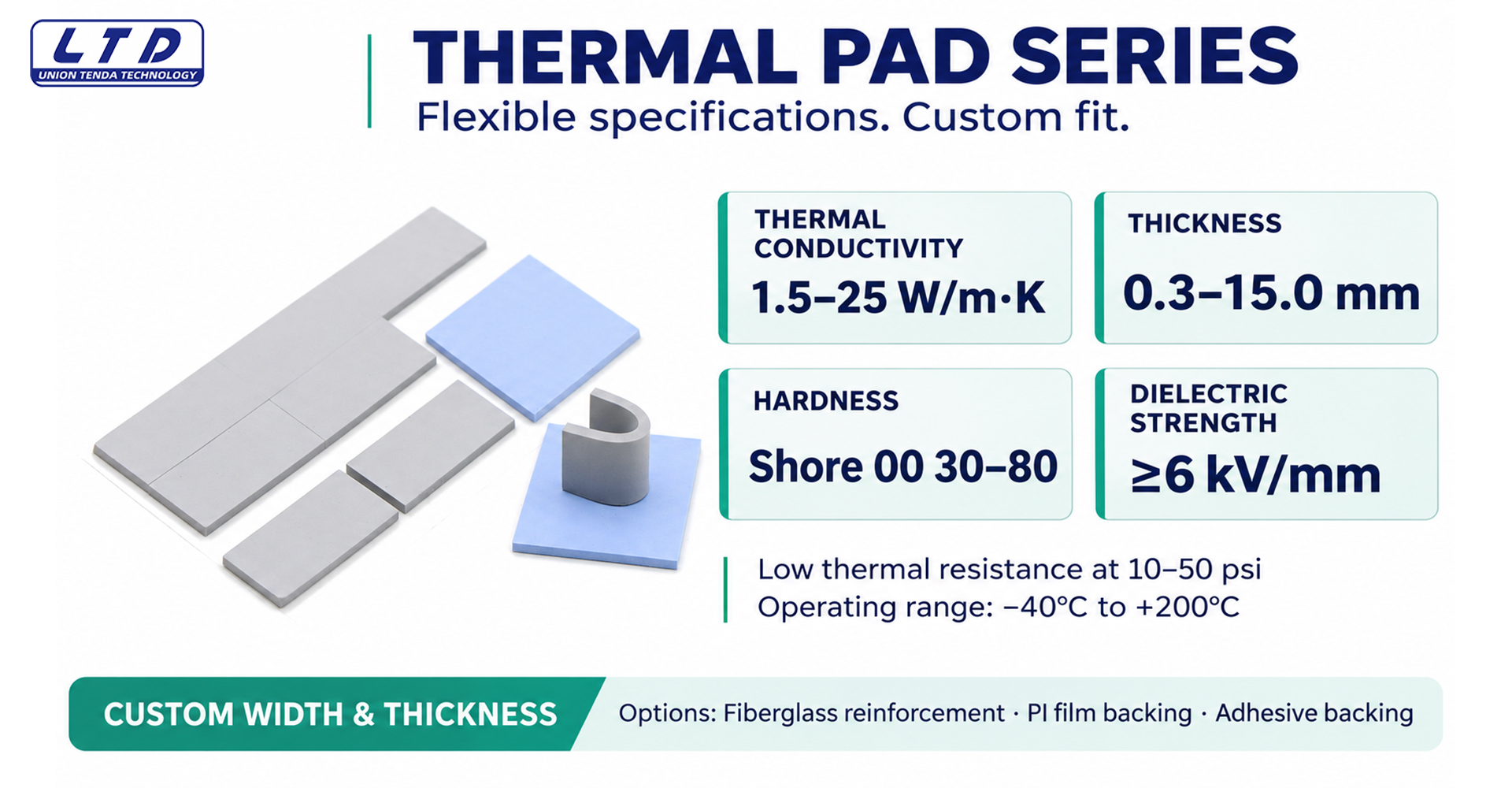
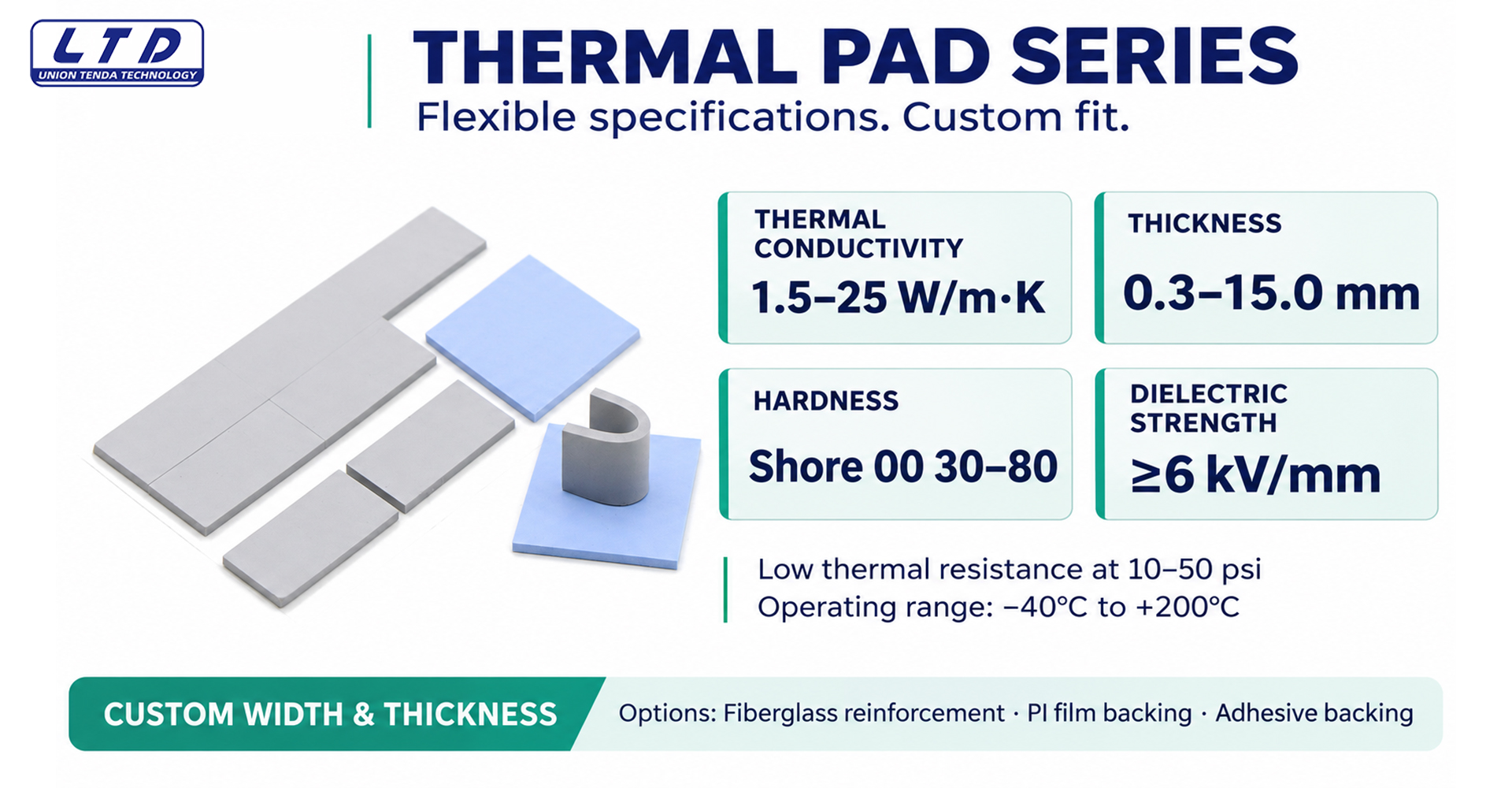
1.5–25 W/m·K silicone thermal pads offer customizable width and thickness, low thermal resistance at clamping pressures of 10–50 psi, electrical insulation, and stable operation from −40°C to +200°C.
Understanding Thermal Pads: Definition and Purpose
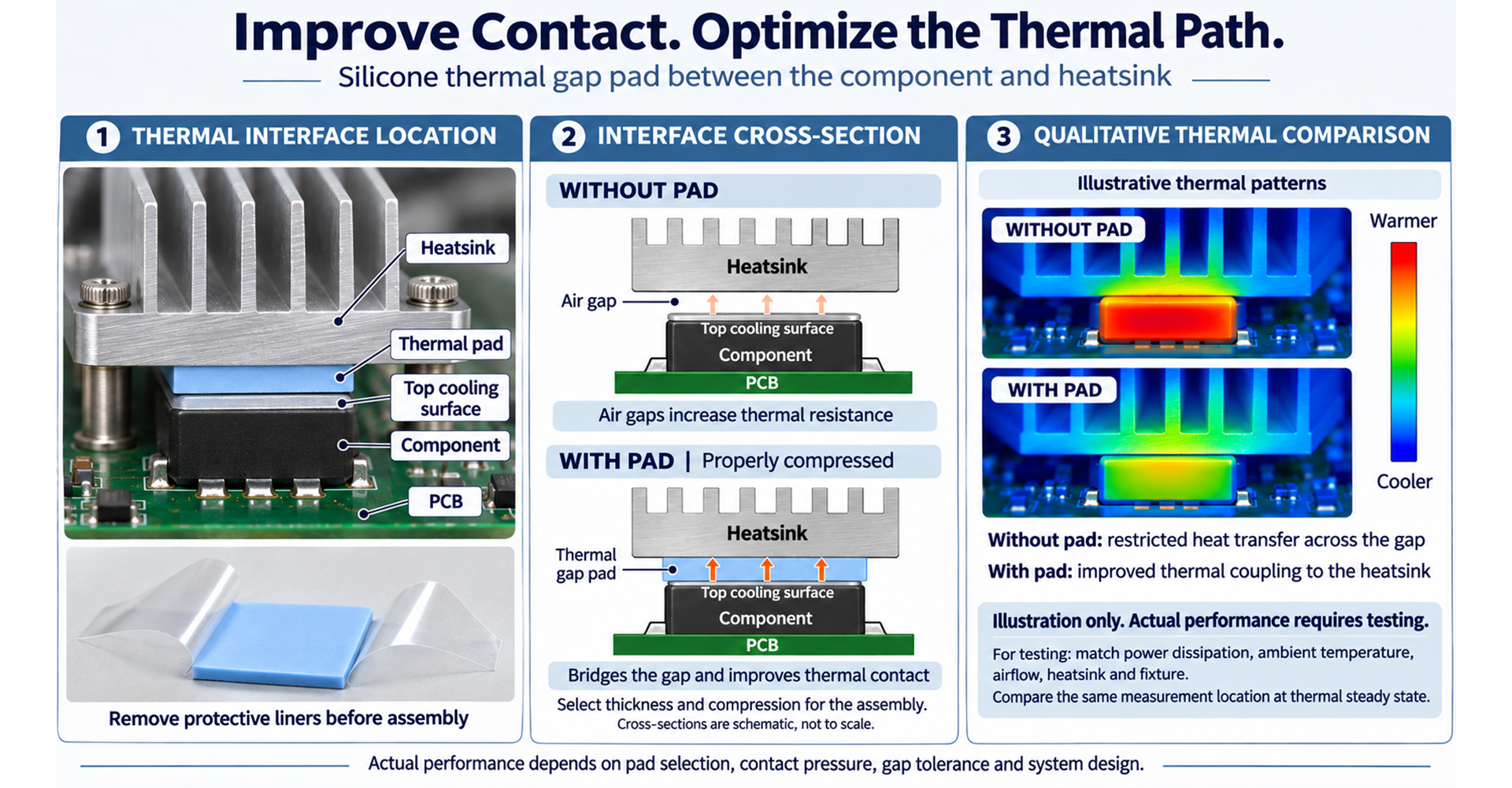
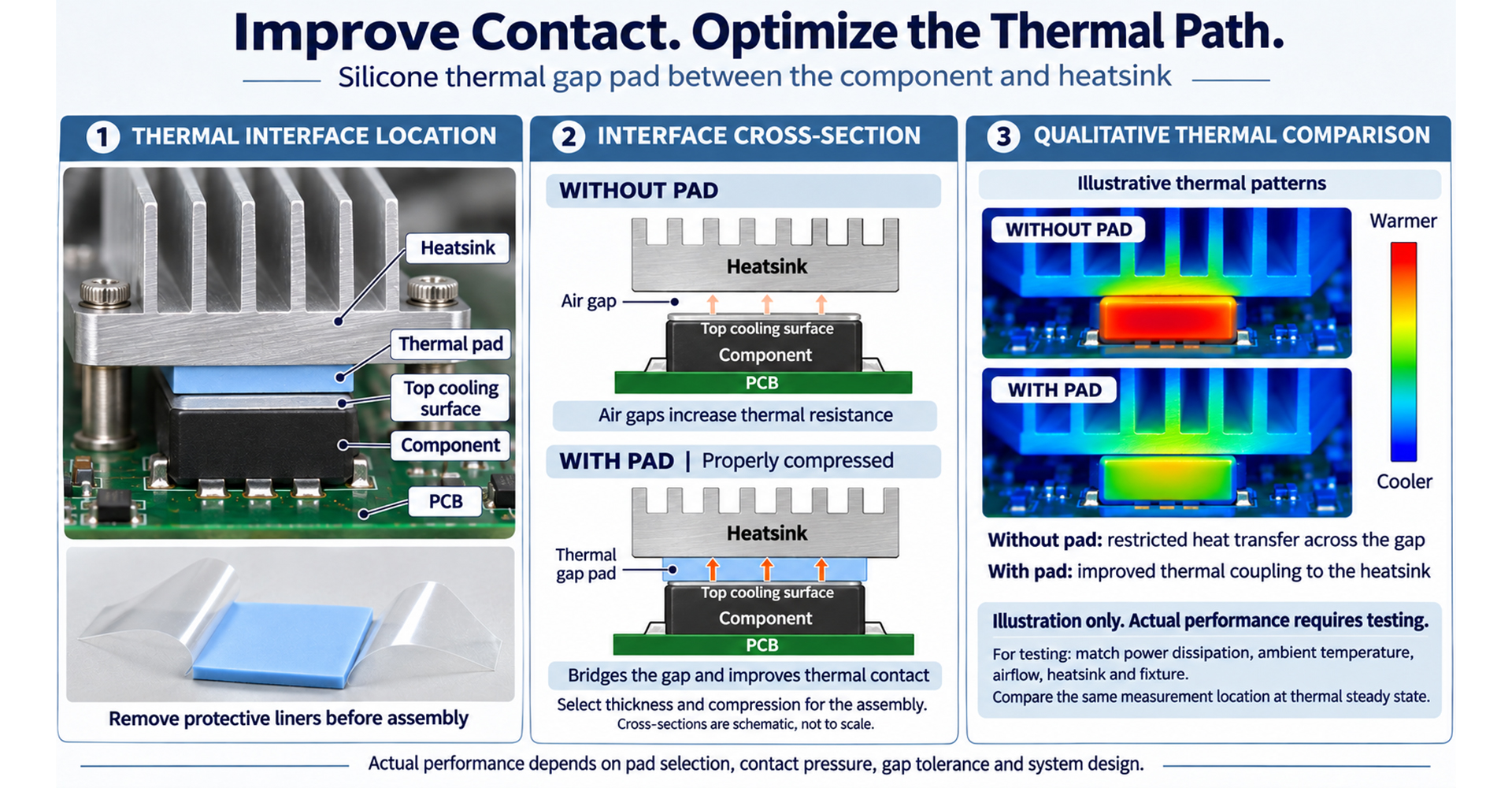
A thermal pad is a physical sheet-form interface material placed between heat-generating electronic components and heat sinks or device enclosures. Its core function addresses a fundamental problem in electronics design: when two solid surfaces are pressed together, microscopic irregularities leave tiny air gaps between them. Because air is a poor conductor of heat, these trapped pockets significantly reduce thermal transfer efficiency. A thermal pad fills these uneven gaps, displacing air and establishing a continuous thermal pathway so that heat generated by chips, processors, storage devices, or power modules can move efficiently toward a heat sink or casing for dissipation.
UnionTenda LTD, operating under the Thermal Silicone Pads brand, produces the LC Series Thermal Silicone Pad line, a set of eleven thermal interface materials engineered to serve this exact purpose across a range of thermal conductivity levels and application demands.
Why Thermal Pads Matter in Electronics Cooling
The target scenario pain points that thermal pads solve are consistent across the industry: trapped air in gaps between heat-generating components and heat sinks or machine casings reduces thermal transfer, and uneven surfaces create variable-sized gaps that further lower cooling performance. Left unaddressed, this inefficiency can lead to elevated operating temperatures, reduced component lifespan, and compromised device reliability.
Thermal pads solve this through a combination of physical properties. Softness and compressibility allow the material to conform to uneven surfaces, filling gaps of different sizes while maintaining full thermal contact. Slight inherent tackiness provides enough adhesion for easy assembly while still supporting multiple disassembly and reassembly cycles, which is valuable during manufacturing, testing, and rework. Weather resistance and aging resistance ensure that these properties remain stable over long periods of use, which is essential for devices expected to operate reliably for years.
How the LC Series Addresses Different Cooling Needs
The LC Series Thermal Silicone Pad line is structured around product line positioning that spans from general-purpose, cost-effective gap fillers to materials engineered for high-power-density devices and applications with demanding heat dissipation requirements.
General-Purpose, Cost-Effective Options
The LC150, LC200, and LC300 Thermal Silicone Pads are positioned as general-purpose, cost-effective thermal interface materials offering high cost performance for electronics cooling. These products deliver thermal conductivity ranging from 1.5±0.15 W/m·K (LC150) up to 3.0±0.3 W/m·K (LC300), making them suitable as thermal interfaces in chips, processors, storage devices, base stations, routers, automotive electronic control units and battery management systems, and power modules.
Beyond thermal transfer, these pads provide electrical insulation with dielectric strength of at least 10 kV/mm and volume resistivity of at least 1×10^13 Ω·cm, which is important for gap filling within electronics assemblies where electrical isolation between components is required. The LC150 and LC200 operate across -40 to 150 °C, while the LC300 extends to -40 to 200 °C, all carrying a V-0 flammability rating under UL94. Thickness options range from 0.3 mm to 15 mm depending on the specific product, giving design engineers flexibility to match the pad to the exact gap dimensions in their assembly.
High-Thermal-Conductivity Gap Fillers
For applications requiring stronger thermal performance, the LC400, LC500, and LC600 Thermal Conductive Silicone Pads are positioned as high-thermal-conductivity gap filler pads. These products address scenarios where heat-generating components need a continuous thermal pathway to heat sinks or enclosures, with air displacement and full surface contact required to increase heat dissipation area and cooling efficiency.
Thermal conductivity in this tier ranges from 4.0±0.3 W/m·K (LC400) to 6.0±0.3 W/m·K (LC600), with thermal impedance values decreasing as conductivity increases—from 0.386 °C·in²/W for the LC400 down to 0.225 °C·in²/W for the LC600, measured at 1 mm thickness and 10 psi. All three products operate across -40 to 200 °C with V-0 flammability ratings, and maintain dielectric strength of at least 10 kV/mm with volume resistivity of at least 1×10^13 Ω·cm, preserving the electrical insulation properties needed for electronics assembly work.
High-Power-Density Thermal Materials
At the upper end of the LC Series, the LC800, LC1000, LC1200, LC1500, and LC1800 Thermal Conductive Silicone Pads are designed specifically for high-power-density devices and applications with high heat dissipation demands. The target scenario here involves high-power-density devices that require close, tight thermal connection between the heat source and heat sink to reduce interface thermal resistance and improve dissipation efficiency.
Thermal conductivity in this segment spans from 8.0±0.5 W/m·K (LC800) up to 18.0±0.5 W/m·K (LC1800), with corresponding thermal impedance values as low as 0.115 °C·in²/W for the LC1500 and LC1800 at 1 mm thickness and 10 psi. These products operate across -40 to 150 °C and retain V-0 flammability ratings. Dielectric strength in this tier ranges from 5 to 7 kV/mm depending on the specific product, reflecting the trade-offs involved in achieving higher filler content for greater thermal conductivity, while volume resistivity remains at 1×10^12 to 1×10^13 Ω·cm.
Shared Characteristics Across the LC Series
Regardless of thermal conductivity tier, every product in the LC Series shares certain foundational features. Each pad offers low cost relative to its performance tier, helping to manage thermal management material costs while still meeting cooling requirements. Each retains slight inherent tackiness for ease of assembly and rework. Each is formulated for softness and compressibility to conform to uneven gaps. And each is built for weather resistance and aging resistance, supporting long-term reliable use in the field.
Industry Applications
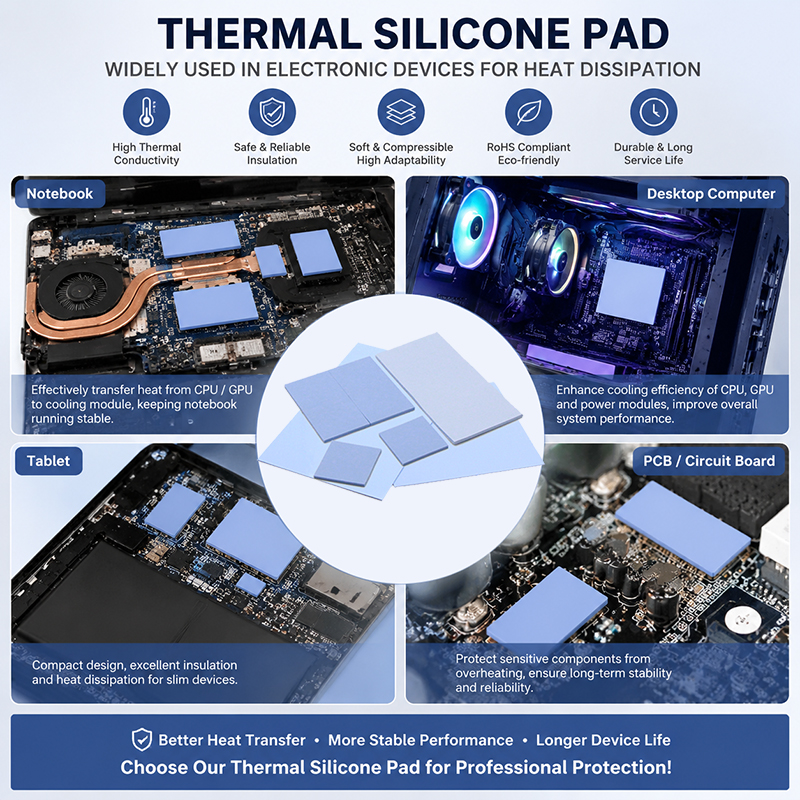
Across the LC Series, industry adaptation spans several sectors. In electronics, the pads serve as thermal interfaces for chips, processors, and storage devices paired with heat sinks or casings, improving component cooling and device reliability. In communications, they support base stations and routers that require long-term stable cooling under sustained operation. In automotive applications, they serve electronic control units and battery management systems within specified operational temperature limits. In power electronics, they manage thermal transfer between power modules and heat sinks to help lower operating temperatures.
Choosing the Right Thermal Pad
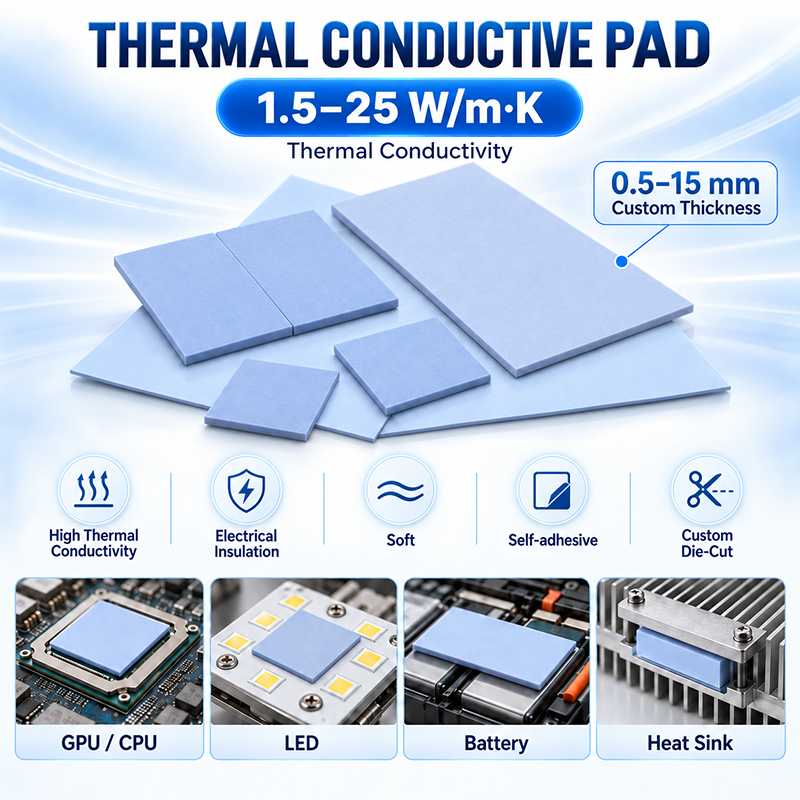
Selecting an appropriate thermal pad depends on matching thermal conductivity, thickness range, operating temperature, and electrical insulation requirements to the specific application. UnionTenda LTD’s LC Series Thermal Silicone Pad lineup, marketed under the Thermal Silicone Pads brand, provides a graduated range of options—from the cost-effective LC150 through LC300, to the higher-conductivity LC400 through LC600, and up to the high-power-density LC800 through LC1800—allowing engineers to select a pad whose thermal conductivity, thickness, and operating temperature range align precisely with their cooling and electrical insulation needs across electronics, communications, automotive, and power electronics applications.
Related products
-
Thermal Conductive Graphite Sheet
Contact UsThermal conductive graphite sheet is a brand-new thermal conductive and heat-dissipating material, with unique grain orientation and uniform thermal conductivity in two directions.
-
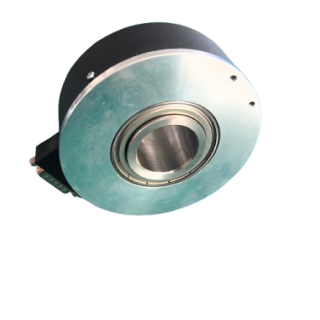
Absolute Hollow Shaft Encoder-PAL178H Series
Contact UsOuter diameter Ф178, hollow shaft, Basic hollow shaft Ф40~Ф60.
Resolution from 16 to21 bit. -
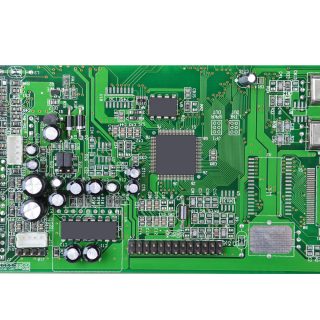
High-Volume Consumer Electronics PCBA
Contact UsConsumer Electronics PCBAs are circuit board assemblies designed for a wide range of everyday electronic devices, offering compact design, reliable performance, and cost-effective manufacturing.
-

BLHeli_32 3B40A 4 IN 1 ESC
Contact UsThe AT32F421 main control chip operates at a frequency of up to 128MHz.
Reviews
There are no reviews yet.