
Which Voltage Stabilizer Suits Unstable Factory Power?
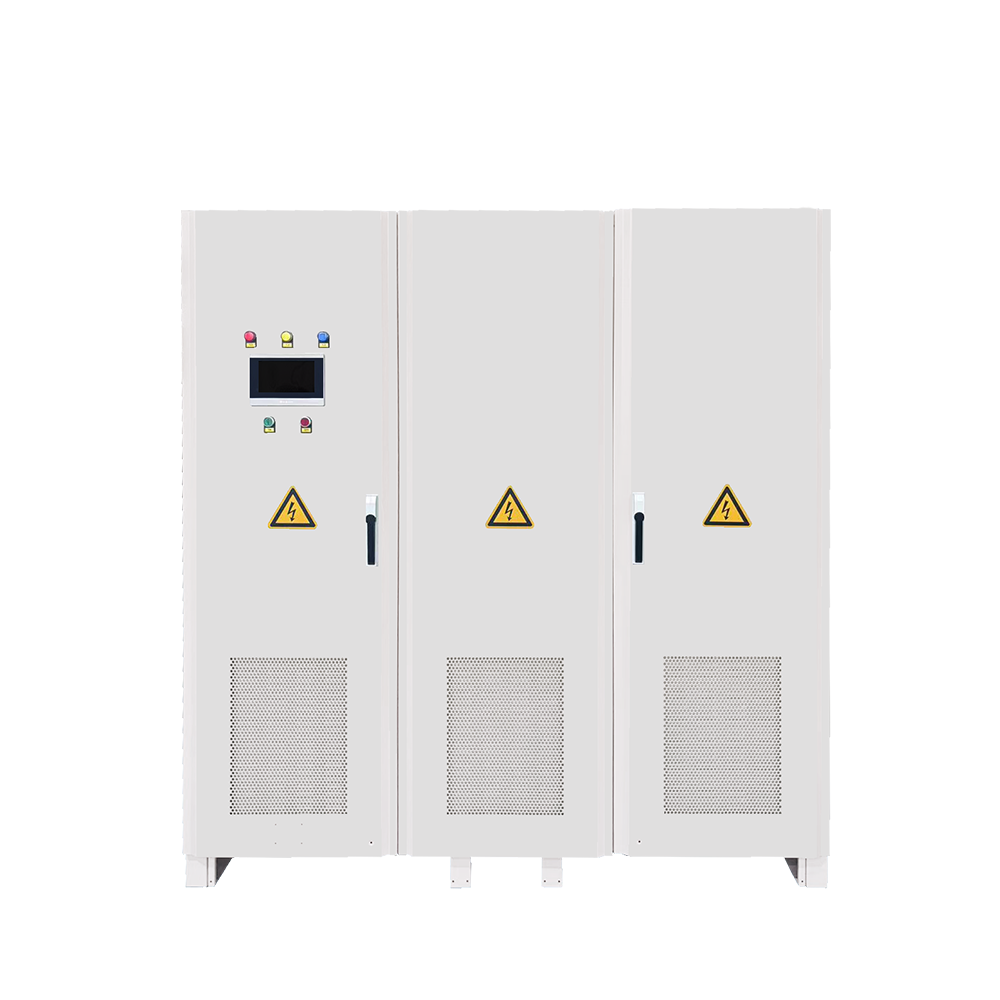
Contactless SCR voltage stabilizer, no mechanical contact, fast response, low maintenance, wide voltage regulation range, suitable for factory, equipment and engineering power stabilization.
The Hidden Cost of Unstable Grid Power in Industrial Settings
Factories operating under fluctuating grid conditions face a recurring set of problems: CNC machines that stall mid-cycle, imaging and test equipment that drifts out of calibration, and production lines that shut down unexpectedly when voltage dips or surges beyond equipment tolerance. For plant managers evaluating a voltage stabilizer, the real question is not which brand is loudest in marketing, but which technology, capacity range, and protection architecture actually fits the specific grid conditions and load profile of their facility. Shenzhen Xingkerong Technology Co., Ltd., operating under the brand SINCRON, has built its voltage stabilization line around exactly this question, offering three distinct regulation routes — servo, static (thyristor-based), and IGBT static — each engineered for a different combination of power, response speed, and maintenance tolerance.
Three Regulation Technologies, Three Different Trade-Offs
Servo Voltage Stabilizers (SBW): High Power, Accepted Maintenance
The Servo Voltage Stabilizer (SBW) uses carbon-brush sliding stepless regulation and is positioned for high-power factory main distribution and CNC machine clusters, with a capacity range of 1 kVA to 8,000 kVA. It offers a default voltage regulation range of ±20%, customizable up to ±50%, output accuracy of ±2% (adjustable between 1% and 5%), a response time of ≤40 ms, and efficiency of ≥98%. The unit includes automatic bypass on fault to avoid interrupting production, along with overvoltage, undervoltage, overcurrent, over-temperature, phase loss, short circuit, and optional lightning protection. It can handle 150% load for 90 seconds and 200% load for 20 seconds. The trade-off is that the carbon brush is a wearing part requiring periodic inspection — a reasonable compromise for facilities where mechanical maintenance is already part of operations.
Static Voltage Stabilizers (ASN/ASR): Maintenance-Free, Continuous Operation
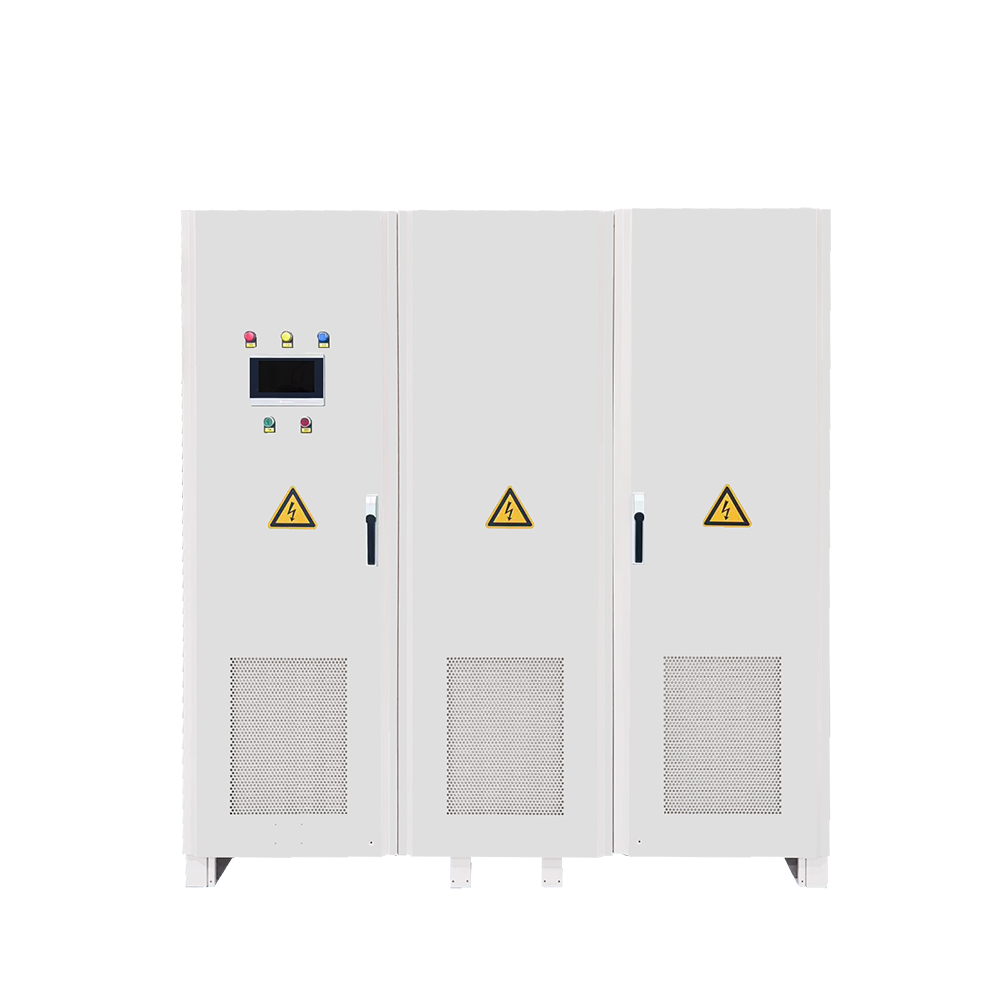
For sites that need unattended, continuous operation, the Static Voltage Stabilizer (ASN/ASR) eliminates mechanical wear entirely through thyristor (SCR) technology, using German SEMIKRON SCR modules across a capacity range of 10 kVA to 8,000 kVA. It delivers ±1% output accuracy, a response time of approximately 20 ms, efficiency ≥98%, and independent per-phase regulation that keeps three-phase output balanced even under unbalanced input. The default regulation range is ±20%, customizable to ±50%. An LCD touch screen displays input/output voltage, load current, operating step, and alarm records without requiring an upper computer, and optional Modbus RS232/RS485 communication supports remote monitoring. Notably, Sincron states that the main control board, trigger circuit, and assembly are 100% developed and produced in-house, which supports batch consistency and lead-time control.
This line has the broadest documented deployment record among SINCRON’s stabilizer family. A Russian construction company’s aggregate production line deployed an ASN-2,500 kVA unit with a 15–20 day delivery lead time, accompanied by a factory routine test report covering withstand voltage, temperature rise, and load. An African machining plant installed a single ASN-4,000 kVA unit to absorb the impact load created by multiple machine tools running simultaneously, also within a 15–20 day lead time. A government currency minting plant in Singapore, a confidentiality-governed project, similarly specified an ASN-4,000 kVA unit for whole-plant distribution where continuity and voltage stability requirements were especially high. An outdoor-rated ASN-300 kVA static stabilizer was also supplied to an orchard and agricultural plant in Chile, where sun exposure, dust, and temperature variation demanded a weatherproof configuration.
IGBT Static Voltage Stabilizers (HIS): Fastest Response for Precision Loads
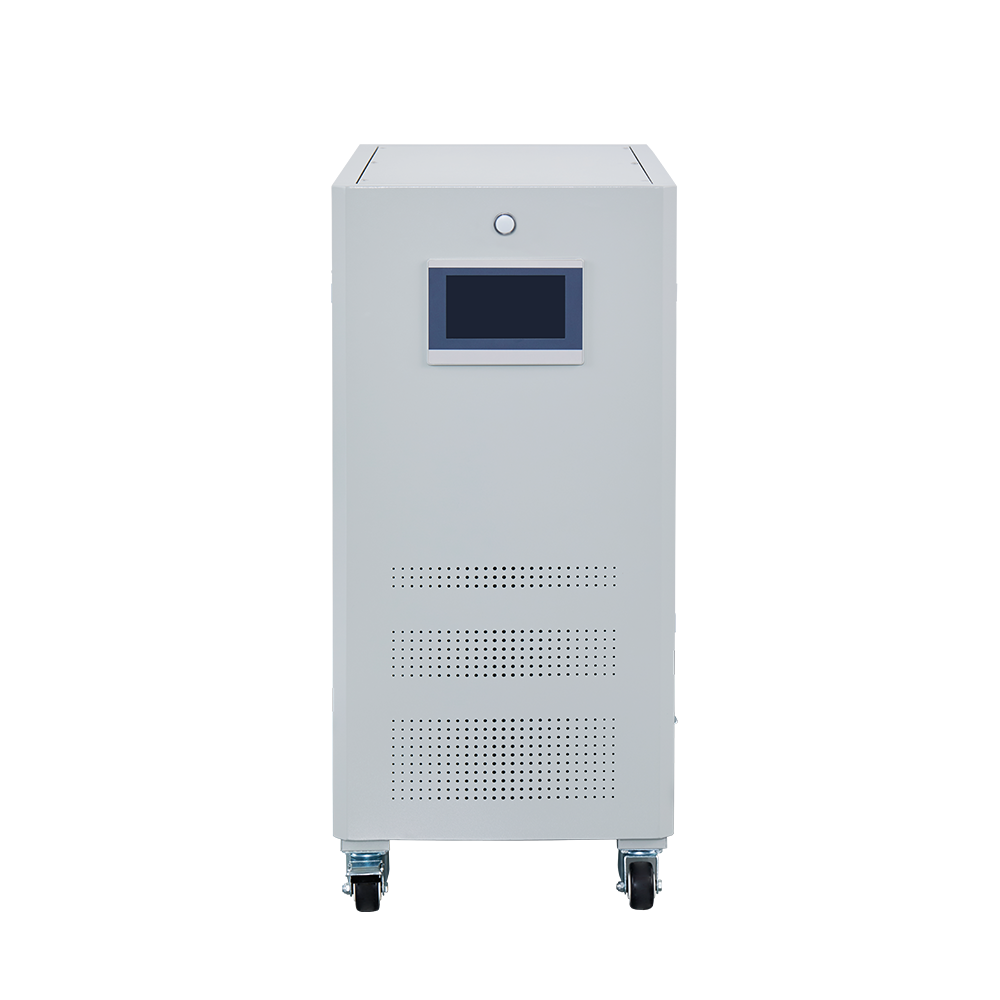
Where response speed and waveform purity matter more than raw capacity, the IGBT Static Voltage Stabilizer (HIS) uses an AC-DC-AC topology with IGBT inversion, delivering a 10 ms response time, ±0.5% stabilization accuracy, and pure sine wave output with low harmonic distortion. Standard capacities run from 350 VA to 15,000 VA across eight catalogue steps, with a custom upper limit of 300 kVA for a single unit. Protection functions include IGBT short-circuit detection, overvoltage, undervoltage (trips below 80 V), overcurrent, short circuit, overload, and over-temperature (trips above 85°C), along with high-frequency interference immunity from 150 kHz to 80 MHz. This all-electronic, contactless design has no servo motor, carbon brush, or mechanical contacts, suiting laboratories, precision medical equipment, and small server rooms.
Matching Stabilizer Type to Facility Conditions
A factory’s choice among these technologies should follow its own operating constraints rather than a single default recommendation. Facilities with large power loads and existing mechanical maintenance capacity may find the SBW’s wide ±50% customizable range and high overload tolerance sufficient. Operations that cannot tolerate scheduled brush replacement — such as the Chinese-invested textile plant in Lagos, Nigeria, which combined oil-immersed stabilization technology with ±30% custom input range to stabilize output at 415V±2% and reduce defect rates from 13% to within 4% — benefit from brushless architectures. For smaller, precision-sensitive loads such as lab instruments or medical devices, the IGBT static route’s 10 ms response and ±0.5% accuracy address waveform-sensitive equipment that would otherwise be vulnerable to transient disturbances.
Why Sourcing Discipline Matters as Much as Topology
Beyond regulation technology, SINCRON’s broader manufacturing position shapes what a stabilizer purchase actually delivers. The company operates four production bases totaling approximately 28,000 m² and has held National High-Tech Enterprise status, alongside ISO 9001:2015 quality management certification (Certificate No. 15/25Q7219R21). Each unit passes insulation withstand, temperature rise, load, and aging tests before delivery, with a company-wide complete-unit warranty of 2 years and after-sales response within 1 day. Standard products ship in 7–10 working days domestically, while custom configurations — including outdoor-rated and combined stabilizer-transformer units such as the AVRB for sites with stabilization needs beyond ±40% — are confirmed per custom order.
Conclusion
Selecting a voltage stabilizer for an unstable grid environment is ultimately a matter of matching capacity, response time, maintenance tolerance, and accuracy requirements to the actual load profile on site. SINCRON’s servo, static, and IGBT static lines cover this spectrum from 350 VA laboratory applications up to 8,000 kVA factory main distribution, backed by documented factory testing, a 2-year warranty, and a manufacturing footprint built specifically for industrial power equipment rather than general trading. For plant engineers assessing which stabilization architecture fits their facility, the deciding factors remain the same: regulation range, response speed, output accuracy, and whether the operation can accommodate periodic mechanical maintenance or requires a fully brushless, unattended solution.
Related products
-
Librids Modular Portable Power Station for Home Use Outdoor Generator Off-grid Power Supply
Contact UsThis 4kwh portable power station is ideal for home backup, small businesses, and outdoor professionals.
-
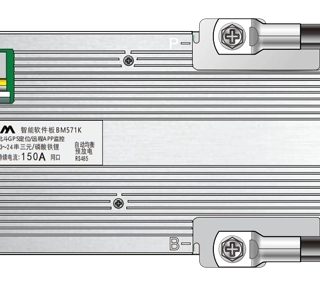
BM571K/BM571KO
Contact UsThe BM571K/BM571KO is a smart BMS offering high‑precision timing, power‑loss detection, low‑voltage warnings, and multiple alarms.
-

HYLX/JL 16-40KW wall furnace exchanger
Contact UsSpecification:HYLX/JL 16-40KW wall furnace exchanger
Material:TP2 copper
Features:safety,efficiency,energy saving,environmental protection -

Reviews
There are no reviews yet.