
PET Preform Machine Selection: A 2026 Buyer’s Guide
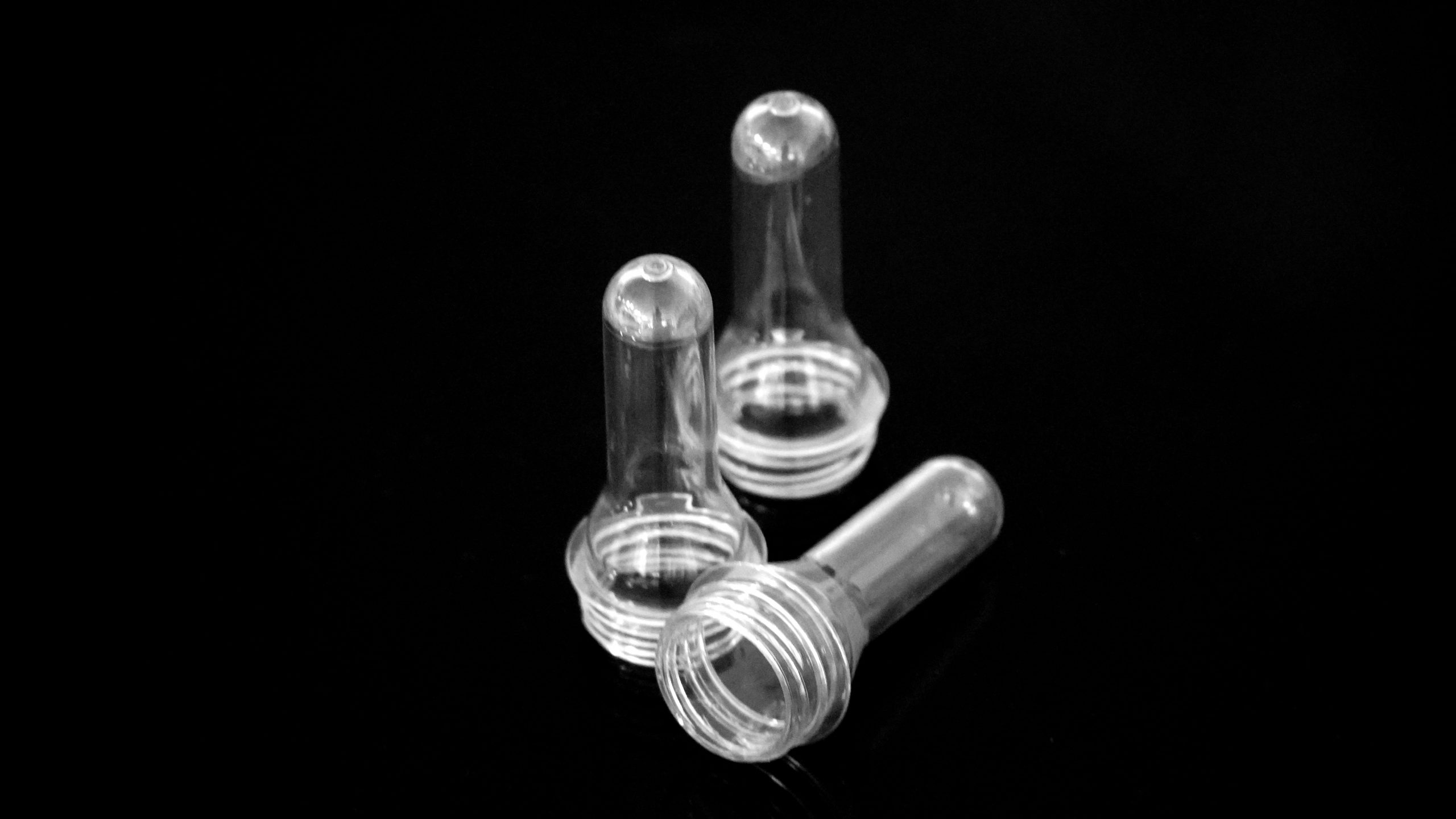
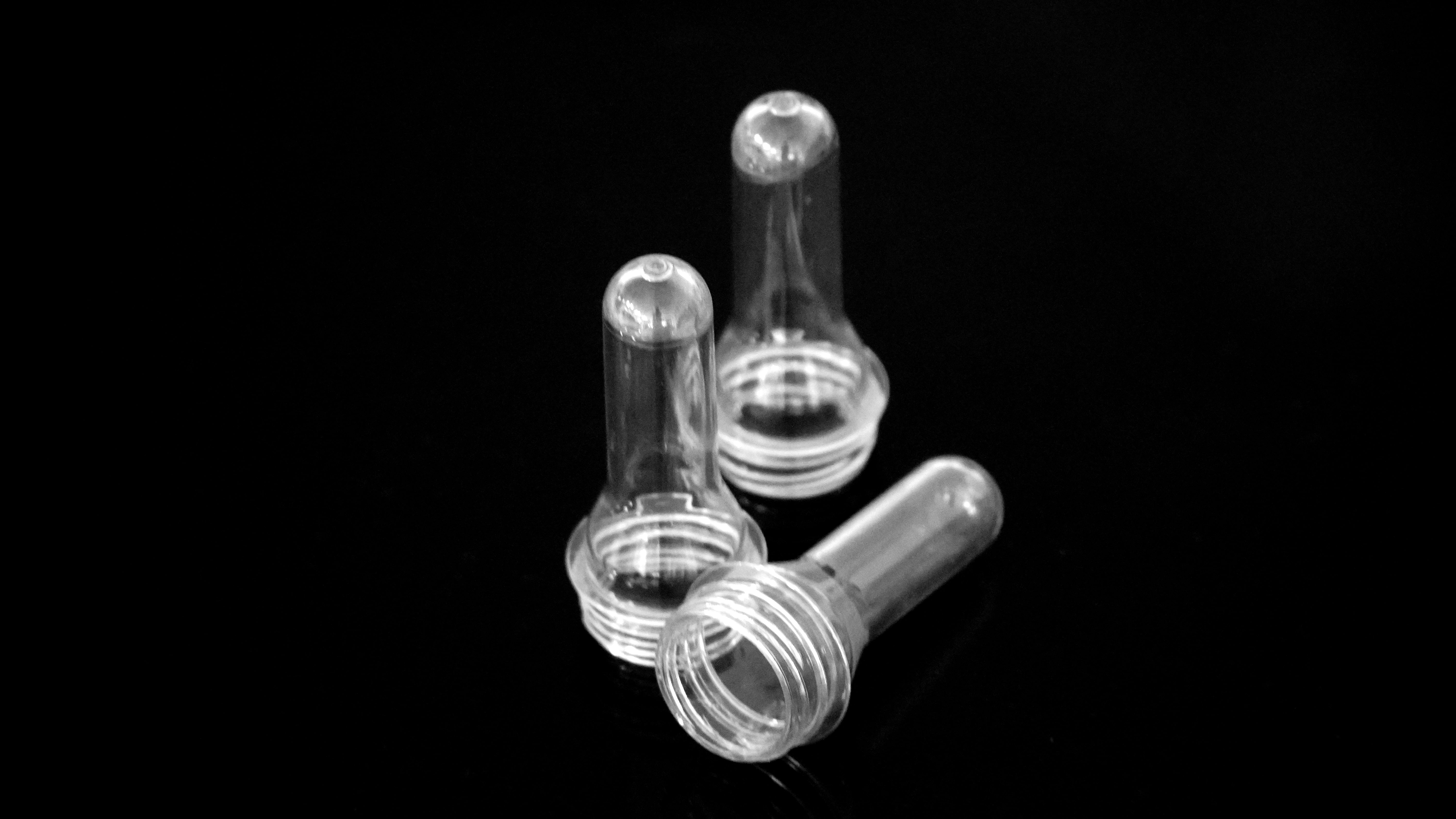
Built to support rapid market delivery. High-output capability ensures you meet tight deadlines for cosmetic and chemical tube preforms.
PET Preform Machine Selection: A 2026 Buyer’s Guide
Choosing the right PET preform injection molding machine is one of the most consequential decisions a beverage or water packaging producer will make. Cavity count, injection repeatability, cycle time, and delivery lead time all interact to determine whether a new production line meets market demand on schedule and at a competitive unit cost. This article examines the technical and commercial factors buyers should weigh, using the integrated machine, mold, and automation offering from DKM Machinery and SINO MOULD as a practical reference point for how these decisions play out in real deployments.
Why Machine Selection Is Harder Than It Looks
PET preform production is a high-cavity, high-repeatability business. Producers are not simply buying a clamping unit; they are buying a system that must hold tight shot-weight tolerances across dozens or hundreds of cavities, cycle after cycle, for years. The core pain points reported across the industry — long equipment lead times, high per-unit production costs, slow molding cycles, and unstable multi-cavity consistency — are precisely the variables that a well-specified PET preform machine is designed to solve.
DKM-PET III Preform-Dedicated Injection Molding Machine, offered in DKM-350, DKM-450, DKM-550, and DKM-650 PET III configurations, illustrates how model selection should be matched to cavity count rather than chosen in isolation:
- DKM-350 PET III pairs with 48-cavity lines
- DKM-450 PET III pairs with 72-cavity lines
- DKM-550 PET III pairs with 144-cavity preform molds
- DKM-650 PET III pairs with 144-cavity production lines
This model-to-cavity mapping matters because injection repeat accuracy is only meaningful when the machine’s shot capacity and clamping tonnage are correctly sized to the mold. The DKM-PET III series is built around a standard electric accumulator with synchronized plasticizing combined with post-mold cooling technology, which shortens molding cycles, and nano far-infrared heating rings, which reduce production energy consumption. The optimized machine frame structure delivers injection repeat accuracy of ≤0.5‰, a figure that supports stable output across multi-cavity preform production where even small shot-weight deviations compound across dozens of cavities.
Cycle Time as a Selection Criterion
Buyers evaluating PET preform equipment should ask for cycle time data tied to specific preform weights and neck finishes, since generic speed claims are not comparable across applications. Documented results from DKM-PET III deployments include a 144-cavity preform mold on the DKM-650 PET III achieving a 12.8-second cycle producing an 11g, 29mm neck preform; a 72-cavity standard line on the PET 450 achieving a 12-second cycle for a 12g, 28mm preform; and a 48-cavity standard line on the PET 350 achieving a 16-second cycle for a 12g, 28mm preform. These figures give prospective buyers concrete benchmarks rather than abstract performance claims.
The Full Production Line, Not Just the Machine
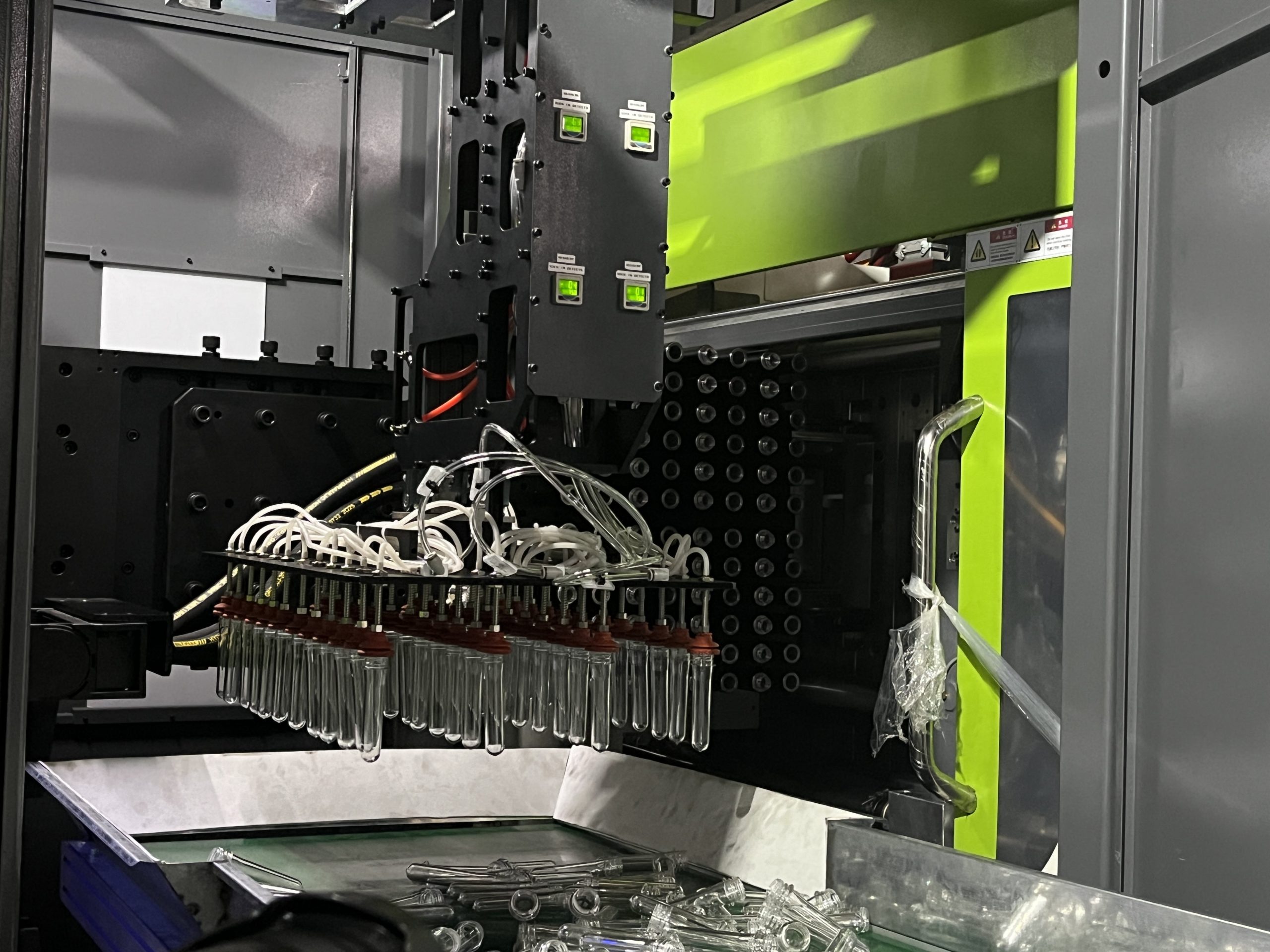
A PET preform machine does not operate in isolation — it is one component of a complete production line that also includes the mold and the take-out or cooling robot. The PET Preform Production Line offering integrates the preform mold, the DKM-PET III injection molding machine, and an out-mold cooling and pick robot into standardized configurations:
- Standard 1: PET 650 machine, 144 cavities, take-out robot, 11g/29mm preform, 12.8-second cycle
- Standard 2: PET 450 machine, 72 cavities, dual-station external cooling robot, 12g/28mm preform, 12-second cycle
- Standard 3: PET 350 machine, 48 cavities, three-station external cooling robot, 12g/28mm preform, 16-second cycle
For preforms under 16g, cooling takes place directly on the robot gripper during part removal. For preforms over 16g, robot gripper cooling is combined with multi-station cooling units, which allows faster overall molding cycles for larger preforms without compromising dimensional quality. This weight-based cooling logic is a detail buyers should specifically ask about, since it directly affects achievable cycle time for heavier preform formats.
Mold Quality and Delivery Timelines
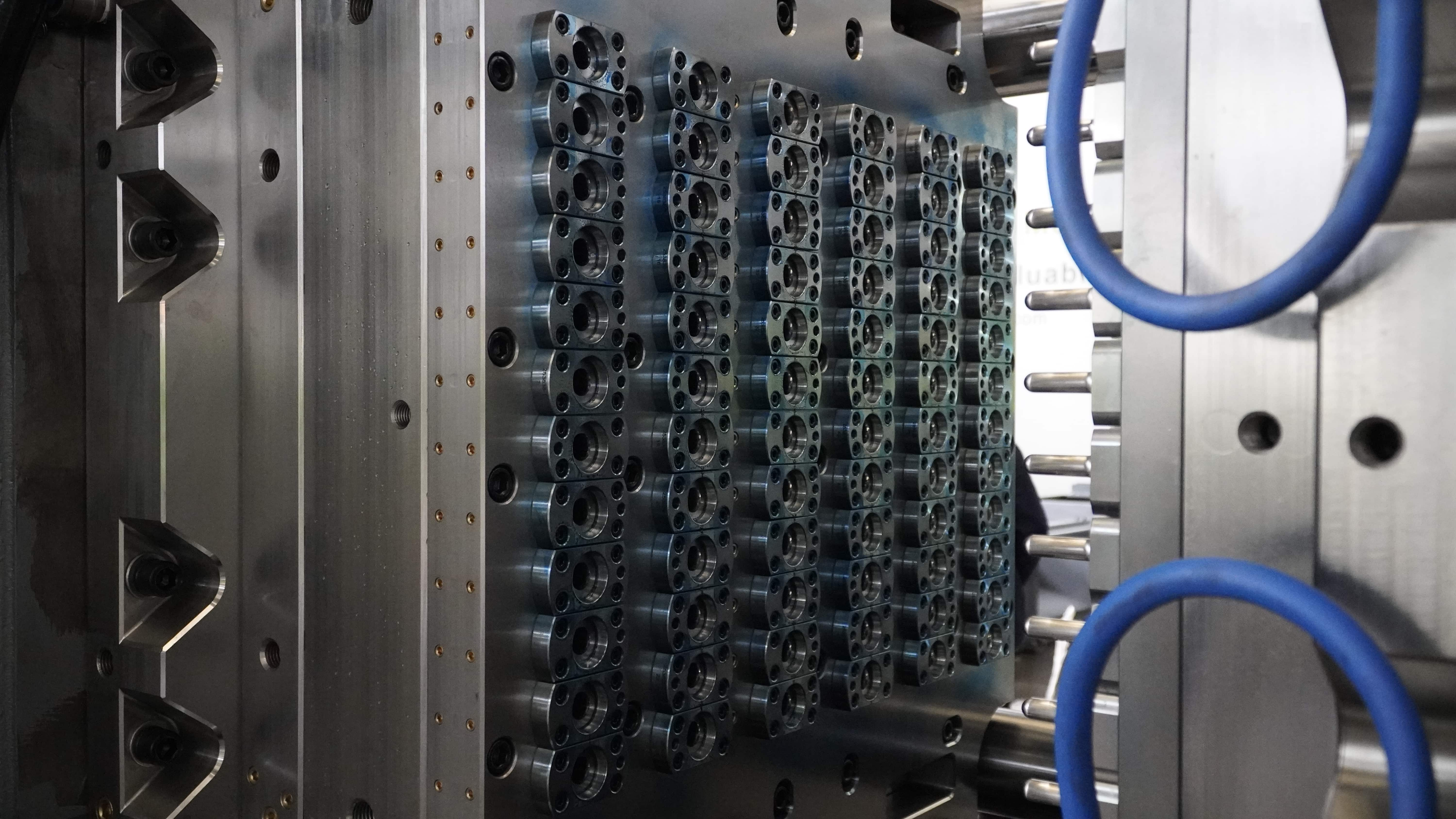
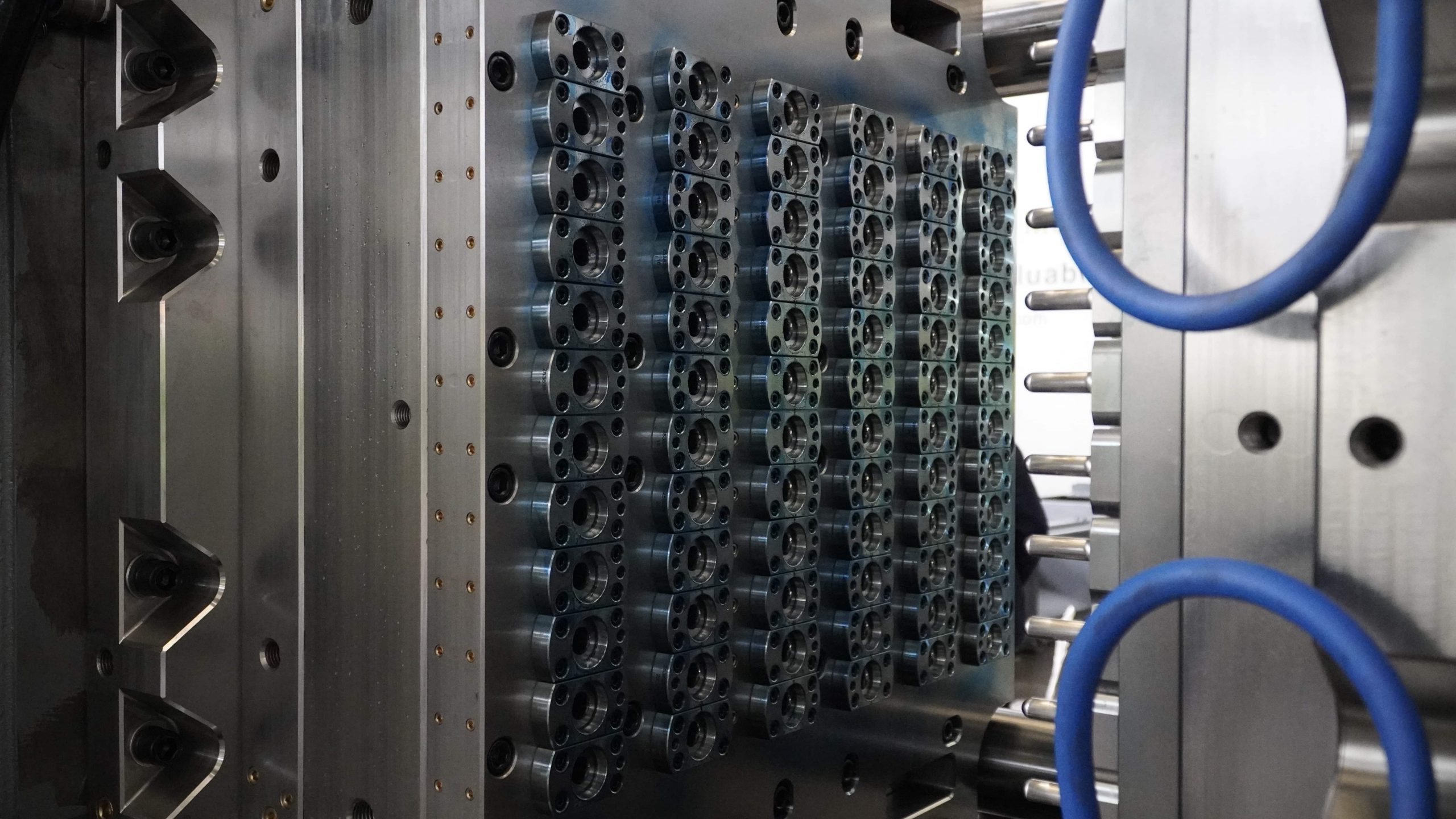
Machine selection cannot be separated from mold sourcing. PET Bottle Preform Molds, manufactured by SINO MOULD and its subsidiary SINO-PK, are available in flexible cavity counts from 8 to 168, with key components in Swedish S136 steel (HRC45-48) and mold bases in DIN1.2311. Tolerances down to 0.01mm support uniform wall thickness and concentricity, with ±0.005mm precision capability available for applications that demand it. Standard neck finishes include PCO 1810 / PCO 1881 and 28mm neck configurations for preform weights typically in the 12g-30g range.
On delivery, standard 48/72-cavity production lines with standard 28/38mm neck finishes can move from order confirmation to qualified shipment in 14 days, while custom non-standard applications — special neck finishes, unique bottle designs, or mixed-cavity configurations — require 5 to 7 weeks. Standard 48/72-cavity molds alone are delivered in 1 to 2 weeks. A 3-year warranty on PET preform molds, with spare parts free of charge during the warranty period, is included as part of the standard commercial terms.
Practical Selection Criteria for Buyers
When evaluating PET preform equipment, producers should request four categories of information from any prospective supplier: documented cycle time tied to a specific preform weight and cavity count; injection repeat accuracy expressed as a tolerance figure (such as ≤0.5‰); confirmed mold steel specification and dimensional tolerance; and a written delivery commitment, ideally for both the mold alone and the complete line. The DKM-PET III series and its paired PET Preform Production Line and PET Bottle Preform Mold offerings provide verifiable figures across all four categories, which allows buyers to compare proposals on a like-for-like basis rather than relying on generalized marketing claims.
Conclusion
PET preform machine selection is ultimately a systems decision that spans the injection molding machine, the mold, and the automation that handles cooling and part removal. Cavity count must match machine capacity, cycle time claims must be tied to specific preform specifications, and delivery commitments should be explicit and contractual. The integrated approach demonstrated by DKM Machinery and SINO MOULD — pairing specific PET III machine models with corresponding cavity counts, documenting cycle times against real preform weights, and offering standardized 14-day line delivery alongside custom 5-to-7-week options — reflects the level of technical specificity that producers should expect when selecting PET preform equipment for new or expanded production capacity.
Related products
-
Short pitch precision roller chains(A series)
Contact UsShort pitch precision roller chain, also known as A series roller chain, is a type of roller chain characterized by small pitch and precise construction. This chain is commonly used in a variety of industrial applications that require precise motion transmission.
-
INDUSTRIAL DIRECT GAS FIRED TUNNEL OVEN
Contact UsSuitable for a variety of products baking, there are several choices for the type of transporting belt, you can choose the best type based on the products to be baked.
-
HUB III Bearing Unit Assembly Line
Contact Us● HIGH EFFICIENCY / QUICK CHANGEOVER / FULL AUTOMATION / DATA TRACEABILITY
● LEADING TECHNOLOGY / SIMPLE OPERATION -
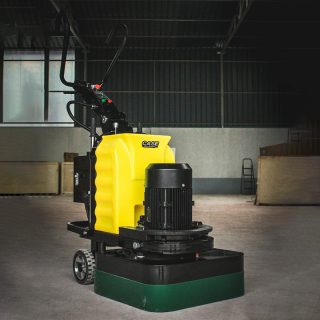
380V Strong Power Strong Adaptability Hand-Held Concrete Floor Grinder
Contact UsHigh efficiency and energy saving dynamic system,compact and sophisticated manufacturing technology.
Reviews
There are no reviews yet.