
How to Choose the Right Large Hydraulic Cylinder Barrel
Large hydraulic cylinders are essential in heavy-duty equipment where high force, long strokes, and reliable operation are required.
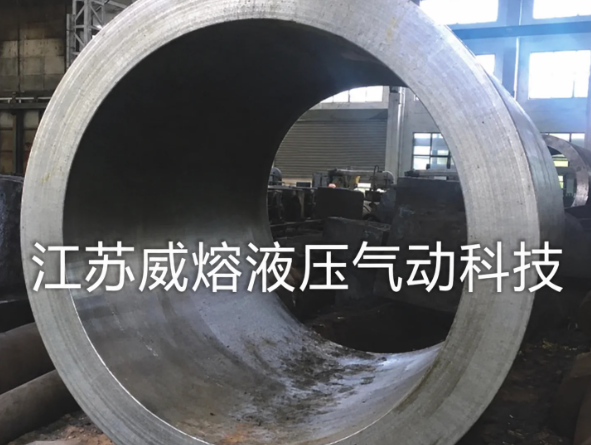
Large hydraulic cylinders are essential in heavy-duty equipment where high force, long strokes, and reliable operation are required. The large hydraulic cylinder barrel is one of the most important components because it forms the pressure chamber and provides the internal working surface for the piston and sealing system.
Choosing the right barrel involves more than selecting a suitable diameter. Material grade, wall thickness, bore accuracy, manufacturing process, heat treatment, surface finish, and operating pressure should all be considered according to the actual application.
What Is a Large Hydraulic Cylinder Barrel?
A hydraulic cylinder barrel contains the pressurized hydraulic fluid that acts on the piston to generate linear force. Compared with standard cylinders, large hydraulic cylinder barrels generally have larger diameters, thicker walls, and longer dimensions.
They are widely used in hydraulic presses, steel and metallurgical equipment, construction machinery, mining equipment, marine systems, and customized industrial hydraulic applications. Because these cylinders often operate under heavy loads, the barrel must maintain structural strength and dimensional stability throughout its service life.
Key Factors for Barrel Selection
Material is one of the first factors to consider. Carbon steel and alloy steel may be selected according to working pressure, mechanical loads, operating environment, and required service life. Proper heat treatment can further improve strength, toughness, and dimensional stability.
Bore diameter also plays an important role because it determines the piston area and therefore influences the theoretical hydraulic force. Wall thickness must be selected according to cylinder diameter, pressure, material properties, and applicable safety requirements.
For long hydraulic cylinders, barrel length and straightness are equally important. Excessive deformation or poor internal geometry can affect piston movement, seal performance, and wear.
Manufacturing and Internal Bore Quality
Large hydraulic cylinder barrels can be produced using formed steel plates and controlled welding processes. For large-diameter applications, this approach provides flexibility in selecting plate thickness and barrel dimensions. Welding quality is critical because the finished barrel must safely contain hydraulic pressure.
After forming, the internal bore requires precision machining. Processes such as boring and honing can be used to achieve the required diameter, straightness, roundness, cylindricity, and surface finish. A properly finished bore helps reduce friction and supports stable piston seal performance.
Heat treatment is another important part of production. Depending on the material and design, normalization, quenching, tempering, or surface hardening may be applied. For large components, uniform heat treatment helps control internal stress and deformation.
Applications of Large Hydraulic Cylinder Barrels
Large hydraulic cylinders are used across many industries. Hydraulic presses require cylinders capable of handling repeated high loads. Steel and metallurgical equipment often requires robust hydraulic systems for lifting, positioning, and production processes.
Construction and mining machinery use large cylinders for lifting, digging, pushing, and material handling. Marine and offshore equipment may require additional attention to material selection and environmental protection. Customized industrial systems can also use large hydraulic cylinders for clamping, forming, positioning, and other controlled linear movements.
Choosing a Reliable Manufacturer
When selecting a large hydraulic cylinder barrel manufacturer, buyers should evaluate more than production dimensions. Manufacturing capability, steel processing, welding, machining, heat treatment, inspection equipment, and experience with large components are all important.
Jiangsu Weirong Hydraulic & Pneumatic Technology Co., Ltd. has developed experience in large hydraulic cylinders and hydraulic systems since 2007. The company manufactures large hydraulic cylinder bodies using thick steel plates and provides related large-component heat treatment capabilities.
For customized hydraulic cylinder projects, suppliers should be able to work with detailed drawings and technical specifications, including bore diameter, wall thickness, barrel length, material, pressure rating, surface finish, tolerances, and mounting configuration.
Conclusion
Selecting the right large hydraulic cylinder barrel requires a complete evaluation of the hydraulic system and operating conditions. Material, bore size, wall thickness, length, heat treatment, machining accuracy, and surface quality all contribute to cylinder reliability.
For heavy-duty applications, working with a manufacturer that has suitable production, machining, heat treatment, and inspection capabilities can help ensure that the barrel meets the technical requirements of the complete hydraulic cylinder.
Related products
-
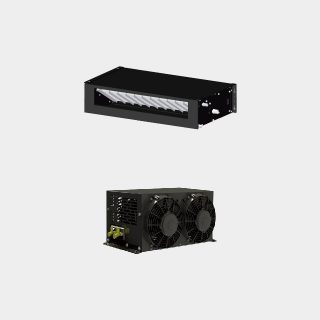
Ceiling Mounted Cassette type AC for RV ——K48UC-735TPG
Contact Us● The cooling capacity reaches up to 3500w, providing powerful cooling performance.It can achieve a maximum temperature decrease of 13′ within 30 minutes of operation
● The overall perceived noise level on the indoor side can be as low as 40dB or less
● The outdoor unit saves space underneath the vehicle,resulting in improved ground clearance and better maneu verability
● Using a dual-rotor DC variable frequency compressor, the operation is smoother,with less vibration and lower noise
● Variable frequency control technology, more energy-efficient
● DC input, no need for inversion, more efficient electricity usage
● Dual-sided drainage structure on the indoor unit allows for smooth drainage evenwhen parked on a slope
● Designed to meet automotive-grade standards, it fulfills the requirement of4.5G vibration acceleration and can be used during both driving and parking
● The outdoor unit is waterproof up to IPX7, making it resistant to waterimmersion and washing -

Metal casings
Contact UsYancheng Zhongming New Materials Co., Ltd. is located in Yancheng City, Jiangsu Province.
-
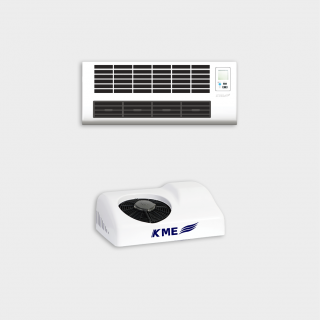
DC Rooftop Mounted Vehicle Air Conditioners
Contact Us● Strong air volume, fast cooling
● Lightweight design, intelligent design
● Longer battery life, meeting the need for a full night’s sleep
● Energy saving/lightweight/quiet
● Split structure, rooftop mounted
● Energy saving and low consumption, quality assurance
● The company has passed the automotive industry IATF16949 certification -

Gel & Clot Activator Tube
Contact UsGel and clot activator tube is used for blood serum biochemistry, immunology and drug testing, etc.
Reviews
There are no reviews yet.