

Diamond Saw Blade For Concrete Cutting: 2026 Guide
Diamond Saw Blade For Concrete Cutting: 2026 Guide
Understanding Diamond Saw Blade Technology for Demanding Cutting Jobs
Anyone searching for a diamond saw blade for concrete cutting is usually facing the same underlying question: how do you choose a blade that delivers stable performance, controlled wear, and predictable results when working with dense, abrasive materials? The answer lies less in marketing claims and more in the engineering fundamentals behind diamond cutting tools — the segment formulation, the bond system, the blade structure, and how all of these elements are matched to the material being cut. These fundamentals are the same principles that guide the development of diamond saw blades across the hard-material processing industry, including the natural and engineered stone sector where XRT Diamond Tools, the brand of Quanzhou Xinruite Diamond Tools Co., Ltd., has built its manufacturing expertise since 2001.
What Determines Cutting Performance in Hard Material Applications
Diamond saw blades are not interchangeable tools. Their performance depends on a combination of technical variables that must be aligned with the material, the machine, and the production goal.
Diamond Segment Formulation and Bond Systems
The diamond segment is the working edge of any saw blade, and its formulation determines how well the blade performs under load. Different metal bond systems and diamond concentrations are developed to optimize cutting performance, tool life, and processing efficiency. A bond that is too hard for the material will not release diamond particles fast enough, leading to a dull, glazed edge; a bond that is too soft will wear away before the diamond has done its work. This is why diamond tool manufacturers develop segment formulas according to stone hardness, abrasiveness, machine type, and cutting speed requirements rather than applying a single generic formula across all applications.
Blade Structure: Silent vs. Non-Silent Design
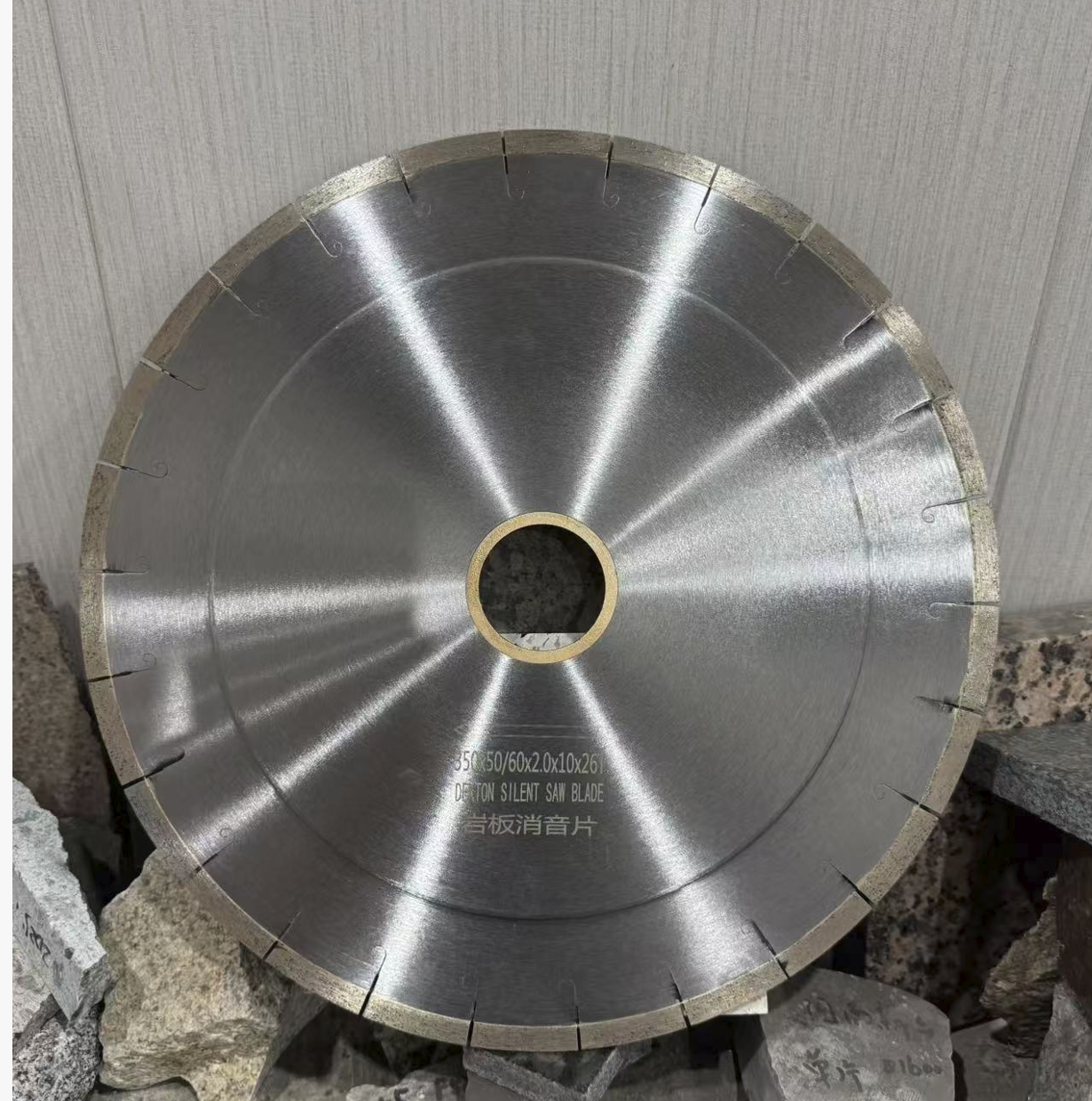
Cutting environments also differ in their operational requirements. Some processing conditions call for lower cutting noise, which is why silent blade structures exist as an alternative to standard non-silent designs. Non-silent blades remain a reliable, cost-effective option for many production settings, offering dependable cutting performance without the added structural complexity of noise-reduction features. Choosing between the two depends on the workshop environment, equipment type, and the operator’s priorities around noise control versus straightforward cost efficiency.
Matching Blade Specifications to Material Characteristics
Material hardness and abrasiveness directly influence how a diamond blade should be specified. Granite, for example, has high hardness and abrasiveness and requires a diamond formula capable of maintaining strong cutting performance without excessive segment wear. Marble, by contrast, calls for smoother cutting performance and better edge protection to avoid affecting finished surface quality. Quartz materials demand stable cutting performance and controlled wear to prevent chipping, while ultra-hard engineered surfaces like Dekton require specialized formulas designed specifically for dense, hard-to-cut materials. This range of material-specific engineering illustrates a broader truth: no single blade design performs optimally across every hard material, and cutting outcomes improve significantly when the blade formula is tailored to the specific processing conditions at hand.
XRT Diamond Tools: Deep Expertise in Diamond Saw Blade Manufacturing
A Product Line Built on Application-Specific Engineering
XRT Diamond Tools has spent more than 20 years focused on the research, development, manufacturing, and application of diamond tools for cutting and processing. Its diamond saw blade and cutting disc line is built specifically around this principle of application-based engineering, with dedicated product families for granite, marble, quartz, microcrystalline stone, Dekton, and ceramic materials. Each product line is developed with optimized diamond segment formulas suited to the hardness and abrasiveness of its target material, and both silent and non-silent blade structures are available depending on customer requirements. Blade diameters across the range span from 250mm up to 600mm, with additional customized sizes produced according to specific customer needs.
This structure reflects XRT’s broader technical platform, which covers diamond tool development, diamond segment formulation, metal bond technology, precision manufacturing processes, and stone-processing application solutions. The company’s manufacturing technology includes segment pressing, sintering, welding, precision machining, and quality inspection — all aimed at producing stable, consistent product performance across production runs.
Factory-Direct Manufacturing and Customization
Because XRT operates as a factory-direct manufacturer, product specifications, diamond formulas, bond systems, segment dimensions, and blade configurations can be adjusted according to stone hardness, abrasiveness, machine type, and customer requirements. This customization capability is central to how the company approaches every order: rather than offering a single fixed specification, XRT develops diamond tool solutions according to different stone materials, machine conditions, cutting parameters, and customer requirements.
Balancing Cutting Speed, Tool Life, and Total Cost
For any stone factory, processor, or distributor, the real measurement of a good diamond saw blade is not a single performance metric but a balance. XRT’s stated core value is to help customers achieve a better balance between cutting speed, tool life, cutting quality, and total processing cost. A blade that cuts fast but wears out quickly may lower productivity in the long run, while a blade built purely for longevity may slow down production schedules. XRT’s application engineering approach — grounded in stone hardness, abrasiveness, machine type, and cutting speed requirements — is designed to help customers find that balance rather than optimize for one variable at the expense of the others.
Global Technical Support for Diamond Blade Applications
Beyond the products themselves, technical guidance plays a significant role in achieving reliable cutting results. XRT provides professional support during product selection, testing, installation, and application, helping customers optimize cutting performance and tool efficiency. This service model extends to customers across Asia, the Middle East, Europe, Africa, and South America, including key markets such as Turkey, Iran, Indonesia, India, Vietnam, Pakistan, Egypt, Brazil, Russia, Italy, and Saudi Arabia. Local stone characteristics, machine conditions, and cutting requirements can all be factored into the recommendations provided.
Conclusion
Selecting a diamond saw blade for demanding, hard-material cutting work ultimately comes down to understanding the relationship between segment formulation, bond systems, blade structure, and the specific characteristics of the material being processed. Quanzhou Xinruite Diamond Tools Co., Ltd., operating under the XRT and Xinruite brand names, applies these engineering principles across its diamond saw blade range for granite, marble, quartz, microcrystalline stone, Dekton, and ceramic materials, supported by factory-direct manufacturing, customization capability, and international technical service. For stone processing companies, distributors, and diamond tool dealers evaluating blade options, this combination of application-specific formulation and responsive technical support represents the kind of practical, cost-performance-driven approach that helps translate diamond blade technology into stable, predictable production results.
Related products
-
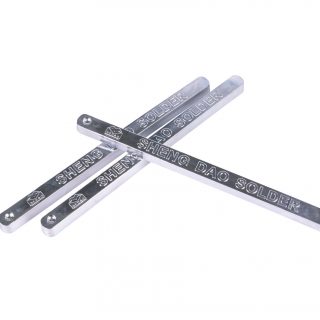
Sn63Pb37 Lead-Containing Solder Bar
Contact UsExcellent wettability to reduce defective solder joints. Minimal harmful impurities to enhance diffusivity. Improved fluidity.
-
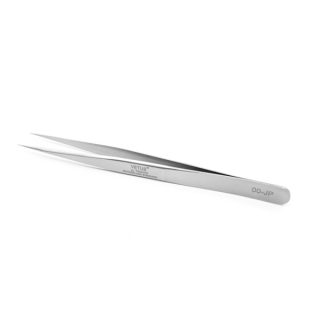
00-JP- High precision tweezers – Anti-Acid/Anti-Mag SS
Contact UsVETUS top quality high precision tweezers – Anti-Acid/Anti-Mag SS – tips: straight, very fine, sharp
-
Copper Top Adapter
Contact UsThrough theory and practice, we have developed a copper top adapter with our own intellectual property rights
-
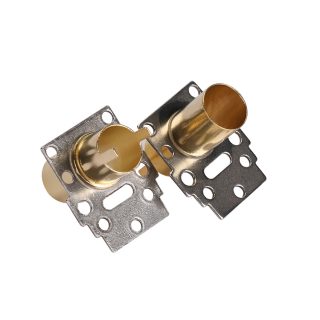
MYD screening tubes OD7.3*20.5MM
Contact UsOur premium shielding tube, crafted from high-quality C3602 brass and SUS304 stainless steel, delivers exceptional durability, corrosion resistance, and electromagnetic shielding performance.
Reviews
There are no reviews yet.