
MASUMA: A Japanese-Standard Electric Fuel Pump Manufacturer
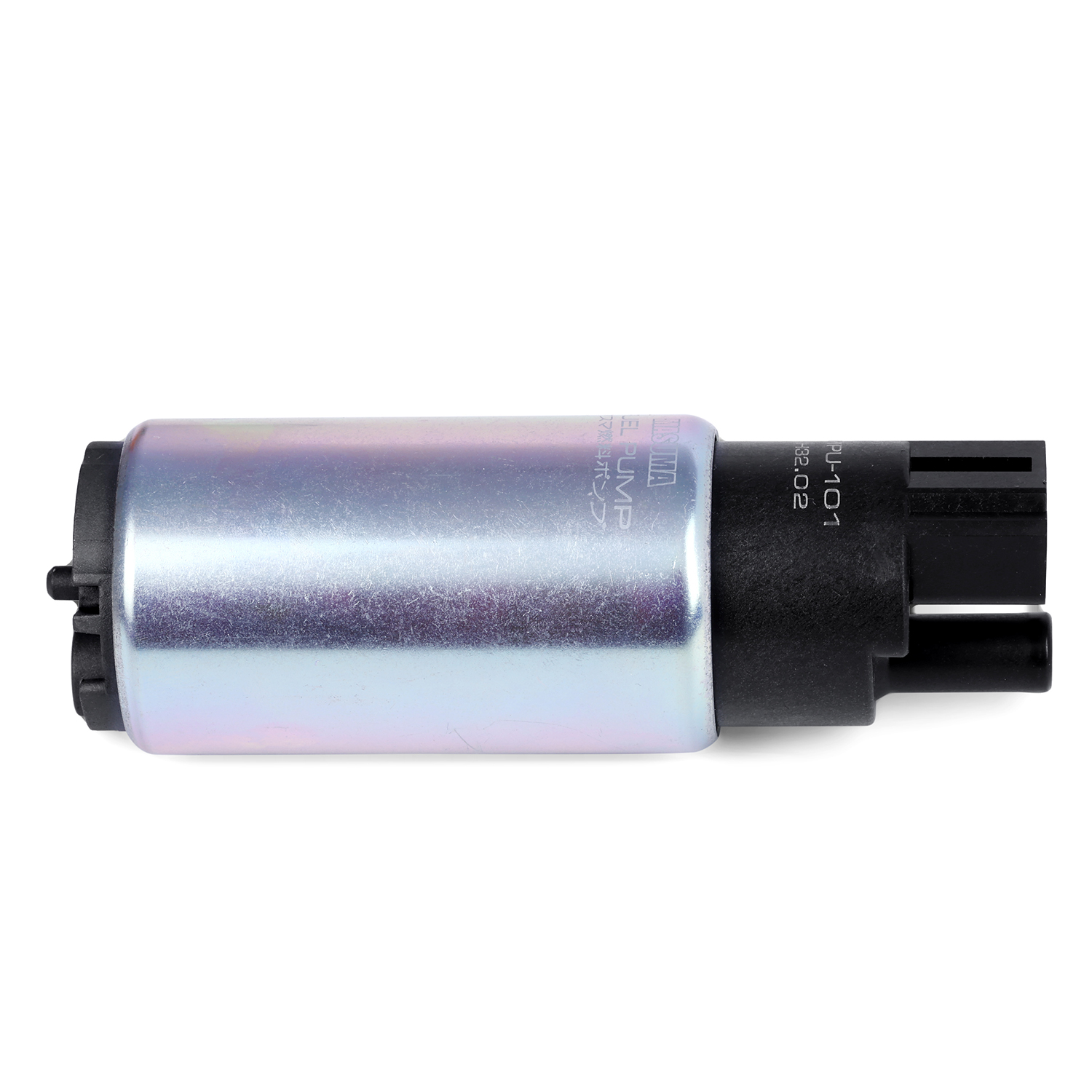
An electric fuel pump provides the necessary pressure and flow to the fuel system by continuously drawing fuel from the tank.
Industry Background: Why Fuel Delivery Reliability Demands Higher Manufacturing Standards
The global automotive aftermarket continues to grapple with a persistent set of engine performance issues: power loss, fuel inefficiency, starting failures, and unstable combustion. Many of these problems trace back to component wear, poor sealing, carbon buildup, and electrical leakage within ignition, fuel delivery, and engine sealing systems. Electric fuel pumps sit at the center of this challenge, since unstable fuel pressure, pump clogging, and premature wear caused by low-quality fuel directly translate into drivability complaints across passenger vehicles, commercial fleets, and hybrid electric models.
Addressing these pain points requires more than assembling generic parts—it requires precision engineering validated through reverse engineering and rigorous durability testing. This is the strategic positioning that MASUMA, a brand operating across the global automotive aftermarket, has built its Fuel Delivery Line around. Rather than treating fuel pumps as commodity items, MASUMA’s approach documents specific material choices, manufacturing equipment, and measurable technical thresholds—an approach that offers the industry a transparent basis for evaluating what “durable” and “reliable” actually mean in electric fuel pump manufacturing.
Authoritative Analysis: Engineering Standards Behind Electric Fuel Pump Performance
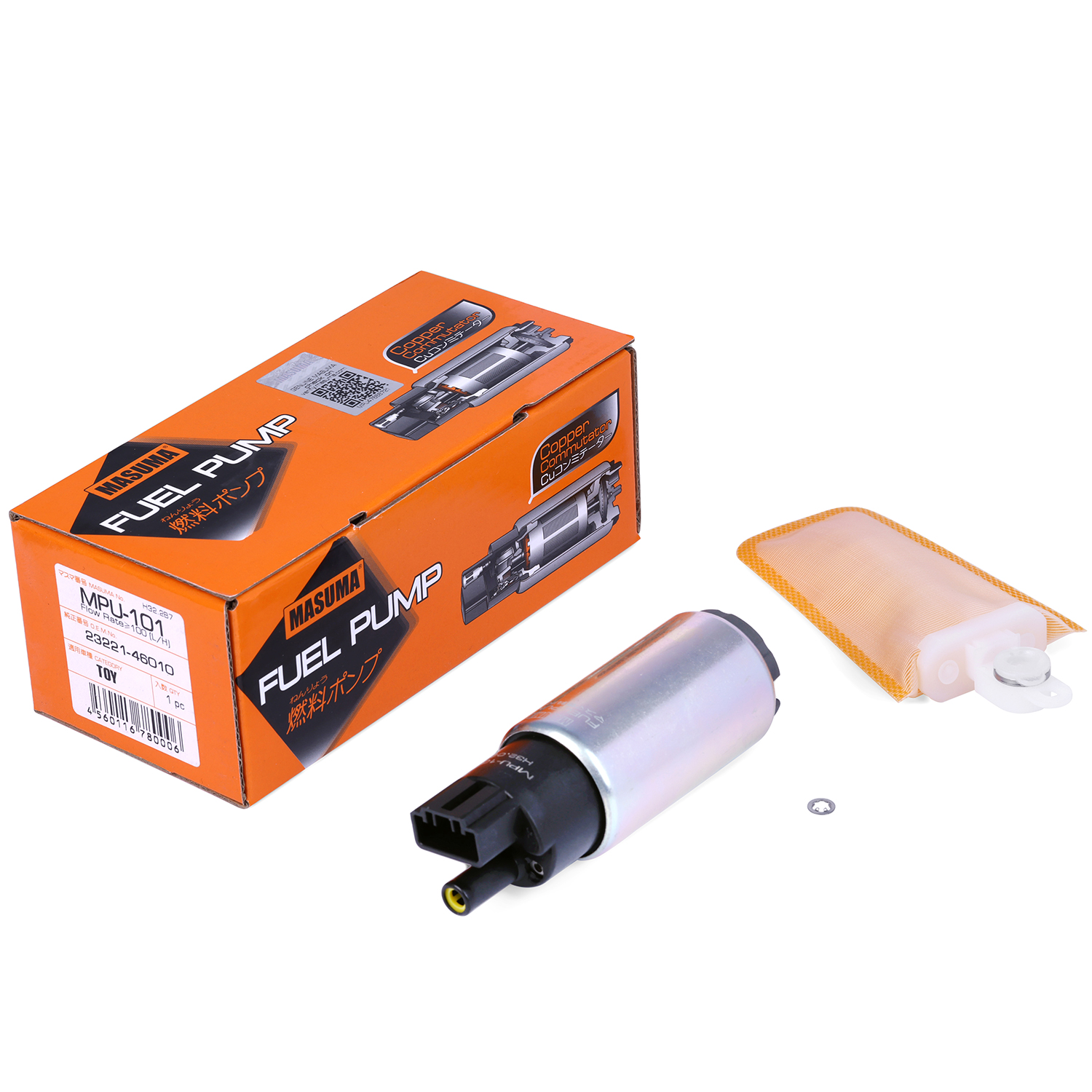
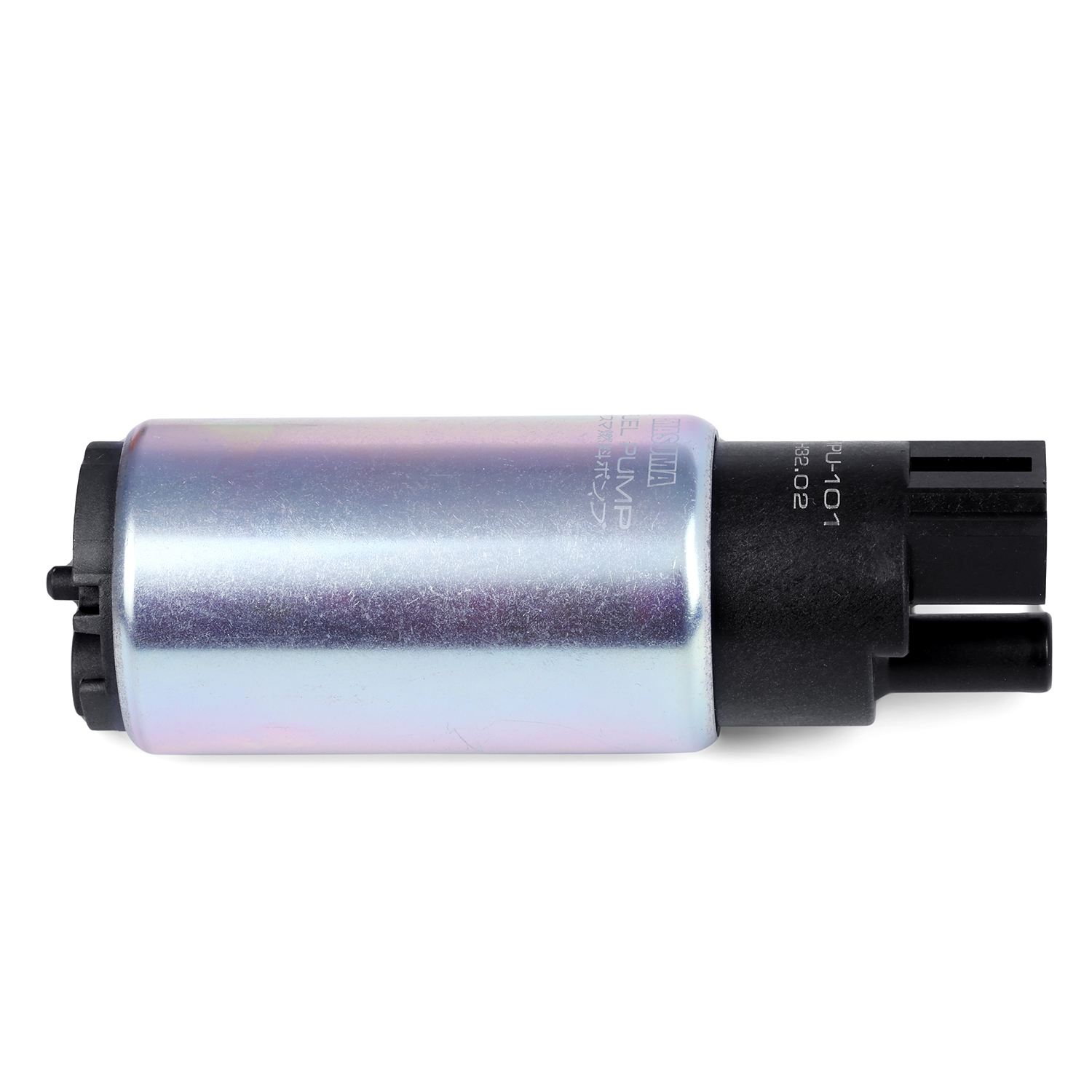
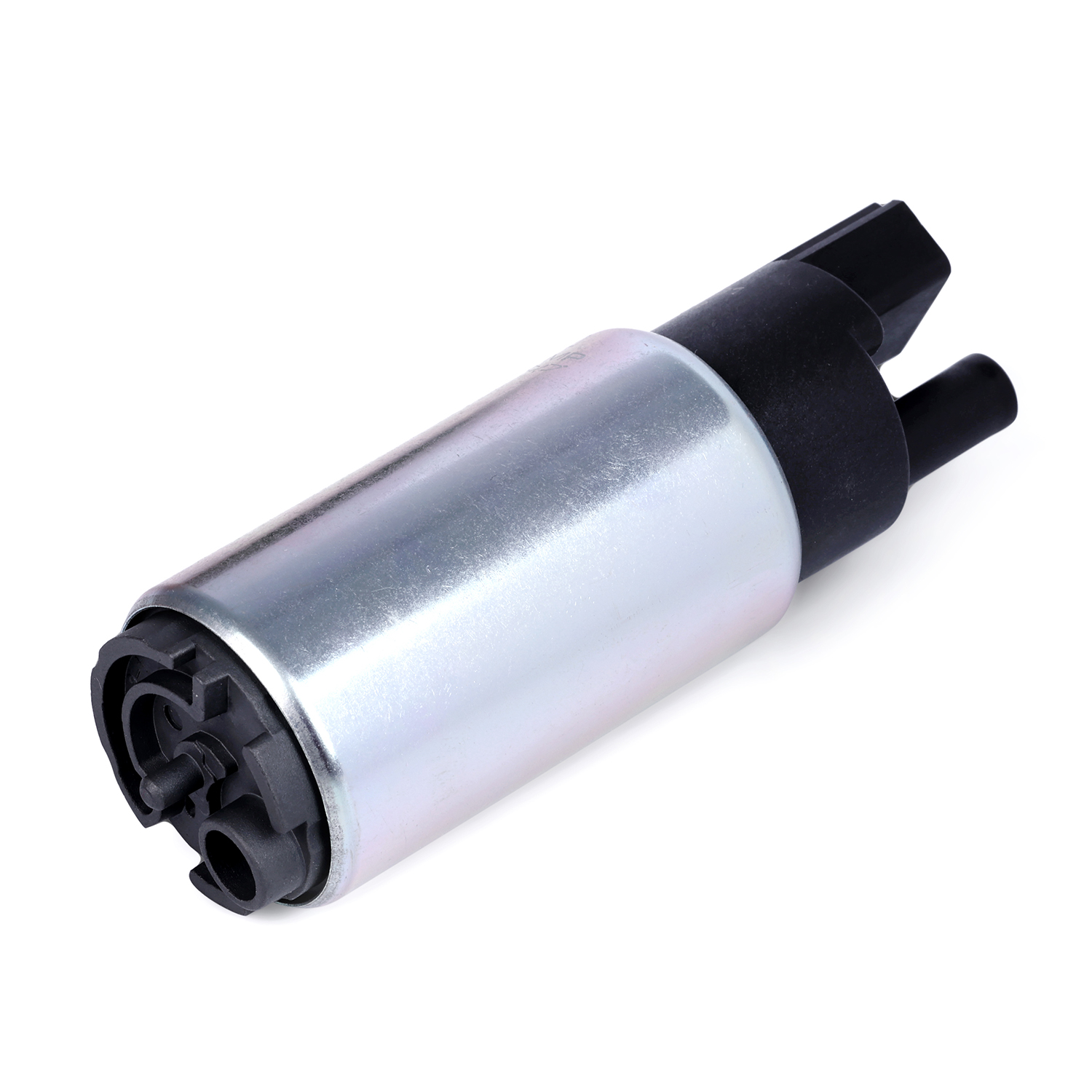
Necessity. Fuel pumps must maintain consistent pressure and resist chemical degradation from modern fuel blends, or engines suffer stalling, hesitation, and long-term component damage. MASUMA‘s Copper Commutator Electric Fuel Pumps (Standard Version) address this directly: a 0.8% silver copper commutator extends service life to 1 year or 80,000 km under standard daily operation, supported by a Korean sized impeller for stable fuel flow and an ADC-6 aluminum back cover that is factory-oxidized to minimize damage from dust and impurities.
Principle Logic. For higher-demand commercial applications, the High-Grade Carbon Commutator Electric Fuel Pump replaces copper with carbon commutator and brush materials sourced from SCHUNK Germany and Terranflex Japan, extending service life to 2 years or 150,000 km. The logic here is straightforward: carbon commutators resist electrical erosion better under high-mileage, continuous-duty cycles than standard copper designs, while a high-precision sized impeller made of 100% positive material maintains pressure consistency over time.
Standard Reference. MASUMA‘s Brushless Fuel Pumps introduce measurable technical benchmarks that function as clear standard references for the category. The check valve limits reverse fuel leakage to no more than 1.5cc/min under 269KPa test pressure, stabilizing line pressure after engine shutdown. The double-groove herringbone impeller, made of Japan Polyplastics or Solvay PPS (R7), limits dimensional change in organic solvents to ≤0.02% at 250°C—a critical threshold given constant exposure to modern fuel chemistries. The rotor shaft is GCr15 steel hardened to HRC55–65, and high-temperature winding resists heat up to 220°C, while low-iron-loss silicon steel (B50A470-H) lamination reduces noise and vibration during continuous high-speed operation.
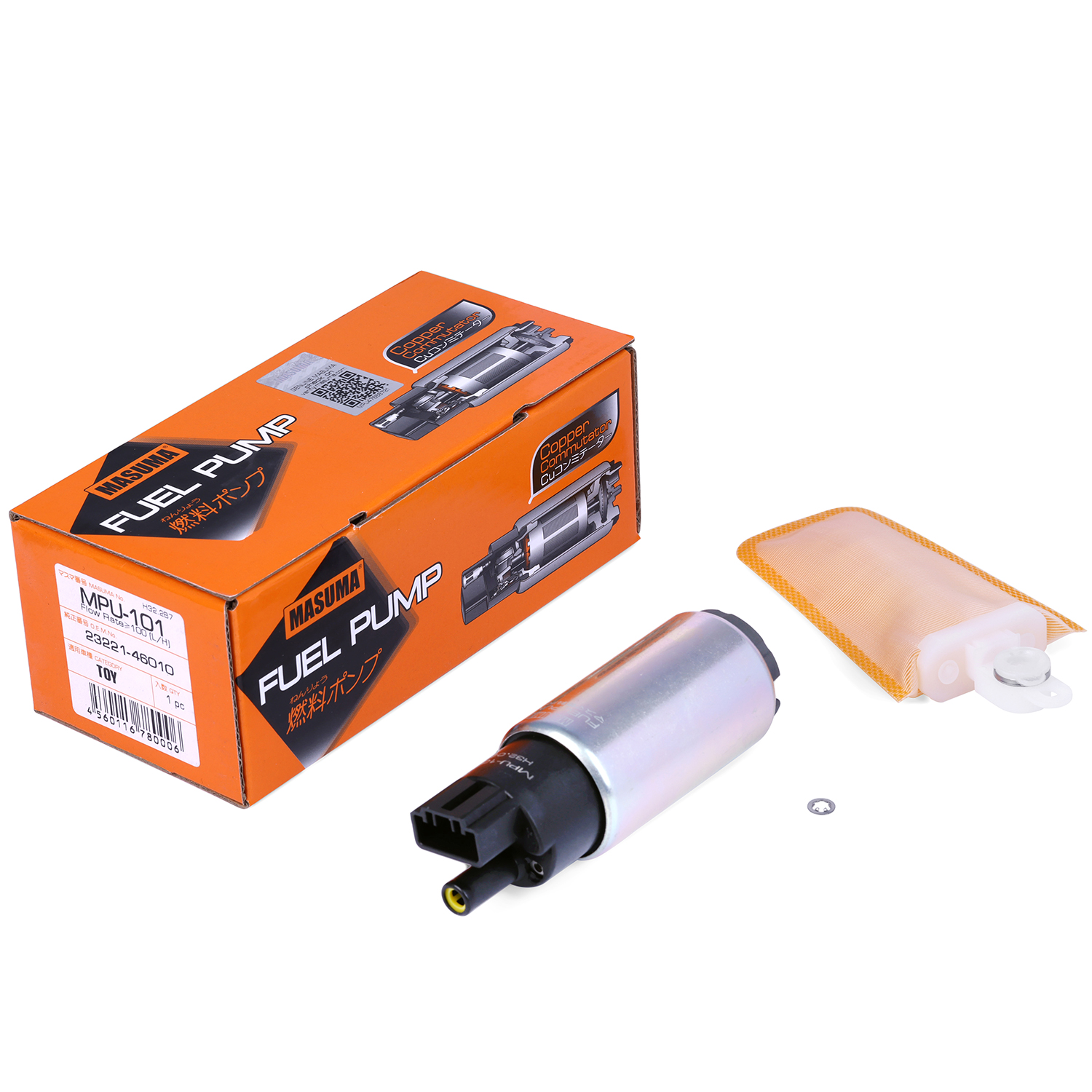
Solution Path. Manufacturing consistency depends on equipment as much as materials. MASUMA‘s fuel pumps are produced using Japanese CNC machine tools and automated robotic assembly, with the Italian A-TOP wound rotor balanced on Japanese DSK dynamic balancing machines to reduce vibration. Each unit undergoes a 15-minute break-in test with automated data archiving for traceability, giving distributors and repair stations verifiable performance data rather than unverified claims. The Electronic Fuel Pump Assembly extends this rigor further, using a glass fiber-reinforced modified PPS body to resist dissolution and swelling in acidic or high-solvent gasoline below 200°C, a KEP POM F20-03 housing containing lubricants for structural hardness, and Ahlstrom anti-static filter paper to prevent line clogging.
Deep Insights: Where Fuel Delivery Technology Is Heading
Several trends emerge from this technical foundation. First, material iteration is accelerating away from simple copper-based designs toward brushless, PPS-based, and carbon commutator systems that better withstand high-mileage and high-viscosity conditions—illustrated by the ZYB Ignition Boost Fuel Pump, engineered specifically for pumping heavy oil, residual oil, and diesel in road construction mixing stations and industrial burners. Second, market demand is broadening: platform compatibility now spans passenger cars, commercial vehicles, and hybrid electric models, meaning fuel delivery components must perform reliably across increasingly diverse drivetrain architectures.
Third, there is a clear risk that low-quality fuel and inconsistent commutator materials remain a persistent source of premature wear across the aftermarket, particularly for commercial and high-mileage vehicle operators. Finally, the industry is moving toward greater standardization through documented, traceable testing—MASUMA’s practice of automated data archiving during break-in testing points toward a broader direction where measurable technical metrics, not marketing language, become the basis for aftermarket part selection.
Company Value: How MASUMA Contributes Verified Engineering Practice to the Aftermarket
MASUMA‘s contribution to the fuel delivery segment lies in combining internationally sourced materials and equipment—Korean impellers, SCHUNK Germany and Terranflex Japan carbon components, Japan Polyplastics or Solvay PPS resins, Japanese CNC and DSK equipment, and Italian A-TOP winding—into a documented manufacturing process built on reverse engineering and durability testing. This is not simply a hardware supply model; it is paired with service capabilities including technical diagnostic guides, installation procedures, and vehicle maintenance recommendations, ensuring that after-sales support matches vehicle manufacturer standards.
By publishing specific technical metrics—reverse leakage limits, dimensional tolerance under solvent exposure, shaft hardness ratings, and winding heat resistance—MASUMA provides distributors, repair stations, and fleet operators with concrete criteria for evaluating fuel pump quality rather than relying on generalized durability claims. This transparency is what positions MASUMA’s technical materials as a practical reference point within the global automotive aftermarket, particularly for industry participants operating in the passenger vehicle service, commercial transportation, and road construction machinery sectors.
Conclusion and Recommendations
Electric fuel pump reliability depends on verifiable engineering choices: commutator material, impeller composition, rotor balancing, and documented testing procedures. MASUMA’s Fuel Delivery Line demonstrates how these elements combine—from standard copper commutator pumps to brushless and electronic assembly designs—to address unstable fuel pressure, pump clogging, and wear caused by demanding fuel conditions.
For aftermarket distributors, repair stations, and fleet operators, the practical takeaway is to evaluate electric fuel pump manufacturers based on measurable technical specifications and traceable testing data rather than general marketing assurances. As the aftermarket continues to serve an expanding mix of passenger, commercial, and hybrid electric vehicles, manufacturers that document material sourcing, equipment standards, and performance thresholds—as MASUMA does across its Copper Commutator, High-Grade Carbon Commutator, Brushless, and Electronic Fuel Pump Assembly products—offer a more reliable basis for long-term procurement decisions in fuel delivery systems.
Related products
-
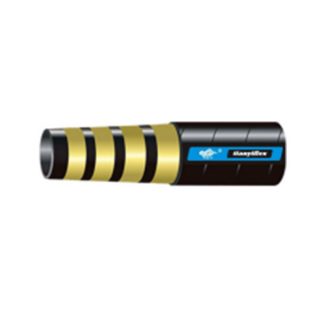
DIN-EN 856 4SP
Contact UsSTANDARD: SAE J517 TYPE 100 R12
TUBE: oil resistant synthetic rubber
REINFORCEMENT: four spiral high strength stainless steel wire
COVER: oil, abrarion & weather resistant synthetic rubber
TEMPERATURE RANGE: -40℃ /+100℃ ; -40 °F/+212°F LT-55 & HT150℃ customizable
APPLICATION: suitable for high temperature and medium pressure hoses under harsh conditions, machine tools and agricultural applications, construction machinery, oil drilling, mining machinery, steel, chemical industry, energy, rail transit, food processing and shipbuilding -
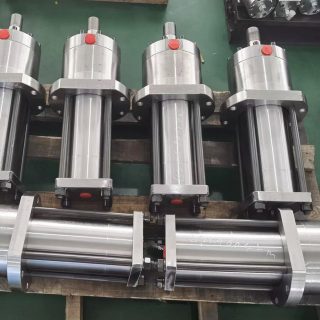
Ejection Cylinder (Tie Rod Type/Bolt Type)
Contact UsUsed for machine to make the activity like push/hit/pull etc.
-
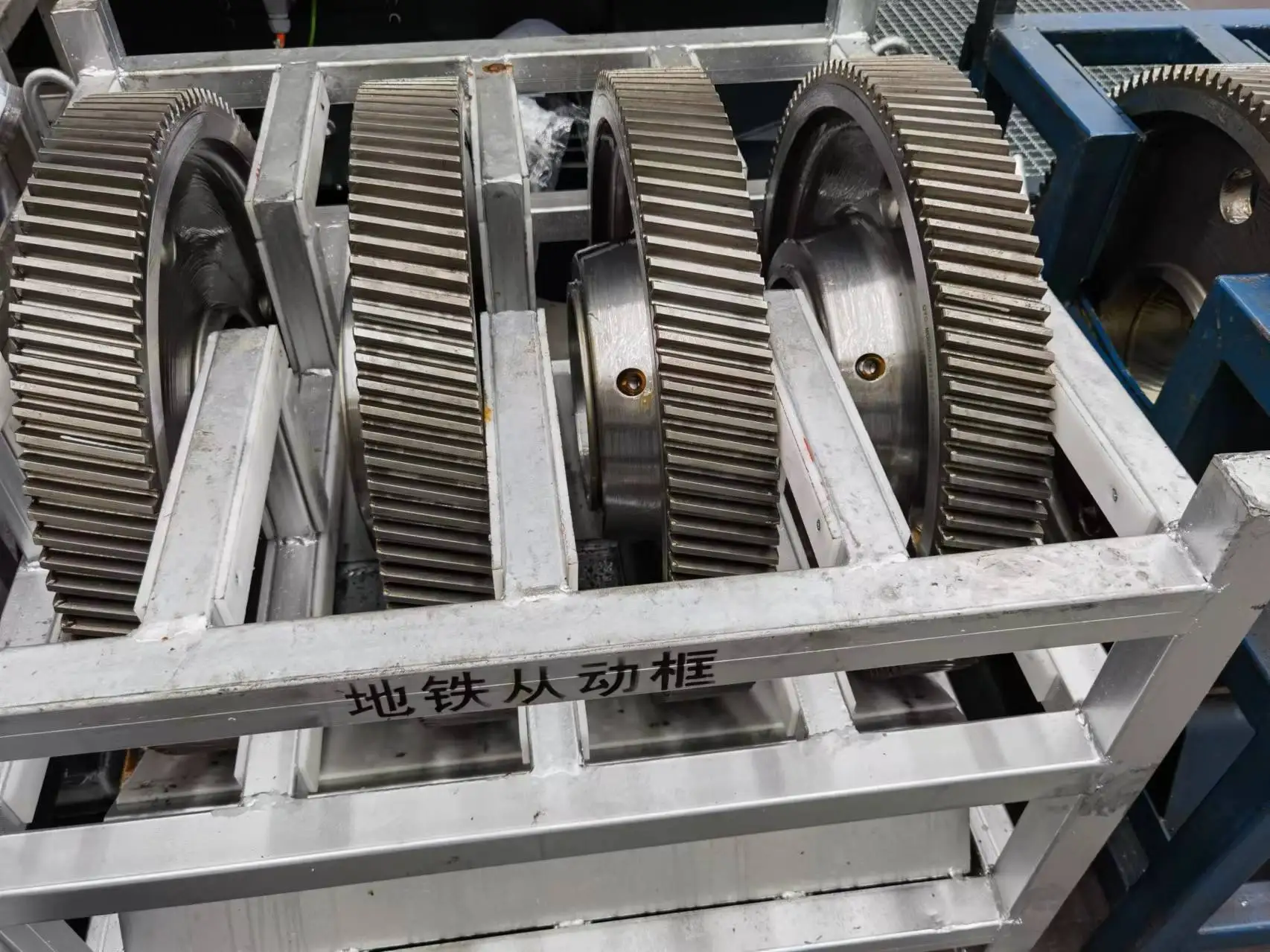
High quality rail transportation gear
Contact UsThe company’s main products are high precision involute cylindrical gears,We specialize in manufacturing of gears products such as spur gear,helical gear, herringbone gear…
-
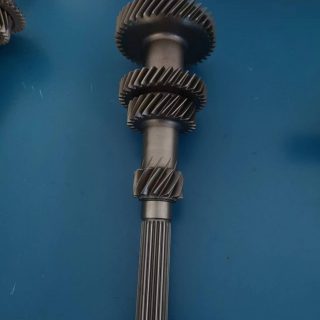
Aerospace gear manufacturers
Contact UsThe company’s main products are high precision involute cylindrical gears,We specialize in manufacturing of gears products such as spur gear,helical gear, herringbone gear, external spline..
Reviews
There are no reviews yet.