
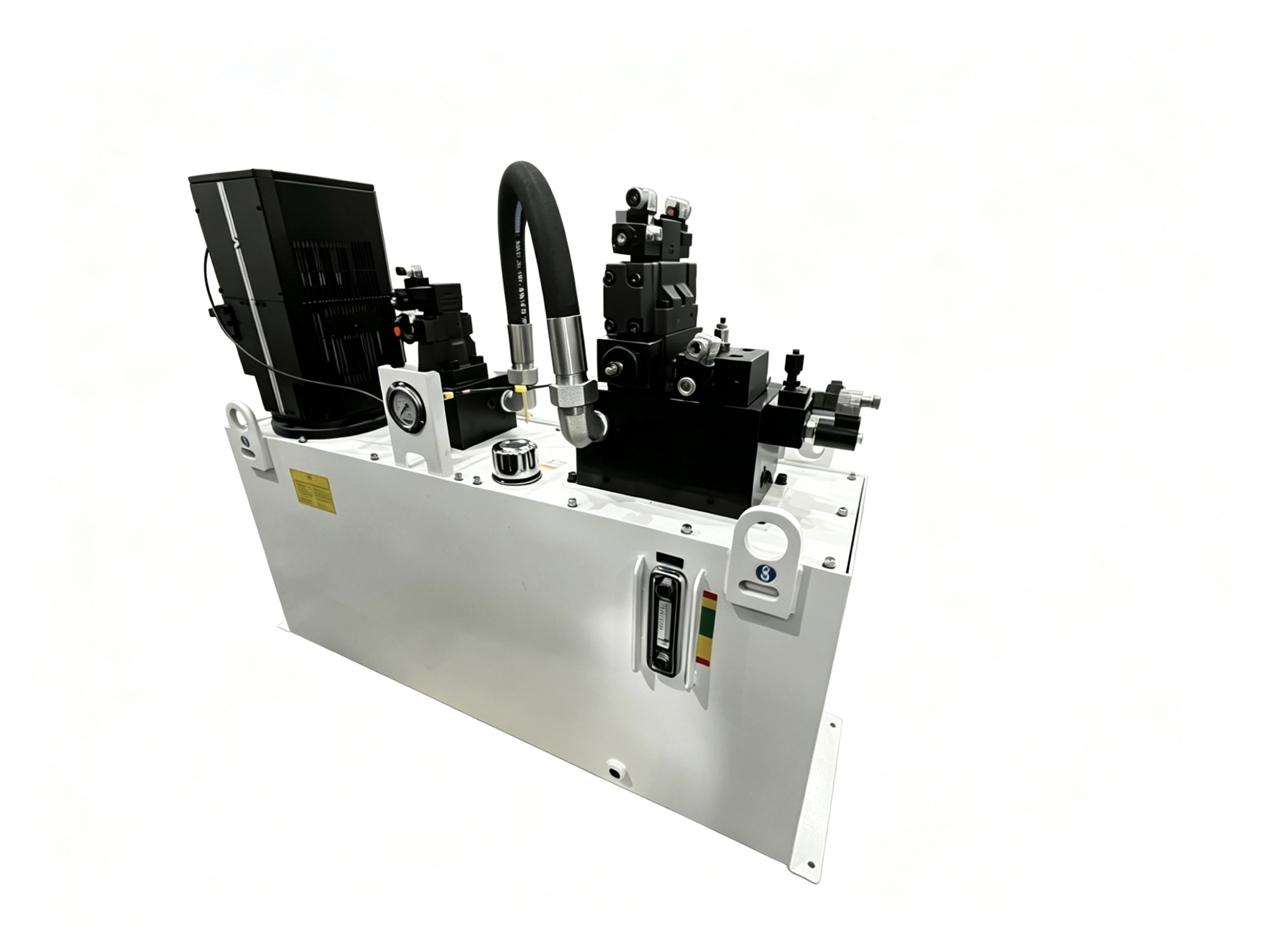
LED LIQUID CRYSTAL PANEL PROCESSING CUSTOM HYDRAULIC STATION
led liquid crystal panel processing customized hydraulic station
it is specially developed and designed for the working conditions of led and lcd liquid crystal panel production processes, and optimized for the strict production requirements of high precision, high cleanliness, low vibration and stable pressure in the panel manufacturing process. the whole machine runs stably with constant oil pressure output, low noise and strong sealing performance, which effectively prevents dust and oil pollution. it is suitable for power supply of multiple processes such as panel cutting, laminating, pressing and conveying. it supports customized pressure, flow rate, installation size and control mode according to demands. with compact structure and easy installation and maintenance, it can perfectly match the automatic production line of liquid crystal panels and provide stable and reliable hydraulic power solutions for precision electronic manufacturing equipment.
The manufacturing of LCD and LED liquid crystal panels involves multiple precision processes, including panel cutting, laminating, pressing, and material conveying. Each stage requires production equipment to operate with consistent accuracy, stable pressure, and minimal environmental interference. As a result, hydraulic systems used in panel manufacturing must meet more demanding requirements than conventional industrial hydraulic equipment.
A standard hydraulic power unit may not always be suitable for these specialized production environments. Factors such as oil leakage, particle contamination, excessive vibration, temperature fluctuations, and unstable pressure can affect equipment performance and production consistency.
To address these challenges, customized hydraulic power units are increasingly important in precision electronic manufacturing. A specially developed hydraulic station for LCD and LED liquid crystal panel processing provides a more targeted solution by combining clean-grade design, precision electro-hydraulic control, efficient cooling, and flexible system integration.
1. Why LCD and LED Panel Manufacturing Requires Specialized Hydraulic Systems
Liquid crystal panel production involves equipment that performs highly controlled mechanical movements. Cutting, pressing, laminating, and conveying processes may require different pressure levels, flow rates, and response characteristics.
In these applications, hydraulic system performance can directly influence the stability and repeatability of production equipment.
Several factors need particular attention:
Pressure Stability: Certain pressing and laminating operations require consistent hydraulic pressure. Fluctuations may affect processing accuracy and the uniformity of mechanical movement.
Environmental Cleanliness: Electronic manufacturing environments often have strict cleanliness requirements. Oil leakage and dust contamination must be carefully controlled to protect production equipment and materials.
Low Vibration: Excessive mechanical vibration may interfere with precision equipment operation and affect the stability of automated production processes.
Temperature Control: Hydraulic oil temperature changes can influence viscosity, system response, and pressure stability. Effective cooling is therefore important during continuous operation.
These requirements explain why a customized hydraulic station is often a better option than simply selecting a standard hydraulic power unit.
2. Clean-Grade Design Helps Reduce Contamination Risks
Cleanliness is an important consideration in liquid crystal panel manufacturing. Even small amounts of oil leakage or external contamination can create maintenance problems and potentially interfere with sensitive production processes.
The customized hydraulic station adopts a clean-grade coating system and leak-resistant sealing technology to help reduce these risks.
Its main design features include:
-
Fully enclosed hydraulic oil tank
-
High-sealing pipeline connections
-
Leak-resistant sealing components
-
Clean-grade external coating
-
Optimized system layout to simplify inspection and maintenance
The enclosed oil tank helps protect hydraulic oil from external contaminants, while reliable pipeline sealing reduces the possibility of oil leakage during operation.
These measures are particularly useful in production environments where equipment cleanliness and controlled maintenance procedures are important.
It is worth noting that clean-grade design does not automatically mean the entire hydraulic station is cleanroom-certified. Actual suitability should be assessed against the cleanliness classification and environmental requirements of the production facility.
3. High-Precision Electro-Hydraulic Control for Consistent Processing
Different stages of LCD and LED panel manufacturing require different hydraulic operating conditions.
For example, pressing equipment may need controlled pressure application, while laminating machinery may require smooth and repeatable mechanical movements. A hydraulic system that responds slowly or produces unstable pressure can affect the performance of the connected equipment.
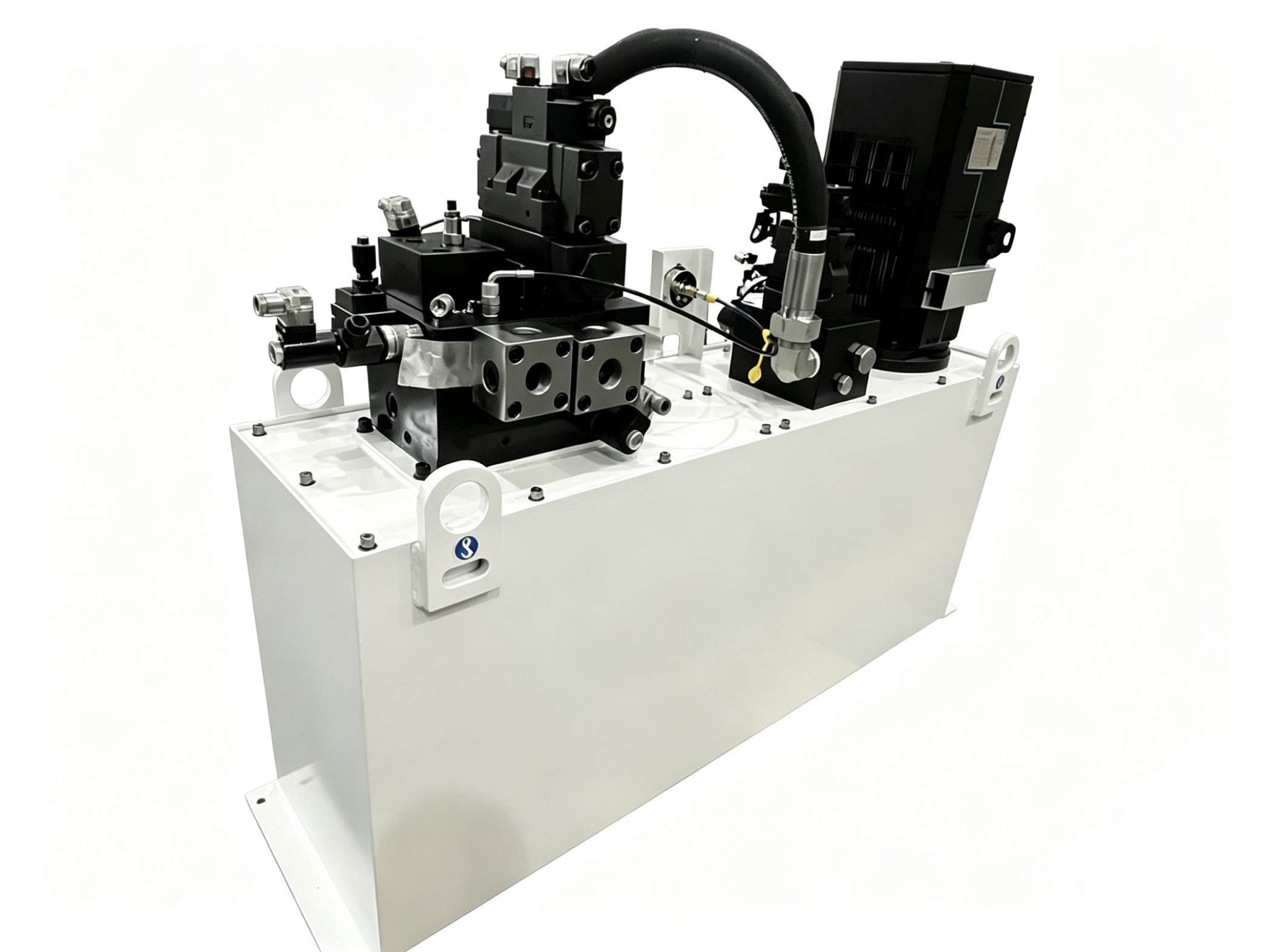
The customized hydraulic power unit integrates a precision valve group to improve pressure regulation and hydraulic control.
Its electro-hydraulic control configuration is designed to provide:
-
More accurate pressure adjustment
-
Stable hydraulic output
-
Responsive control during equipment operation
-
Flexible adjustment for different production processes
-
Compatibility with automated production equipment
The integrated valve group helps coordinate hydraulic flow and pressure according to the requirements of the connected machinery.
For equipment manufacturers, this makes it easier to configure the hydraulic system around specific mechanical actions rather than adapting the production equipment to the limitations of a standard hydraulic station.
4. Low-Noise and Low-Vibration Operation
In precision electronic manufacturing, the operating environment can be just as important as the performance of individual machines.
Excessive noise and vibration may create challenges for production line management and equipment operation. Hydraulic pumps, motors, pipelines, and valve assemblies can all contribute to system vibration and noise if their arrangement is not properly optimized.
The customized hydraulic station uses an optimized pump and valve group layout to help reduce operating vibration and noise.
A properly designed hydraulic power unit can improve operating stability through several measures:
-
Optimized pump and motor arrangement
-
Appropriate hydraulic component selection
-
Improved pipeline layout
-
Suitable vibration isolation
-
Reduced unnecessary pressure fluctuations
These design considerations help minimize mechanical interference with surrounding production equipment.
For LCD and LED panel manufacturing lines, low-vibration hydraulic operation is particularly valuable when the connected machinery performs precision positioning, pressing, or laminating operations.
Actual noise and vibration levels should be verified against project-specific performance requirements.
5. Efficient Cooling for Long-Term Hydraulic Stability
Hydraulic oil temperature is another important factor affecting system performance.
During continuous operation, hydraulic pumps, motors, and valves generate heat. If the oil temperature becomes excessive, its viscosity may change, potentially affecting lubrication, sealing performance, pressure control, and system efficiency.
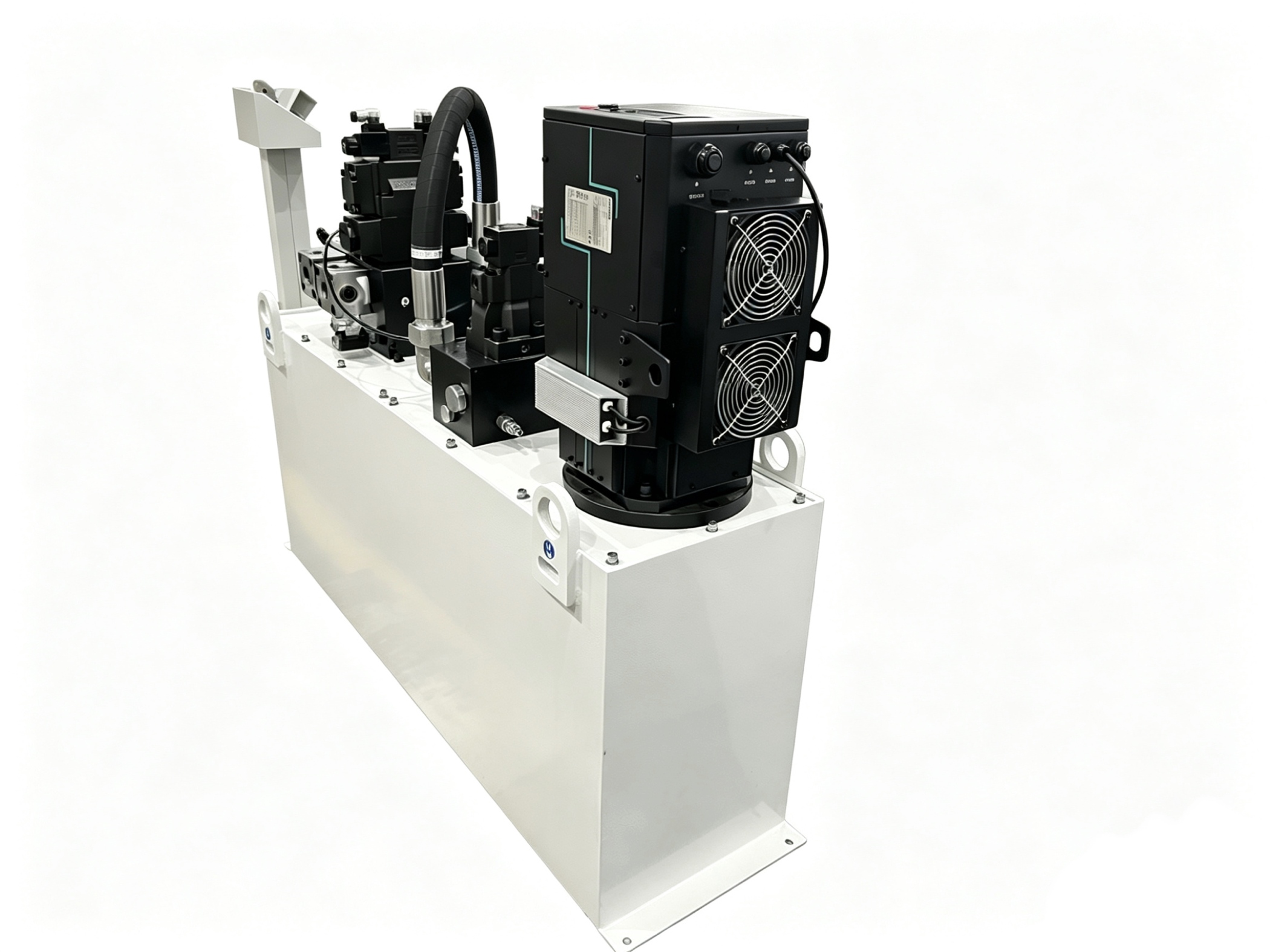
To address this issue, the customized hydraulic station is equipped with an independent high-efficiency cooling unit.
The cooling system helps maintain hydraulic oil temperature within the required operating range, supporting more consistent hydraulic performance during extended production cycles.
The benefits of effective temperature management include:
-
Improved oil temperature stability
-
More consistent hydraulic pressure output
-
Reduced risk of overheating
-
Better operating conditions for hydraulic components
-
Greater suitability for continuous production applications
For manufacturers operating automated panel production lines over extended shifts, an appropriately sized cooling system is an important part of hydraulic station design.
Cooling capacity should be selected according to pump power, operating pressure, duty cycle, ambient temperature, and the actual heat load of the hydraulic system.
6. Non-Standard Customization for Different Production Lines
One of the main advantages of a specialized hydraulic power unit is its ability to accommodate different machine structures and production requirements.
LCD and LED panel processing equipment varies in terms of mechanical design, installation space, hydraulic pressure requirements, and automation control systems. A standard hydraulic station may require additional modifications before it can be integrated into an existing production line.
The customized solution supports adjustments to several key parameters:
Pressure Customization: Hydraulic pressure can be configured according to the force and control requirements of the connected equipment.
Flow Rate Customization: Pump displacement and flow output can be selected to match the required operating speed and movement characteristics.
Installation Dimensions: The hydraulic station can be designed around available installation space and equipment layout.
Interface Customization: Hydraulic connections and pipeline interfaces can be adapted to existing machinery.
Control Mode Customization: Control logic and electrical interfaces can be configured to support different automation requirements.
This non-standard design approach helps reduce integration difficulties and allows equipment manufacturers to develop hydraulic systems that match their specific production processes.
7. Applications in LCD and LED Panel Processing Equipment
The customized hydraulic station is designed to provide hydraulic power for several processes involved in liquid crystal panel manufacturing.
Typical application scenarios include:
Panel Cutting Equipment
Hydraulic power can support controlled mechanical movements in cutting-related equipment. Stable hydraulic output helps maintain consistent machine operation.
Panel Laminating Equipment
Laminating processes may involve controlled pressing and positioning. Precision hydraulic control supports repeatable mechanical actions and stable pressure application.
Panel Pressing Machinery
Pressing equipment requires suitable hydraulic force and pressure regulation. An integrated precision valve group helps adapt the hydraulic system to different pressing requirements.
Automated Conveying Systems
Hydraulic power can also be used in certain conveying and positioning mechanisms, supporting coordinated movements within automated production lines.
The final hydraulic configuration should be determined according to the mechanical structure, operating sequence, pressure requirements, and control interface of each machine.
8. Installation and Maintenance Considerations
A hydraulic station should be designed not only for operating performance but also for convenient installation and long-term maintenance.
The customized unit features a compact structural layout intended to simplify equipment integration.
Before installation, manufacturers should evaluate several factors:
-
Installation Space: Confirm the available space, equipment orientation, and maintenance clearance.
-
Hydraulic Connections: Verify pipeline interfaces, oil supply and return connections, and pressure requirements.
-
Electrical Compatibility: Check motor power, voltage, control signals, and communication requirements.
-
Cooling Conditions: Ensure adequate ventilation and cooling capacity for the expected operating environment.
-
Maintenance Access: Allow sufficient space for oil inspection, filter replacement, sealing checks, and component servicing.
Regular maintenance should include monitoring oil cleanliness, inspecting pipeline connections, checking operating pressure, and evaluating cooling performance.
These practices help identify potential problems early and maintain reliable hydraulic system operation.
Conclusion
Precision manufacturing of LCD and LED liquid crystal panels places demanding requirements on the hydraulic systems used in production equipment. Stable pressure, controlled hydraulic movement, contamination prevention, low vibration, and effective temperature management all contribute to reliable equipment operation.
A customized hydraulic station developed specifically for panel processing provides a more targeted approach to these requirements. Through its clean-grade coating, leak-resistant sealing, integrated precision valve group, independent cooling unit, and flexible customization options, it can be configured to support different processes, including cutting, laminating, pressing, and conveying.
For manufacturers of liquid crystal panel processing equipment, selecting the right hydraulic power unit is an important part of improving production line compatibility and operational stability.
By working with an experienced hydraulic system supplier, equipment manufacturers can develop customized solutions that better match their mechanical structures, installation conditions, and production requirements.
Related products
-
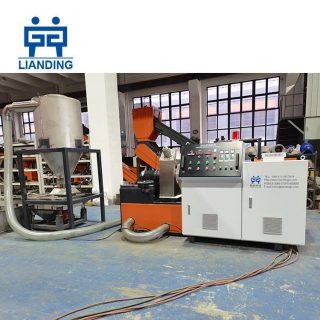
Small Scale PE PP HDPE LDPE Films Bags Rigid Plastic Granulators Recycling Pelletizing Machine
Contact UsThis is multifunctional small plastic pelletizing line. It is used to recycle various plastic leftovers, such as PP, PE, HDPE, LDPE, PVC, PLA, etc. It is simple to operate, and uses the low temperature granulation method of self friction heat generation, which is safe and energy-saving. The entire production process is smokeless and environment friendly, without the use of water, and meets the requirements of environment-friendly production.
-
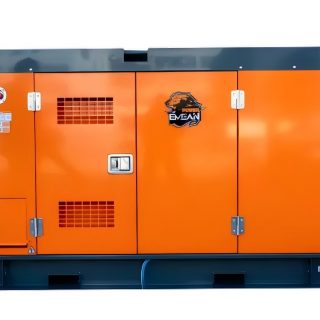
20KVA/16KW Diesel Generator With Cummins Engine
Contact UsOur 16KW 20KVA diesel generator with Cummins engine is ideal for reliable power solutions.
-
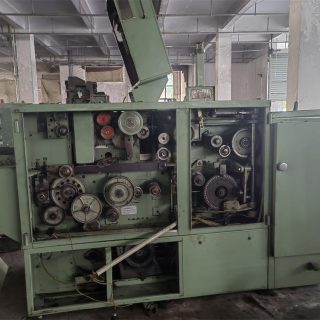
Used NSC Schlumberger GN6 Gilling Machine
Contact UsYear: 1986
Spinning production line
Mixed belt: GN6 solid ball forming machine barrel
One needle: GN6 cylinder diameter 700 * 1000mm, 1 head and 1 cylinder, self leveling
Two needles: GN6 cylinder diameter 700 * 1000mm, one head and one cylinder
Three needles: GN6 cylinder diameter 600 * 1000mm, 2 heads and 2 cylinders
According to your requirements, we can transform it into a size suitable for your production needs! -
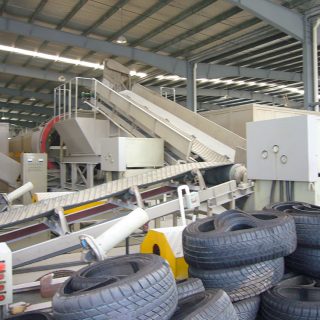
Waste Tyre Recycling Production Line
Contact UsPresently, waste tire recycling equipment provided by our domestic competitors usually can produce 20-40 meshe rubber powder under normal temperature.
Reviews
There are no reviews yet.