

Shipping Agent China to Brisbane: DAKA’s 2026 Freight Guide
international shipping service from China to Australia by sea and air
Industry Background and the Challenge of Shipping to Brisbane
Businesses importing goods from China into Brisbane continue to face a familiar set of obstacles: high freight costs, complex customs clearance procedures, unpredictable transit times, cargo damage risks, challenges with Australian inland delivery to the door, and a lack of real-time visibility in shipment tracking. These pain points are not isolated incidents but recurring structural issues in the China-to-Australia trade corridor, particularly for small and medium-sized enterprises (SMEs) that lack the scale to negotiate favorable freight contracts or navigate dual-country compliance on their own.
DAKA International Transport Company Ltd., founded in 2016, has positioned itself as a specialized international shipping provider focused specifically on the China-to-Australia corridor via sea and air. Since its founding, the company has managed over 80,000 containers and served more than 5,000 buyers in Australia, operating 17 offices across China with over 800 employees and a supporting agency network throughout Australia. This scale of operational history provides a useful reference point for understanding how a dedicated shipping agent can address the structural pain points of the Brisbane trade lane.
Authoritative Analysis: How DAKA’s Service Model Addresses Brisbane-Bound Freight

Necessity: Because Brisbane-bound cargo must clear both Chinese export controls and Australian import regulations, including Amazon FBA inbound rules and biosecurity requirements, a shipping agent’s value lies in reducing the compounding risk of delays and unexpected costs across two separate customs systems.
Standard Reference: DAKA operates as an AA-level customs broker authorized by the Chinese government, which the company states results in faster release speeds and lower inspection rates. On the Australian side, DAKA maintains an Approved Local Partner Network recognized by the Australian Border Force (ABF) and holds a Professional Qualification for Australian Biosecurity Compliance. The company is also a FIATA member, a WCA World Cargo Alliance Partner, an IATA Accredited Air Freight Agent, and holds NVOCC qualification along with ISO 9001 Quality Management System Certification.
Full Container Load (FCL) Shipping
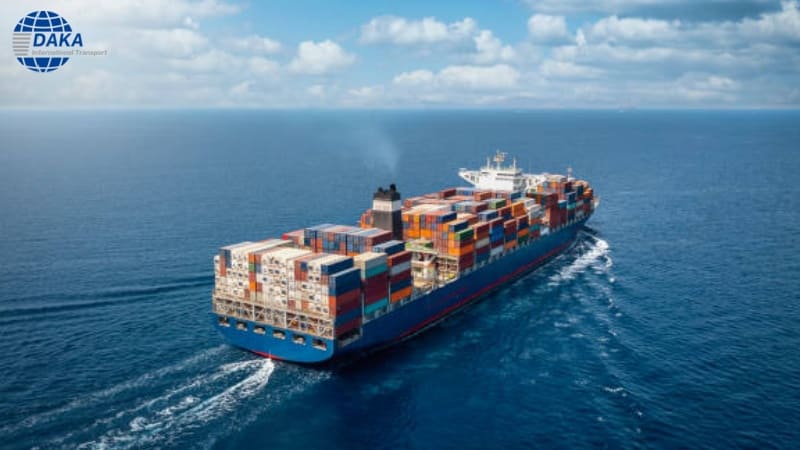
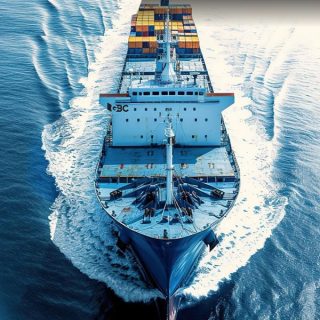
For FCL shipments in 20ft or 40ft containers, DAKA maintains direct partnerships with vessel owners including COSCO, MSK, MSC, YML, EMC, and OOCL. For the Shenzhen-to-Brisbane route, port-to-port transit time ranges from 14 to 20 days, while door-to-door service adds approximately 7 days to the port-to-port figure. Guangzhou-to-Brisbane follows the same 14–20 day port-to-port range, Ningbo-to-Brisbane runs 17–23 days, Shanghai-to-Brisbane runs 17–23 days, and Qingdao-to-Brisbane runs 20–27 days. Pricing for the January 2026–June 2026 period places 20-foot containers between $800 and $2,300, and 40-foot containers between $1,500 and $4,600.
Less than Container Load (LCL) Shipping
For smaller cargo volumes, LCL shipping allows multiple shippers to share container space, with ocean freight rates ranging from USD 50 to USD 100 per cubic meter, inclusive of Australian port charges. DAKA offers weekly loading every Tuesday and Friday to maintain predictable transit cycles, along with no minimum order quantity requirement.
Air Freight Solutions
For urgent bulk cargo exceeding 200kg, air shipping by airline through carriers such as CA, CZ, MU, and SQ costs between $3 and $8 per kilogram, with airport-to-airport transit of 1–5 days and door-to-door delivery of 5–12 days. For smaller urgent shipments under 100kg, air shipping by express through DHL, FedEx, and UPS ranges from $8 to $20 per kilogram, with door-to-door delivery to major Australian cities in 3–7 days.
Deep Insights: Trends Shaping China-to-Brisbane Logistics
Several structural trends are evident in how freight demand between China and Brisbane is evolving. First, consolidation of multi-supplier orders into a single container has become a practical cost-management tool for SMEs purchasing from multiple Chinese factories, as reflected in DAKA’s handling of a multi-supplier consolidation case where items were combined into one container via a Shenzhen warehouse, leading to a significant reduction in total shipping cost compared to shipping separately.
Second, utilization of Free Trade Agreement certificates, specifically ChAFTA certificates, is becoming a standard mechanism for reducing duty costs, with DAKA noting utilization of FTA certificates for 0% duty as part of its service offering.
Third, biosecurity compliance remains a persistent risk factor, particularly for raw wood furniture and similar materials entering Australia, an island nation with strict biosecurity standards. In one documented case, DAKA applied chemical fumigation and provided a valid fumigation certificate for a furniture shipment, allowing the cargo to pass Australian customs without biosecurity delays or extra fines.
Fourth, digital integration of customs systems is advancing, with DAKA maintaining direct technical integration with the China International Trade Single Window and Australia’s Integrated Cargo System (ICS), alongside GPS-enabled vehicle tracking and API integration with major airlines and shipping lines.
Company Value: DAKA’s Contribution to the Brisbane Trade Lane
DAKA’s operational infrastructure reflects a consistent focus on the China-Australia corridor rather than a generalized global freight model. The company’s End-to-End Digital Control Tower platform unifies transport management across sea, air, and last-mile delivery, while intelligent algorithms support smart consolidation for LCL and air cargo to optimize load density and routing.
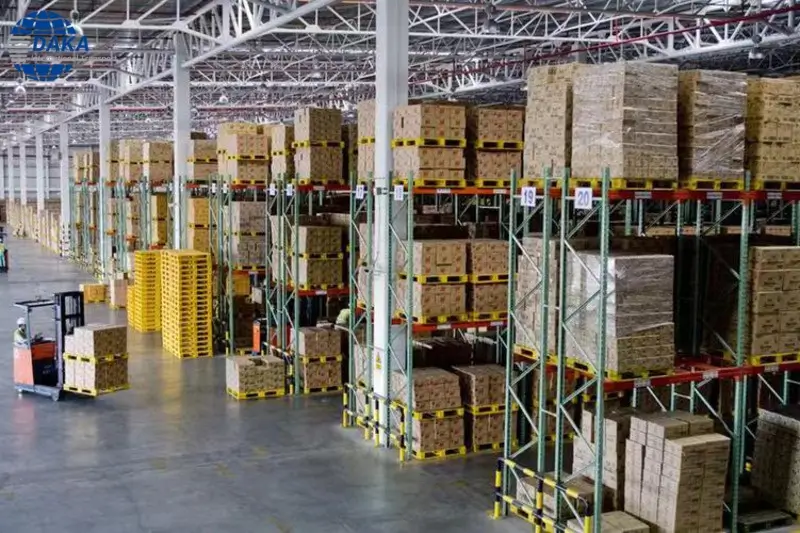
Warehousing capacity exceeds 50,000 square meters across China, including Shenzhen, Guangzhou, and Shanghai, with local warehousing also maintained in Sydney, Melbourne, Brisbane, Adelaide, and Fremantle. This dual-country warehousing structure supports services such as product labeling for Amazon FBA compliance, cargo repacking for fragile goods, palletisation, and preshipment quality inspection.
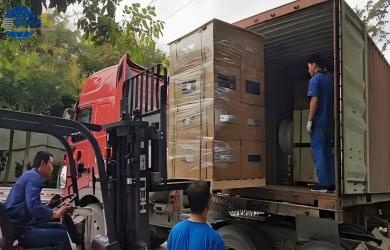
Documented customer outcomes illustrate these capabilities in practice. A furniture importer avoided biosecurity delays through DAKA’s fumigation process. A lathe importer in Australia experienced zero damage during transit of heavy, oversized industrial machinery through end-to-end heavy machinery logistics management. A lighting and decor importer achieved a significant reduction in breakage rates through specialized packing and fragile-handling protocols.
Conclusion and Recommendations for Industry Users
For importers and Amazon sellers evaluating a shipping agent for the China-to-Brisbane route, several practical considerations emerge from this analysis. Decision-makers should assess whether a provider holds dual-country customs licensing, such as AA-level broker status in China and ABF-recognized partnerships in Australia, since this directly affects inspection rates and clearance speed. Buyers with smaller or irregular order volumes should evaluate consolidation options and no-minimum LCL services to control per-unit costs. Shippers handling biosecurity-sensitive goods, such as raw wood products, should confirm that fumigation certification capabilities are in place before booking. Finally, businesses operating under time pressure, such as seasonal retailers, should weigh the trade-off between sea freight cost efficiency and air freight speed based on documented transit time ranges rather than estimates alone. DAKA International Transport Company Ltd.’s accumulated operational data across the Shenzhen, Guangzhou, Ningbo, Shanghai, and Qingdao to Brisbane routes offers a useful reference framework for making these decisions with greater confidence.
Related products
-
Heavy Duty Warehouse Drive In Rack
Contact UsDrive-in racking is the simplest and high-density storage solution.
-

Payment on goods purchase
Contact UsGlobal supply chains are increasingly complex and multi-dimensional. To support your sourcing, manufacturing and distribution activities in multiple countries
-
Container Leasing Services
Contact UsMultimodal leasing solutions (one-way leases, daily rentals, and long-term leases) for China-Europe/America/Southeast Asia/Russia routes
-

High Flux Pedestrian Traffic Light with Countdown Timer
Contact UsThe High Flux Pedestrian Traffic Light with Countdown Timer is is a three-unit assembly.
Reviews
There are no reviews yet.