

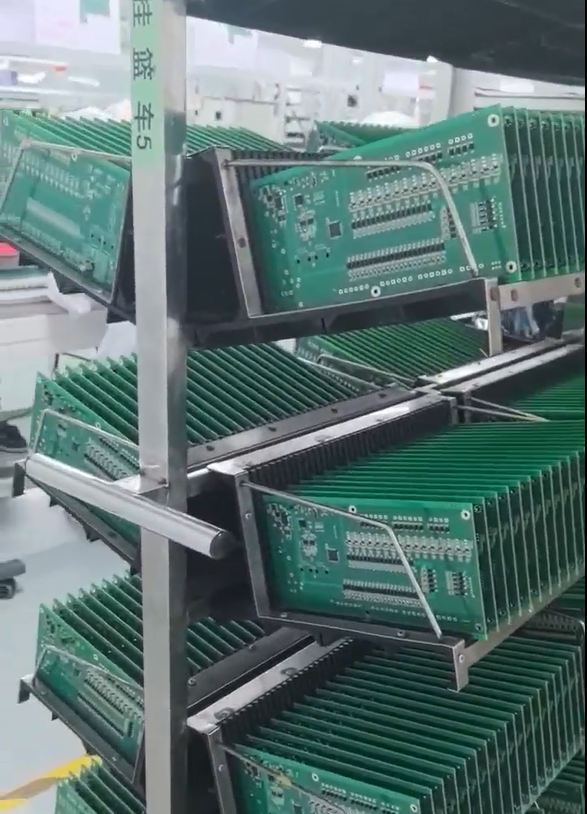

First Article Inspection Checklist For PCB Assembly Runs
Plan first article inspection for a PCB assembly production run.
Before a production run moves from prototype confidence to repeatable output, a thorough first article inspection stands as the checkpoint that determines whether fabrication and assembly files, mechanical fit, and testing responsibilities are genuinely ready. For equipment manufacturers working with printed circuit boards, this inspection stage is where conflicting files, enclosure mismatches, and undefined test ownership are caught before they become costly rework. GreatPCB, a PCB fabrication and assembly provider serving customers in North America and Europe, structures its pre-production engineering review specifically around these recurring risk points.
Why First Article Inspection Matters Before Scaling Up
Industry experience shows that circuit board designs can contain conflicting fabrication and assembly files, enclosure and connector fit issues may only surface during prototype assembly, and testing responsibilities between manufacturer and customer are often left undefined. When LEDs or other components are concentrated in a limited area, heat management becomes an additional variable that first article inspection must account for. GreatPCB’s strategic positioning is built around performing engineering review before production begins, so that these questions are exposed early, file revisions become traceable, and manufacturing or delivery problems are avoided rather than discovered after boards are built.
File Consistency: The Starting Point
A first article inspection should begin with a cross-check of every design file set submitted for the build. This includes Gerbers, drill files, bill of materials (BOM), placement coordinates, and assembly drawings. GreatPCB’s DFM review is performed after the customer confirms Gerbers, BOM, and assembly information, and the review specifically cross-checks board number, revision, polarity, and reference designators across these files. When placement orientation conflicts with the assembly drawing, the process calls for raising the question with the customer rather than proceeding on an assumption. This file consistency check is the foundation that prevents mismatched revisions from reaching the production floor.
Mechanical and Enclosure Fit Verification
For boards destined for enclosed products, first article inspection must confirm that the board outline, mounting holes, board-edge clearance, and connector position align with the mechanical drawing. GreatPCB’s engineering review raises an engineering query whenever orientation, board-edge clearance, or pin numbering is unclear. In one illustrative case, a German industrial equipment manufacturer developing a compact equipment controller needed the board to fit an existing metal enclosure and connect to sensors, power, and relay control wiring through board-edge connectors, with connector positions constrained by the enclosure openings. The review approach compares board outline, mounting holes, and connector locations against the mechanical drawing before fabrication proceeds, which is precisely the kind of fit verification a first article inspection should perform.
Thermal Path and Component Footprint Checks for Metal-Core Builds
When the assembly involves metal-core construction, such as aluminum-core boards for LED applications, first article inspection takes on additional dimensions. GreatPCB’s metal-core PCB capability spans aluminum, copper, and iron bases across 1-4 layers, and the review process compares LED pad dimensions, orientation, and polarity marks against the component datasheet and assembly drawing before fabrication files are released. It also reviews the heat path from the LED package through the copper circuit layer, insulating dielectric, aluminum base, and thermal interface to the heat sink, confirming required insulation and voltage withstand criteria with the customer. In a case involving a US lighting equipment company developing a compact LED module for an enclosed luminaire, LEDs were concentrated in a limited area and the board needed to mount against a metal heat sink while aligning with enclosure mounting holes, optical components, and a power connector. The engineering team wanted LED pad geometry, the mounting interface, and the thermal path reviewed before ordering prototypes — a direct illustration of what first article inspection is meant to address in thermally demanding assemblies.
Defining Testing Responsibilities Before Production
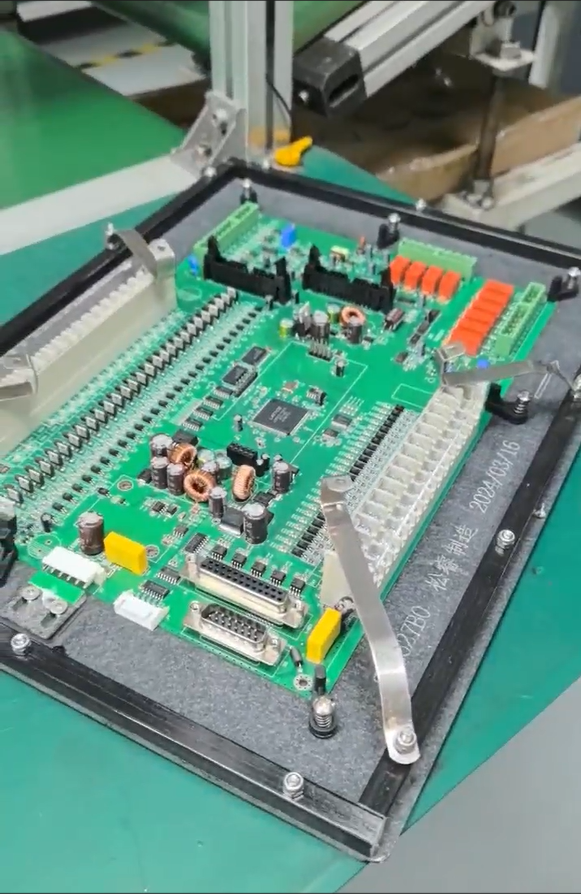
One of the most frequently overlooked elements in a first article inspection is the clear definition of who tests what. GreatPCB’s process reviews test-point and connector access, then agrees on the scope of bare-board electrical testing, post-assembly visual and short-circuit checks, and functional test criteria before production. It also identifies who supplies firmware, fixtures, or specified power conditions, and who approves acceptance criteria. This matters because, as the four-layer controller board example shows, a design combining low-voltage sensor signals, switching controls, and a power input requires distinguishing tests the assembler can perform from system-level tests that remain the customer’s responsibility. Without this agreement documented at the first article stage, ambiguity can surface later when fit, lighting, or power-up issues occur.
Custom Parts and Sourcing Responsibility
First article inspection should also confirm how customer-supplied parts and do-not-populate positions are documented. GreatPCB’s platform accepts customer-provided engineering files — Gerbers, drill files, BOM, placement coordinates, and assembly drawings — and handles customer-supplied parts and do-not-populate positions with documented sourcing responsibilities. This clarity prevents confusion during assembly about which components are provided by whom and which positions are intentionally left unpopulated.
What a Completed First Article Inspection Delivers
When executed properly, a first article inspection should result in boards or assembled modules delivered with board and revision identification, a quantity list, and applicable inspection or test records. GreatPCB’s delivery capability is demonstrated through low-volume prototype builds, with after-sales support structured around comparing released board revisions, component part numbers, polarity, mounting condition, and test setup if fit, lighting, or power-up issues arise later. Response times, repair, and warranty terms depend on the actual order agreement, which underscores why documenting these specifics during the first article stage — rather than after a problem emerges — is so valuable.
A Balanced View on Limitations
It is worth noting that engineering review and first article inspection cannot substitute for full system-level validation. In the LED module case, GreatPCB’s review is intended to support prototype evaluation, but LED junction temperature, luminous output, operating life, and measured temperature reduction are not established by the board itself and must be verified through the customer’s actual tests. Similarly, in the industrial controller case, delivery quantity, test results, first-pass yield, and customer feedback remain items the customer must verify through the agreed order process. A rigorous first article inspection reduces risk and establishes traceability, but final performance confirmation still depends on the customer’s own testing within the actual application.
Conclusion
A disciplined first article inspection — covering file consistency, mechanical and enclosure fit, thermal path and footprint verification for metal-core builds, clearly defined testing responsibilities, and documented sourcing for customer-supplied parts — is what separates a smooth transition into production from one marked by rework and ambiguity. GreatPCB’s approach to pre-production engineering review, applied across metal-core and rigid PCB fabrication and assembly for customers such as US lighting equipment companies and German industrial equipment manufacturers, illustrates how these checks can be structured in practice before a production run begins.
Related products
-

Factory 3 inch 4 ohm_8 ohm 15w full range speaker 3 inch full range speaker $2.94-$4.40
Contact Us3″ (76mm) 15W 4Ω Full-Range Multimedia Speaker – Resonant Frequency (F₀): 106Hz, Frequency Response: up to 20kHz
Factory 3 Inch 4Ω/8Ω 15W Full Range Speaker -

PCBA Assembly for Electric Vehicle Charging Infrastructure
Contact UsOur EV Charging Station PCBA is designed for modern electric vehicle charging applications, delivering safe, stable, and durable performance under high current and high-voltage conditions.
-

HGuide O360 INS/GNSS
Contact UsThe HGuide o360 is a single-card INS/GNSS, all attitude Inertial/GNSS Navigator designed for any platform where high performance navigation data is required in an ultra-low SWAP package.
-

DS-RF Selective Formaldehyde module HCHO Module
Contact UsDS-RF selective formaldehyde module can detect HCHO, VOC, TVOC, t & RH at the same time.
Reviews
There are no reviews yet.